About this place
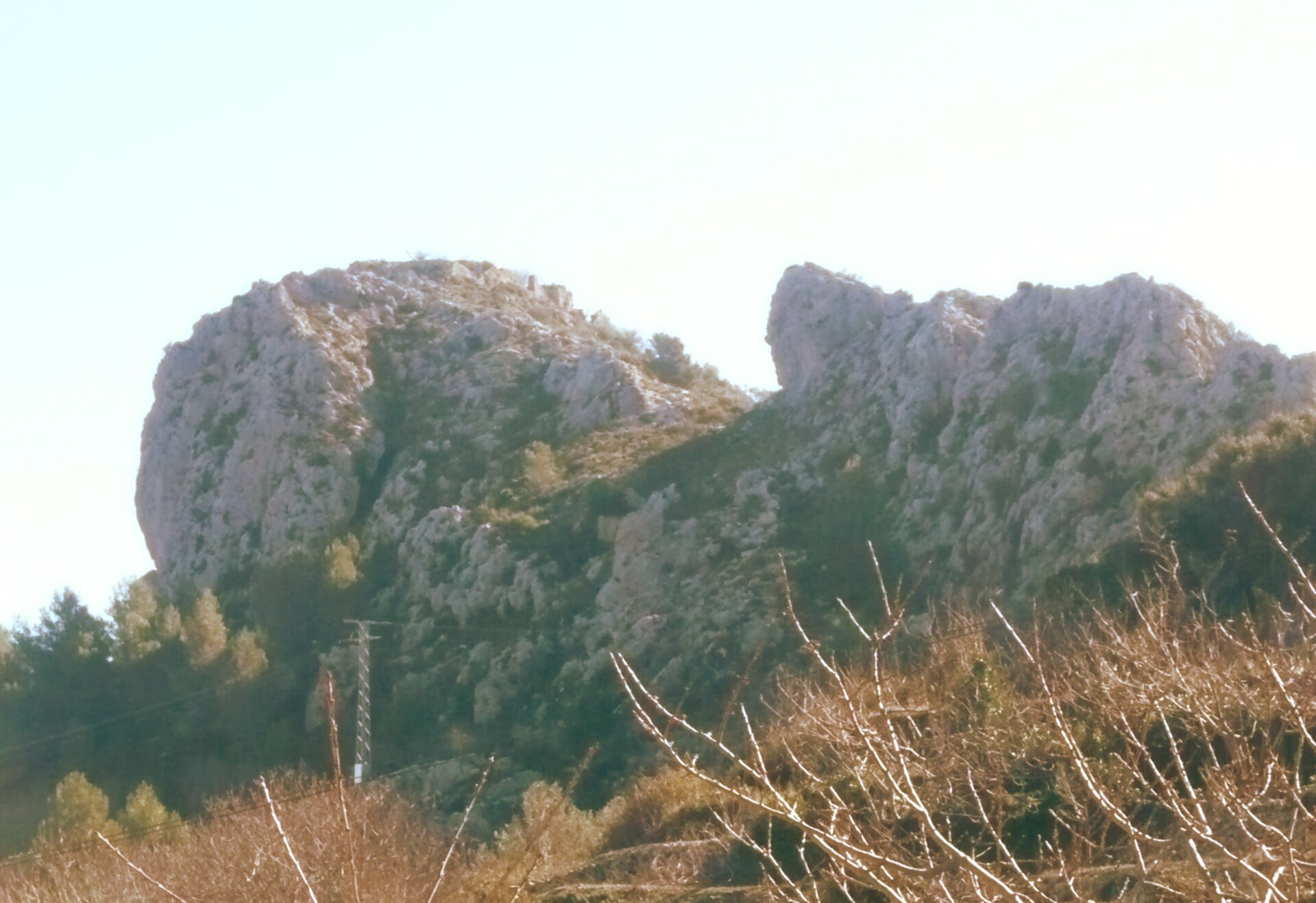
The Castle of Tàrbena (Spanish: Castillo de Tárbena), known locally as Sa Caseta des Moros, is the ruined Moorish fortress standing above the mountain village of Tàrbena in the province of Alicante, in the Marina Baixa region.
How do you get there?
The ruins sit on Cerro Segué, right above the village itself, so the approach starts almost from the last houses of Tàrbena. By car the village is reached via mountain roads from Benidorm, Callosa d'en Sarrià or Parcent — Tàrbena is the last settlement of Marina Baixa before the Vall de Pop valley opens up. From the hill the fortress overlooks both the valley and the Coll de Rates pass, the old route toward Parcent that the castle was originally built to control. The final stretch has to be walked on a rocky path, so sturdy footwear is worth bringing.
What will you see on site?
What remains of the fortress is modest but genuine: sections of wall, the base of a tower, and an aljibe (cistern) split into two chambers of different sizes that once collected rainwater. These are the traces of a hisn, a Muslim hilltop stronghold that protected the farming settlement, or alquería, spread across the rocky slope below. The site has been declared a Bien de Interés Cultural (a protected cultural asset), and local authorities have a project underway to consolidate the ruins and open them properly to visitors. From the upper part of the site you can see both the Costa Blanca coastline and the Sierra de Bèrnia mountain range.
What is the history behind it?
The fortress was raised in the early 12th century, during the Muslim period in this part of the Valencian coast. It served as one of the seats of the local alcaide, Muhammad Ibn Ishaq, and local tradition holds that El Cid himself passed through in 1090. In the following centuries the castle became a flashpoint in the fighting between Mudejars and Christians, including the revolt led by Al-Azraq. In 1268 it was taken by King James I of Aragon, after which the surrounding land passed to relatives of the Muslim leader. Another turning point came in 1445, when the Valencian nobleman Guerau Bou bought the castle together with its entire valley for 47,200 sueldos. The fortress's decline was sealed in 1609, when the expulsion of the Moriscos emptied the area; Tàrbena was later resettled by Majorcan colonists whose 17th-century arrival shaped the character of the village you see today.
When is the best time to visit?
Spring and autumn bring the mildest mountain temperatures and the most comfortable conditions for exploring the trails around Tàrbena, including the nearby Forat de Bèrnia, a natural rock passage through the Bèrnia massif. In summer, the midday heat makes the exposed, rocky climb to the ruins uncomfortable, so an early-morning visit is a better choice. Winter can be cold and windy, but visibility from the castle is often at its best.
Frequently asked questions
Is there an entrance fee for the castle ruins? No, the site is open access and can be visited free of charge, though caution is advised given the state of the ruins.
How long does a visit take? Walking up to the ruins and back usually takes 30 to 60 minutes, depending on fitness and the route chosen from the village centre.
What else is worth seeing in Tàrbena besides the castle? The 18th-century baroque Church of Santa Bárbara, the narrow streets of the old village, and the nearby Forat de Bèrnia and hiking trails of the Sierra de Bèrnia.
Is the site suitable for children? The ground is uneven and rocky with no safety barriers, so children should visit accompanied by adults and wearing proper footwear.
Nearby places

Earn badges for the places you visit
Download NextOnTrip, discover new places and check off your trails.