About this place
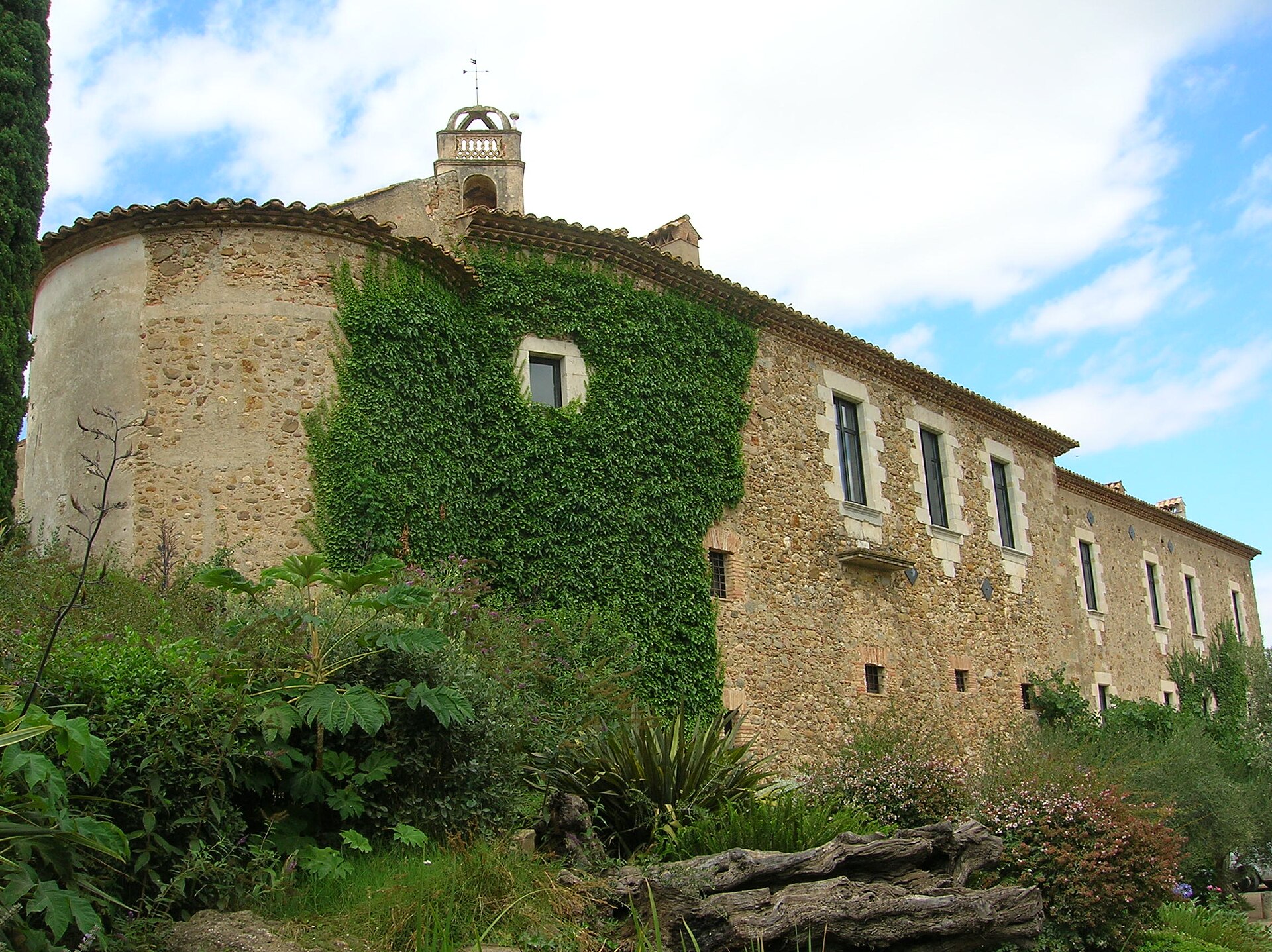
Castell de Sant Andreu crowns the hill of Puig de Sant Andreu in Ullastret, in the Baix Empordà region of Catalonia, overlooking the site of the former Estany d'Ullastret lake. The hill carries two layers of history at once: an Iberian settlement at its base, and the ruins of a medieval castle built centuries later on the same high ground.
What is this place?
The castle, recorded in early sources as "Castellum Uellosos," is one of the few well-documented examples of Carolingian-era military architecture surviving in Catalonia. References to the castle of Vellosos date back to the 9th century. The surviving remains reveal a modest structure of barely 500 square meters, laid out on a trapezoidal plan with four towers at its corners. Despite its small footprint, the castle held real strategic weight: it functioned as an observation and control point over the surrounding territory, and above all over an ancient road leading to Empúries. That route connected a large part of today's Baix Empordà and La Selva with the area around Girona and, further on, with Empúries in Alt Empordà.
In the 15th century, the sanctuary of Sant Andreu de l'Estany was built using the castle's remains as its base. A house was later added alongside it, which today serves as the museum for the archaeological site. It is inside this building that visitors can trace the hill's full story, from its Iberian origins to its medieval fortifications.
How do you get there?
Puig de Sant Andreu lies within the municipality of Ullastret, a short distance from the town center. The hill forms part of a larger archaeological complex tied to the Iberian town of Ullastret, one of the most significant Iberian sites in Catalonia. Driving from Girona or from the Costa Brava coastline typically takes under an hour, and a parking area serves visitors to the archaeological complex.
What will you see on site?
The hilltop is dominated by the museum building and its surrounding visitor infrastructure, and it is here that the surviving traces of the castle are found. Walking across the hill, you can follow the outline of the old defensive walls and picture how this small but strategically placed stronghold once controlled the routes below. Its proximity to the Iberian town of Ullastret means a visit ties together two very different chapters of the region's past: ancient Iberian settlement and medieval defensive architecture.
When should you visit?
Spring and early autumn are the best times to explore, when temperatures across Baix Empordà stay mild and the views from the hilltop over the surrounding land, including the former Estany d'Ullastret lake, are at their clearest. In summer, plan your visit for the morning to avoid the heat typical of the Costa Brava's inland areas.
Frequently asked questions
How does Castell de Sant Andreu differ from the nearby Iberian town? The castle is a medieval structure built on the summit of the same hill that once held an Iberian settlement. They represent two separate, successive occupations of the same site.
Where does the name "Castellum Uellosos" come from? It is the oldest documented name for the castle, appearing in 9th-century sources referring to the castle of Vellosos.
What role did the castle play in the Middle Ages? It served as an observation and control point over the territory and, notably, over an important trade route to Empúries linking Baix Empordà with Girona and Alt Empordà.
What stands on the site of the old castle today? The 15th-century sanctuary of Sant Andreu de l'Estany was built on the castle's foundations, and the adjoining house now functions as the museum for the archaeological site.
Nearby places

Earn badges for the places you visit
Download NextOnTrip, discover new places and check off your trails.