About this place
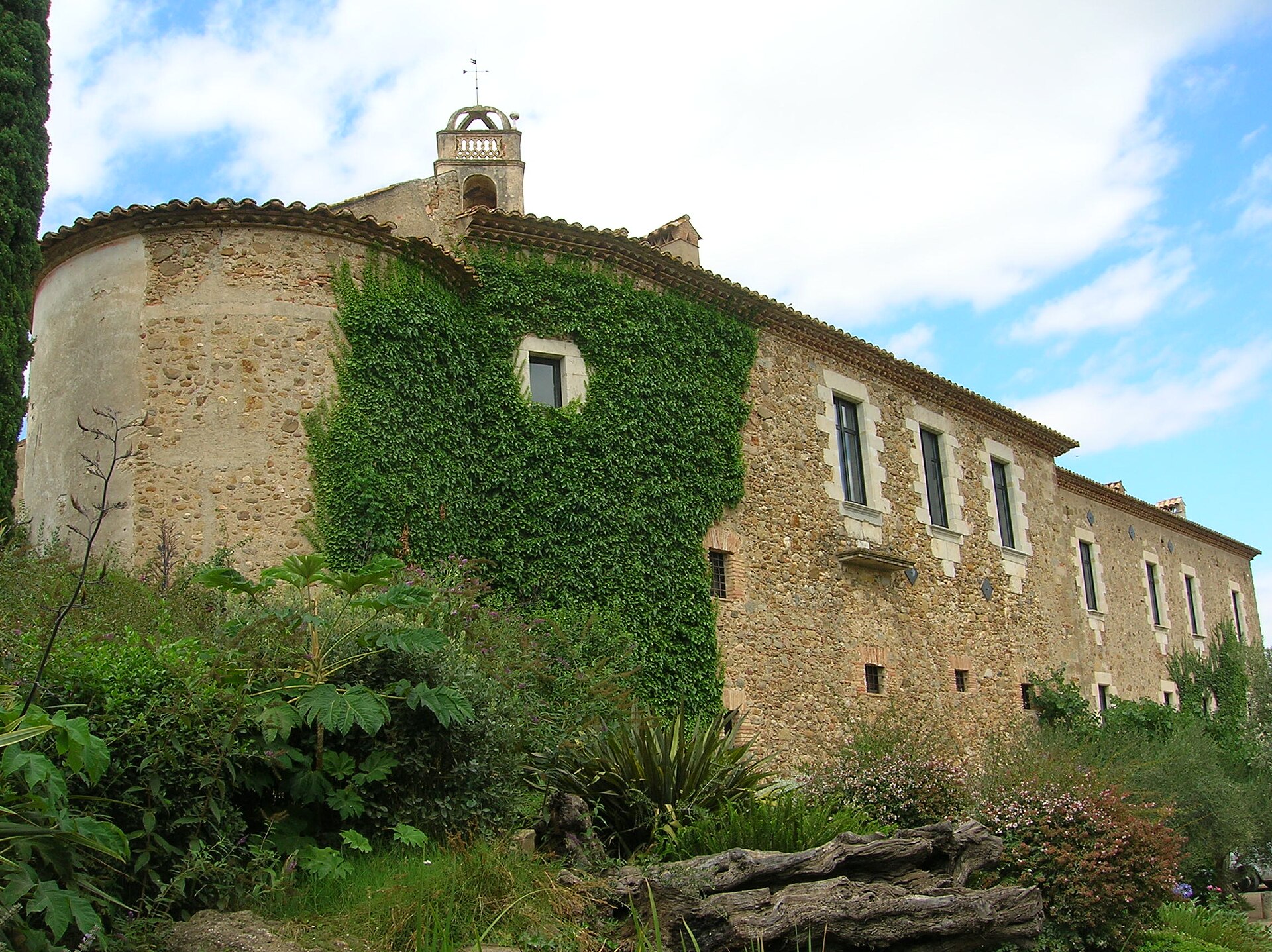
Castell de la Bisbal rises at the heart of La Bisbal d'Empordà, a town in Girona province that for centuries answered to the bishops of Girona, who ruled it as feudal lords from this very building. Known locally as the Castell-Palau, it stands as one of Catalonia's few surviving examples of civil Romanesque architecture, combining the roles of fortress, episcopal residence, and even prison across its long history.
How do you get there?
La Bisbal d'Empordà sits in the middle of the Costa Brava, a short drive inland from the coast and under an hour from Girona along the C-66 road. Girona-Costa Brava airport is the nearest air link. The castle occupies the main square of the old town, so once you reach the historic centre the last stretch is on foot — parking is easiest on the streets ringing the town rather than in the square itself.
What will you see?
Construction began at the end of the 11th century and continued into the early 12th, when the bishops of Girona built the castle as their residence after King James I granted them full civil and criminal jurisdiction over the town. The complex grew in the 14th century with an added outer wall and further service buildings, expanding its footprint and defensive capacity.
The most striking transformation, though, came later: in the 16th and 17th centuries the façade facing the square was reworked to look far more like a grand palace than a medieval stronghold, giving the building its dual character. Walk around it and the contrast is obvious — an elegant, representative front gives way to thicker walls and narrower openings on the courtyard side, the legacy of its original defensive purpose.
That duality runs through the building's whole history. Beyond housing the bishops' court, the Castell-Palau also served as a prison at various points, most notably during the Spanish Civil War and the years that followed — a darker chapter that sits alongside its role as a seat of ecclesiastical power. Walking the narrow lanes that fan out from the square gives a good sense of how the town grew up in the shadow of this one building over almost a thousand years.
When should you visit?
Spring and early autumn bring mild weather to the Empordà region and thinner crowds, making it easier to take in the square and surrounding streets at a relaxed pace. In summer, aim for the morning: the stone square in front of the castle offers little shade once the midday sun sets in.
Frequently asked questions
Can you go inside the castle? Access to the interior depends on the current schedule of cultural events and any ongoing restoration work, so it's worth checking with the local tourist office before your visit.
How long does a visit take? The square and the castle's exterior can be seen in 20–30 minutes, but pair it with a walk through the old town and you'll want an hour or two.
How is this castle different from a typical medieval fortress? It was built primarily as the residence of ecclesiastical power rather than a purely military stronghold — hence the name Castell-Palau, which reflects the mix of defensive elements and the more ornate palace architecture added in later centuries.
What else is worth seeing nearby? The old town surrounding the castle has the tight, quiet streets typical of Empordà towns, and simply walking through the centre of La Bisbal d'Empordà with the Castell-Palau façade facing the main square rounds out the visit naturally.
Nearby places

Earn badges for the places you visit
Download NextOnTrip, discover new places and check off your trails.