About this place
Castell de Foixà is a medieval castle standing in the village of Foixà, in the Baix Empordà region of Girona province. Today it works as a private residence and event venue, but its walls carry nearly a thousand years of history.
Where does the name come from and who were its first owners?
The earliest reference to the settlement of Foixà dates back to 1019, though the first documented lord of the castle only appears in 1192 — Arnau de Foixà. The castle and the surrounding barony took their name from this family, whose noble lineage is recorded from the 12th century onward. The Foixà family held these lands as a fief granted by the counts of Empúries, tying the family into the feudal network centered on one of medieval Catalonia's most important seats of power.
When was the actual fortress built?
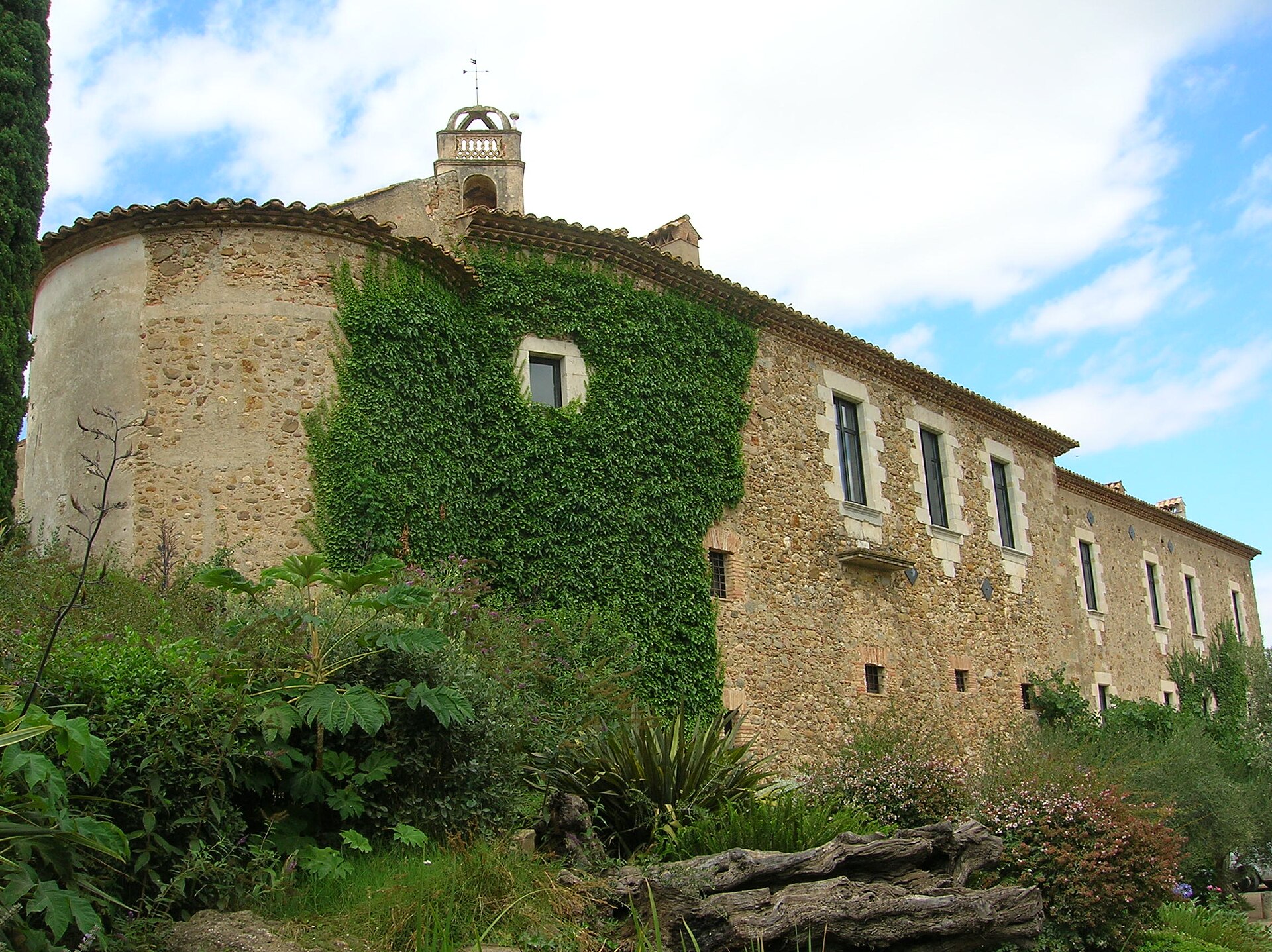
The castle as a fortified structure was raised in the second half of the 13th century, the period from which its first documented mention as a stronghold survives. Two medieval elements have made it to the present day: a semicircular tower that now forms the apse of the chapel dedicated to Saint Mark, and a stretch of the defensive wall featuring a distinctive sloped talus at its base — a construction technique typical of Catalan military architecture of the era.
What happened during the 1383 siege?
The most dramatic chapter in the castle's history unfolded in 1383. Bernat Alemany de Foixà, then lord of the castle, had to withstand an assault by the forces of Count Joan I of Empúries. The siege was brutal by the standards of the time — the attackers deployed bombards hurling stone balls along with mobile siege engines, a serious arsenal for the period. The dispute eventually reached King Pere the Ceremonious, who ruled in favor of Bernat Alemany, forcing the Count of Empúries to compensate him for the damage inflicted. The episode illustrates just how entangled local noble houses like the Foixà were in the rivalries between the great power blocs of medieval Catalonia.
How did the castle change over the following centuries?
The building kept evolving long after the Middle Ages. In the 16th century it underwent a major renovation that gave it much of its current character as a residential palace built over the older medieval fortifications. Further modifications followed in the 18th and 19th centuries, adapting the interiors to the changing domestic needs of successive owners.
What became of the castle in the 20th century?
The 20th century was not kind to the building — it gradually fell into disrepair. That changed in 1972, when the castle was acquired by the Bonamusa-Mir family, who carried out a complete restoration. Thanks to that investment, Castell de Foixà survives today in usable condition rather than joining the long list of ruined Catalan castles.
Is Castell de Foixà worth visiting today?
The castle remains privately owned and now functions mainly as a venue for weddings and other private events, meaning access for individual visitors is limited and requires prior arrangement. The village of Foixà itself, set in the scenic Baix Empordà countryside, makes a good base for exploring Girona and the surrounding medieval villages.
Frequently asked questions
When was Castell de Foixà built? The fortified castle itself dates from the second half of the 13th century, though the settlement of Foixà is documented as early as 1019, and the first known lord of the castle, Arnau de Foixà, appears in the sources in 1192.
What remains of the original medieval structure? Surviving medieval elements include a semicircular tower that now serves as the apse of the chapel of Saint Mark, and a section of the fortified wall with its characteristic sloped talus at the base.
What was the most significant event in the castle's history? In 1383 the castle withstood a harsh siege by the forces of Count Joan I of Empúries, involving bombards and siege machinery; King Pere the Ceremonious ultimately ruled in favor of the Foixà family in the resulting dispute.
Can visitors tour the castle today? Castell de Foixà is privately owned, restored in 1972 by the Bonamusa-Mir family, and primarily hosts weddings and private events — individual visits require contacting the venue's management in advance.
Nearby places

Earn badges for the places you visit
Download NextOnTrip, discover new places and check off your trails.