About this place
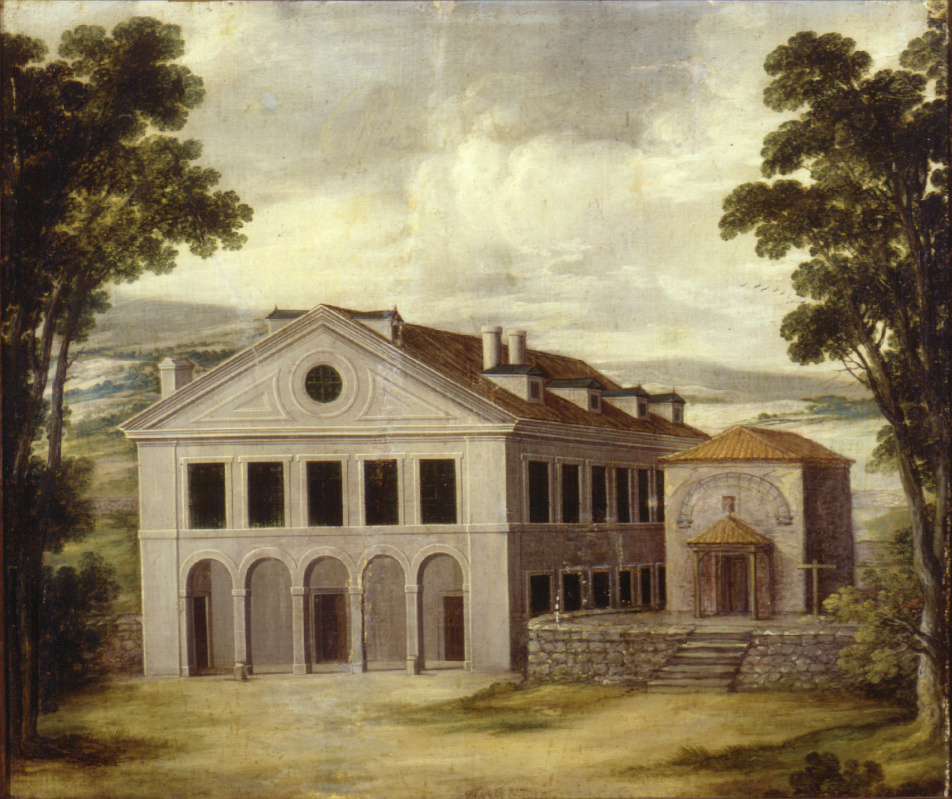
Casita del Príncipe is a small neoclassical pavilion in El Escorial, tucked into the gardens at the foot of Mount Abantos, just a short walk from the famous monastery of San Lorenzo.
What kind of building is this?
The Casita del Príncipe (also known as the Casino de Arriba) is a summer leisure pavilion built for King Charles III's son, the Prince of Asturias, who later became King Charles IV. It was designed in the early 1770s by Juan de Villanueva, one of the leading figures of Spanish neoclassical architecture and the architect behind Madrid's Prado building. Villanueva designed a very similar pavilion in Aranjuez for the same prince, which is why the two buildings are often confused — they are in fact two separate structures in two different towns.
Where exactly is it located?
The pavilion stands in the gardens known as the Jardines del Príncipe, within the grounds of the Real Sitio de San Lorenzo de El Escorial, surrounded by mature trees and terraced walkways. The setting was chosen deliberately: the building was meant to be a secluded retreat for rest and entertaining, removed from the austere formality of the monastery-palace itself, yet still within easy reach of the royal residence.
What is inside the Casita?
The interior contrasts sharply with the pavilion's modest exterior footprint. The rooms feature painted ceilings, decorative plasterwork, period furniture, mirrors and textiles typical of a late-18th-century court residence. The building served a representative and recreational purpose — the prince and his guests used it as a place to relax away from the formal obligations of life inside the main monastery complex.
Can visitors go inside?
The building belongs to Patrimonio Nacional, the same institution that manages the El Escorial monastery and other residences of the Spanish Crown. Visits are seasonal and usually organized as guided tours or during set opening hours, so it is worth checking the current schedule before planning a trip — the pavilion is sometimes closed outside the tourist season or during conservation work.
How do you get to the Casita del Príncipe?
The pavilion sits within the town of El Escorial, in the Community of Madrid, roughly 45 km northwest of central Madrid. The easiest way to get there is by car or by Cercanías train from Madrid, followed by a short walk or local transfer, since the prince's gardens lie some distance from the monastery itself — it is worth allowing extra time to reach the site on foot.
Frequently asked questions
Is the Casita del Príncipe in El Escorial the same as the one in Aranjuez? No. These are two separate buildings in two different towns, both designed by Juan de Villanueva for the same prince, but built at different royal residences — one at El Escorial, the other at Aranjuez.
Who commissioned the pavilion? King Charles III ordered its construction for his son, the Prince of Asturias, later King Charles IV, as a place for rest and entertainment during the royal family's stays at El Escorial.
Is there an entrance fee? The site is managed by Patrimonio Nacional, which generally charges admission for its royal residences; it is worth checking ticket prices and guided-tour availability in advance, since opening hours can be limited.
Is it worth combining a visit with the El Escorial monastery? Yes, it makes a natural addition to a monastery visit — the Casita is close by and offers a more private, recreational glimpse of royal court life, in contrast to the monumental and austere architecture of the main complex.
Nearby places

Earn badges for the places you visit
Download NextOnTrip, discover new places and check off your trails.