About this place
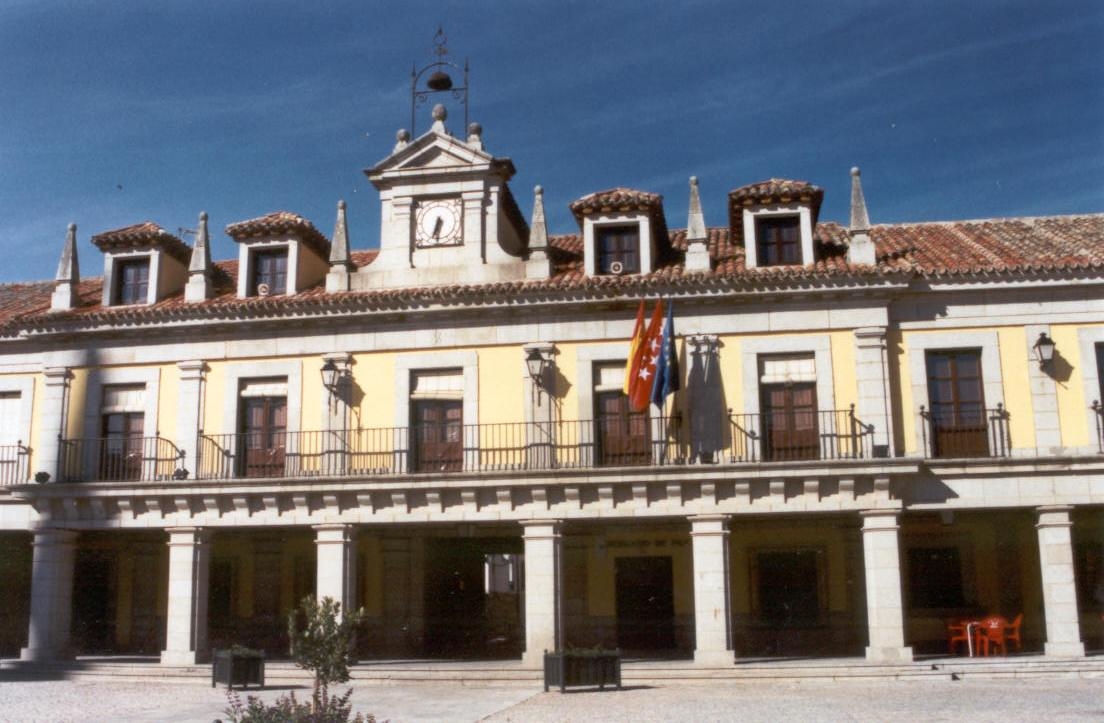
Valdemorillo Town Hall, in the town of Valdemorillo just northwest of Madrid, anchors the main square and is one of the first landmarks visitors notice when they wander into the old quarter.
Where is it located?
The building sits at Plaza de la Constitución 1, right in the middle of the historic centre. This square has long served as the town's main gathering point, hosting markets, patron-saint festivities and community events. Its stone façade and clock tower stand out clearly against the surrounding townhouses, so it's hard to miss on a stroll through the old town.
What's the history behind the building?
The current town hall dates to 1860, built from stone and mortar to replace an earlier municipal building from 1732 that stood just a short distance away. Placing the new structure on the main square underlined the town council's central role in local life.
The building went through a difficult chapter in July 1937, when Valdemorillo found itself on the front line during the Battle of Brunete, part of the Spanish Civil War. The fighting caused serious damage across town, affecting not only public buildings like the town hall, the church and schools, but also many private homes. Subsequent repairs and renovations kept the 19th-century character of the façade intact even as the interior was modernised over the decades.
What should you look out for?
The most distinctive feature is the clock crowning the façade. It wasn't originally made for the town hall — the mechanism came from an old local porcelain and glass factory that once operated in Valdemorillo. The original clockwork is now on display at the Casa de la Cultura, the town's cultural centre, which makes for a natural add-on stop after visiting the square.
A thorough renovation in 2010 added new functional spaces to the building, including an interior courtyard for events and a bright, well-lit basement level housing the plenary hall where council sessions are held. The exterior stone façade was left untouched, so the building still blends seamlessly with the rest of the square.
The town hall is protected under Spain's Historical Heritage Law of 25 June 1985, formally recognising its value as part of the local cultural landscape.
When is the best time to visit?
The square in front of the town hall comes alive on market days and during local festivals, when nearby cafés set up outdoor seating. Outside festival season, it's a quiet spot — ideal for a short stop while exploring Valdemorillo's old town, since walking around the square and photographing the façade usually takes no more than fifteen minutes. It's worth pairing the visit with a quick look at the nearby Casa de la Cultura.
How do you get there?
Valdemorillo lies in the Sierra Oeste area of the Madrid region and is well connected by regional buses running from the capital. Once in town, the historic centre is easy to find on foot — the town hall's clock tower is visible from most of the surrounding streets and serves as a natural landmark for orientation.
Frequently asked questions
Can you go inside the town hall? As an active public administration building, it isn't set up as a museum, but the façade and the surrounding square are open to visitors at any time.
Where does the clock on the tower come from? Its mechanism originally belonged to a local porcelain and glass factory; the original clockwork can now be seen at the Casa de la Cultura.
Is the building original or a reconstruction? The 1860 structure was damaged during the 1937 Battle of Brunete and later restored, then modernised in 2010 while keeping its historic façade intact.
What else is worth seeing nearby? The Plaza de la Constitución and the adjoining old-town streets, plus the Casa de la Cultura, home to the town hall clock's original mechanism.
Nearby places

Earn badges for the places you visit
Download NextOnTrip, discover new places and check off your trails.