About this place
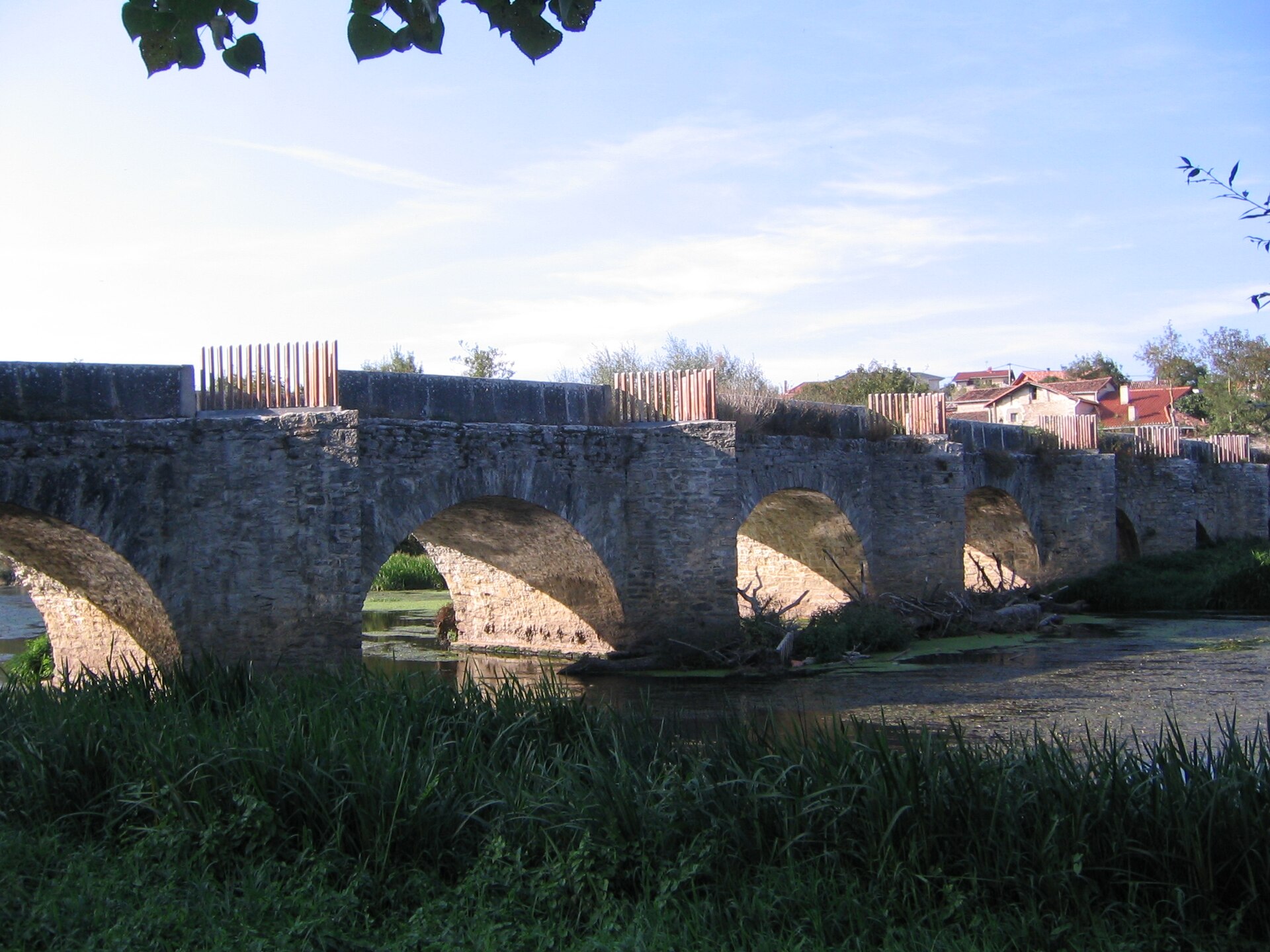
The Bridge of Trespuentes is a long stone bridge spanning the Zadorra River in the municipality of Iruña Oka / Iruña de Oca, in Álava, in Spain's Basque Country. It ranks among the most recognizable structures in the area and is a natural stop for anyone visiting the nearby Roman site of Iruña-Veleia.
Where does the name Trespuentes come from?
The village of Trespuentes has appeared in documents since at least the 11th century, and its name comes from the Latin "transpontem" — literally "behind the bridge." The term described a settlement lying on the far side of the river as seen from the ancient city of Iruña-Veleia. The hamlet itself is thought to have grown up as an outlying district beyond the walls of that Roman city, on the opposite bank of the crossing.
Does the bridge really date back to Roman times?
Because of its proximity to Iruña-Veleia, one of the most important Roman cities in what is now Álava, the bridge has long carried a reputation for Roman origins. No study has ever confirmed this conclusively, but the location itself — a crossing that gave its name to a settlement defined by "being behind the bridge" relative to a Roman town — has kept that tradition alive for centuries.
How was the bridge built?
What visitors see today is the result of several building phases layered on top of one another. The structure has thirteen semicircular arches resting on twelve piers, and the piers themselves clearly belong to different periods of construction. The first six arches form the oldest section, the next five were added later, and the final two belong to a later phase marked by an unusually thick, heavy pier. Builders used slate slabs bound with mortar for most of the structure, while the stones forming the arches themselves were laid dry, without mortar — a technique typical of older bridge-building in the region. The bridge's current overall form reflects more modern standards and may only date from after the 16th century, even though older sections point to a much longer history at this crossing.
Why is it worth a visit?
The Bridge of Trespuentes is more than a piece of engineering history — it also offers a quiet vantage point over the Zadorra valley and the farmland surrounding it. Basque heritage authorities have protected the bridge as a site of cultural interest, underlining its importance to the region's history. For travelers already exploring Iruña-Veleia, the bridge is a natural extension of the visit: it helps explain how settlement patterns developed around the old Roman city over the centuries, with the river marking the boundary between successive communities.
Frequently Asked Questions
Where exactly is the Bridge of Trespuentes located? It crosses the Zadorra River at Trespuentes, a village within the municipality of Iruña Oka / Iruña de Oca in the province of Álava, right next to the Iruña-Veleia archaeological site.
Is the bridge actually Roman? Tradition links it to the Roman period because of its closeness to Iruña-Veleia and the Latin origin of the village's name, but no study has definitively proven that the visible structure is Roman — most of what stands today dates from later building phases.
How many arches does the bridge have? Thirteen semicircular arches supported by twelve piers, built up over several distinct construction periods.
Can it be visited together with Iruña-Veleia? Yes, the two sites sit close to each other and combine naturally into a single outing focused on the Roman and medieval history of this part of Álava.
Nearby places

Earn badges for the places you visit
Download NextOnTrip, discover new places and check off your trails.