About this place
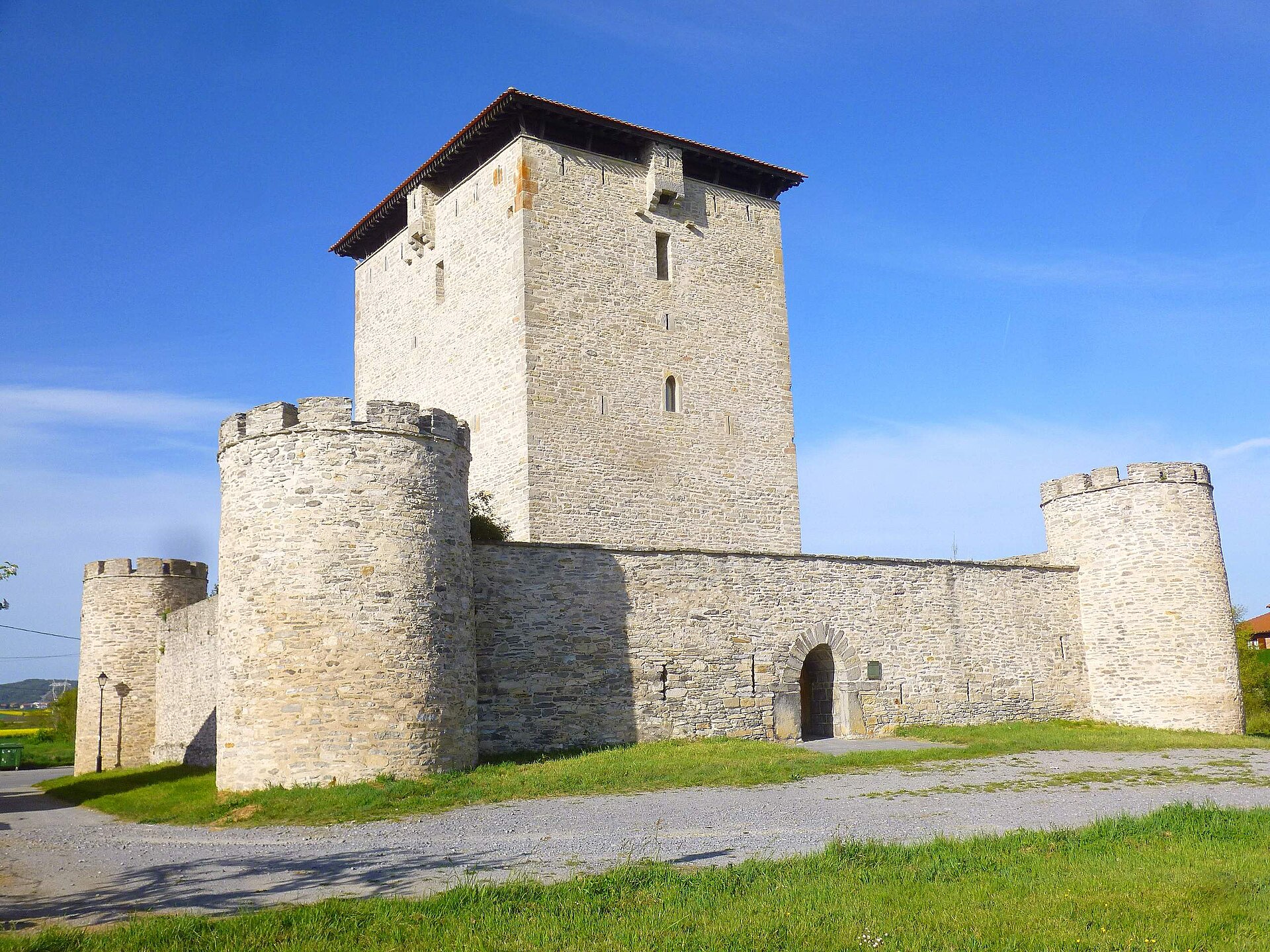
Martioda dorretxea is a medieval tower-house in Martioda, a small concejo (hamlet) belonging to the municipality of Vitoria-Gasteiz, in the province of Álava, Basque Country. Also known as the Torre de los Hurtado de Mendoza, it stands on a hillock overlooking the western edge of the Llanada Alavesa, right at the point where this plain gives way to the Zuia valley.
How do you get there?
Martioda sits roughly 11 km from central Vitoria-Gasteiz, in the rural, northwestern part of the municipality. The easiest way in is by car, driving through the string of small settlements that dot the Llanada Alavesa; thanks to its elevated position, the tower is visible well before you reach the village. It makes a good short detour from Vitoria-Gasteiz, pairing quiet countryside with a hands-on look at regional history.
What will you see?
The building has a rectangular floor plan, a ground floor plus four upper stories, and is built from masonry with ashlar-dressed corners under a four-sided roof. Its core dates back to the 13th century, but the tower was reworked repeatedly over the centuries — building campaigns running into the 18th century added surrounding annexes and layered in Gothic, Renaissance, and Baroque details that are still visible today.
The tower belonged to the Hurtado de Mendoza family, one of the most powerful noble lineages in medieval Álava, who ran their estates from here. Its history also includes a stint as a prison, when the building was used to hold detainees. The last private owners, the Mazarredo family, sold the entire property to the Diputación Foral de Álava (the provincial council) in 1975, and it has remained in public hands ever since, undergoing conservation work to shore up its structure.
The building's form — a dorretxea, Basque for "tower-house" — is typical of the medieval defensive landscape of Álava: not a castle in the classic sense, but a fortified family residence that combined living quarters with defense and a visible display of a lineage's local power.
When should you visit?
Spring and autumn are the best seasons — Álava's mild climate makes for pleasant walks around the site, and views over the Llanada Alavesa are especially clear. Summer afternoons in the region can get hot, so mornings or late afternoons work better for exploring on foot. Winters bring fog and cooler temperatures, but the tower's massive stone construction still cuts an impressive silhouette against the grey sky.
Frequently asked questions
Can you go inside the tower? The building belongs to the Diputación Foral de Álava and has undergone restoration to secure its structure; whether the interior is open depends on the current visiting schedule, so it's worth checking ahead of a visit.
What's the difference between a dorretxea and a castle? A dorretxea is a Basque tower-house — a fortified family residence, smaller and more domestic in scale than a classic castle, but serving a similar defensive and status-signaling role for local nobility.
Who owned the tower? The Hurtado de Mendoza family, one of the important noble lineages of medieval Álava, and later the Mazarredo family, who held it until selling to the provincial council in 1975.
Is it worth combining with other sights in the area? Yes — the Llanada Alavesa and the surrounding hamlets of Vitoria-Gasteiz hold other examples of defensive and rural architecture, making it easy to build a short route around Álava's historic towers.
Nearby places

Earn badges for the places you visit
Download NextOnTrip, discover new places and check off your trails.