About this place
Bílá voda is a nature reserve in the northern part of the Moravian Karst, spanning the cadastral territory of the villages of Holštejn and Lipovec in the Blansko district. It protects the sinking karst valley of the stream that gives the reserve its name, stretching south of the village of Holštejn, together with the many karst features carved into the local Vilémovice limestone. The reserve falls under the administration of the Moravian Karst Protected Landscape Area.
What does the Bílá voda valley look like?
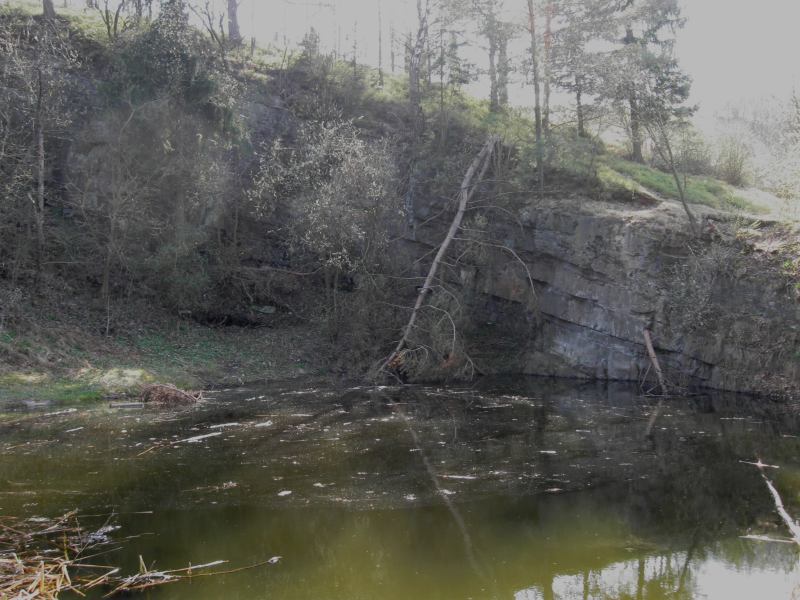
At the heart of the reserve lies a narrow, winding valley cut by the Bílá voda stream through hard limestone. On the Suchdol plains, the stream repeatedly vanishes underground and reappears — first sinking at Stará Rasovna, resurfacing further along, and finally disappearing for good at the Nová Rasovna sink. This pattern of disappearing and reemerging water is a textbook feature of carbonate karst landscapes and one of the main reasons the valley was placed under protection.
What caves lie within the reserve?
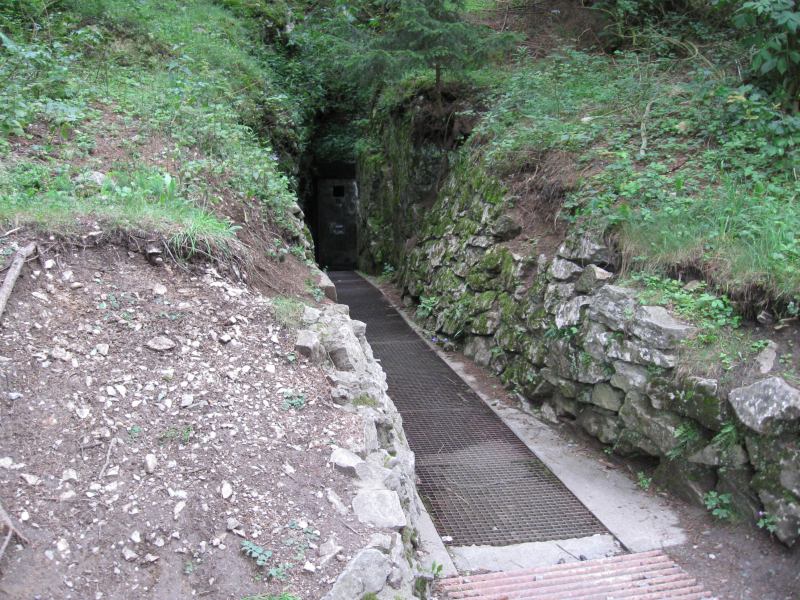
The reserve is dotted with caves carved into the limestone bedrock. Among the named ones are Holštejnská Cave and Hladomorna Cave — the latter once connected to Holštejn Castle above it by an underground passage and used as a dungeon. Other caves in the area carry names such as Spirálka, Piková dáma, 13C, Lidomorna and Nezaměstnaná. In winter, several of these caves serve as hibernation sites for lesser horseshoe bats and other bat species.
How is the valley connected to Holštejn Castle?
High above the valley, on a limestone cliff, stand the remains of Holštejn Castle, built around the year 1268. Hladomorna Cave, situated directly beneath the castle, was linked to it by a passage and used as a prison — a grim history reflected in its name, which references starving prisoners. This proximity between a medieval fortification and an extensive cave system illustrates how closely the karst landscape here is interwoven with the history of settlement.
What plants and animals live in the reserve?
The valley's natural woodland is dominated by European beech, accompanied by hornbeam, ash and other broadleaf species typical of fertile limestone slopes. The reserve is home to various butterfly species and to the river crayfish, which lives in the stream — a species vulnerable during dry spells when the Bílá voda streambed dries up. Bats, including the lesser horseshoe bat, overwinter in the caves, while tawny owls, eagle owls and ravens nest among the rocks and woodland of the valley.
Why does the stream sometimes disappear?
Bílá voda is a typical karst stream — during dry periods its bed can dry up completely, an occurrence that has become more frequent in recent years, leading to fish and crayfish dying off in the drying stretches of the channel. In the past such episodes were rare, happening perhaps once a year for a week or two, but recent droughts have caused the stream to dry up repeatedly within a single season.
Frequently asked questions
Where exactly is the Bílá voda reserve located? Within the cadastral territory of the villages of Holštejn and Lipovec, in the Blansko district, in the northern part of the Moravian Karst, south of Holštejn.
Which caves can be found here? Among others, Holštejnská Cave and Hladomorna Cave, as well as Spirálka, Piková dáma, cave 13C, Lidomorna and Nezaměstnaná.
What is the Nová Rasovna sink? It is the point where the Bílá voda stream finally disappears underground, feeding into the karst system that supplies the Punkva river.
Do bats live in the reserve? Yes, several caves serve as winter hibernation sites for the lesser horseshoe bat and other bat species.
Nearby places

Earn badges for the places you visit
Download NextOnTrip, discover new places and check off your trails.