About this place
Kůlna Cave lies in the Moravian Karst, one of Central Europe's most significant karst landscapes, within the municipal territory of Sloup, in the Blansko district of the South Moravian Region, roughly 23 km north of Brno. It stands out for a rare combination: a world-class Paleolithic archaeological site that is also included in the sightseeing route of the Sloup-Šošůvka Caves.
What does Kůlna Cave look like?
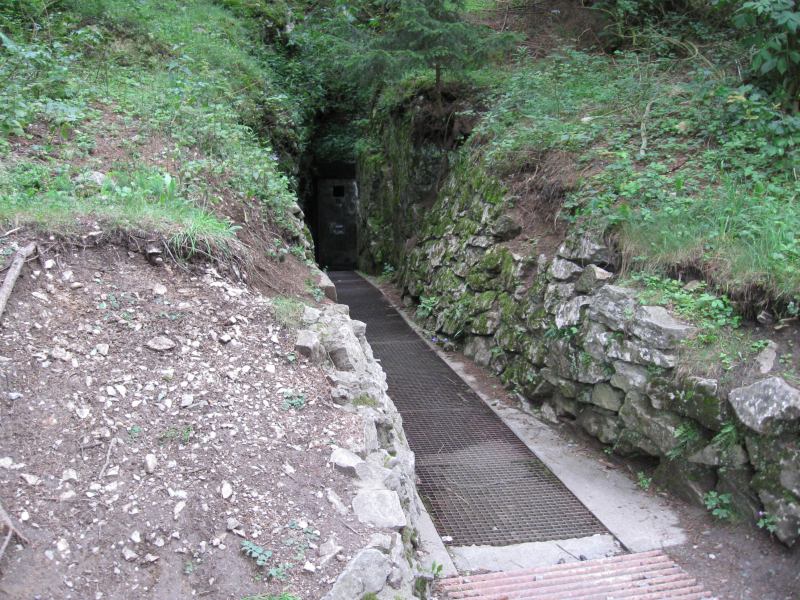
Kůlna is a tunnel-shaped cavern cutting through a limestone hill — one of the few caves in the Moravian Karst with two open entrances. A smaller opening faces north, while a large, striking portal opens toward the south-southwest. The passage itself runs about 91 metres long, reaches a maximum width of 25 metres, and rises up to 8 metres in height. This layout made the cave a natural shelter for millennia: airy yet protected from wind and rain, with daylight reaching in from both ends.
Why does Kůlna matter to archaeology?
The sediment layers on the cave floor turned out to hold one of the richest and best-studied Paleolithic records in all of Central Europe. Systematic excavations carried out between 1961 and 1976 under archaeologist Karel Valoch uncovered a sequence of cultural layers reaching down to the oldest stone tools, dated to around 120,000 years ago. That stratigraphic continuity turned Kůlna into a reference site for researchers studying the Stone Age across the wider Moravian Karst region — it is here that changing tool-making cultures and technologies can be traced across tens of thousands of years.
What traces of early humans were found inside?
The most striking discoveries are Neanderthal skeletal remains, dated to roughly 50,000 years ago. In 1965, researchers uncovered a jawbone fragment belonging to a teenager aged 14 or 15, and five years later, in 1970, a parietal bone from an adult man's skull was found. Together with thousands of flint tools and animal bones, these finds allowed scientists to reconstruct the way of life of hunter-gatherer groups that occupied the cave in succession over tens of thousands of years, from the early Middle Paleolithic through the later Stone Age.
Can Kůlna Cave be visited?
Kůlna isn't open for independent visits along a lit tourist path the way a typical show cave is, but it's included as a stop on tours of the Sloup-Šošůvka Caves, one of the oldest and most visited cave systems in the Moravian Karst. It offers a striking contrast after the dripstone-lined corridors of the Sloup-Šošůvka route — a raw, historically loaded space that sheltered generations of prehistoric people for millennia.
Frequently asked questions
Where exactly is Kůlna Cave located? In the municipality of Sloup, Blansko district, South Moravian Region, at the heart of the Moravian Karst, about 23 km north of Brno.
What makes Kůlna different from other nearby caves? It's a tunnel-shaped cave with two entrances, known primarily as an archaeological site rather than a dripstone cave built for visual spectacle.
What are its most famous archaeological finds? Neanderthal remains dated to around 50,000 years ago — a teenager's jawbone fragment found in 1965 and a parietal bone found in 1970 — along with stone tools dated to as much as 120,000 years old.
Can visitors see the cave? Yes, it's shown as part of the sightseeing tours of the Sloup-Šošůvka Caves.
Who led the archaeological research at Kůlna? The main excavations, conducted between 1961 and 1976, were led by archaeologist Karel Valoch.
Nearby places

Earn badges for the places you visit
Download NextOnTrip, discover new places and check off your trails.