About this place
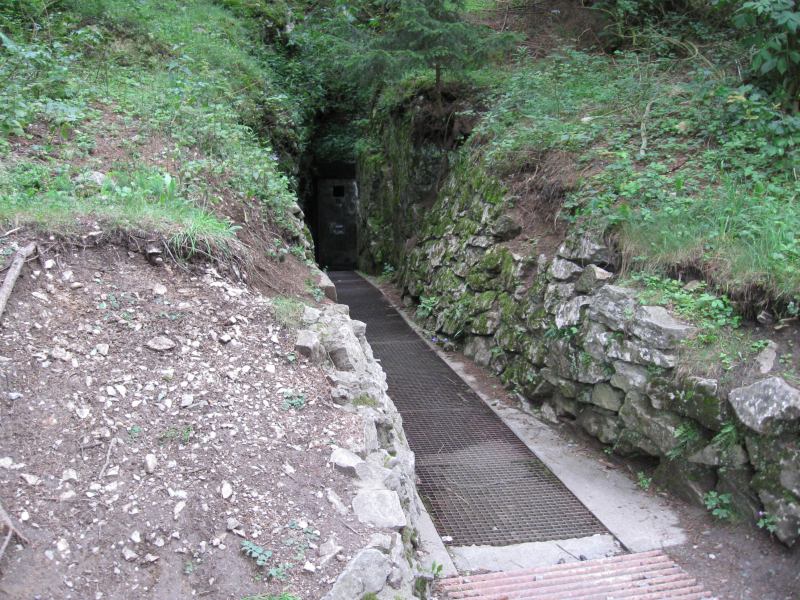
Císařská jeskyně (the "Imperial Cave") is a karst cave tucked into the Ostrovský žleb ravine, on the northeastern edge of the village of Ostrov u Macochy, right in the heart of the Moravian Karst in the Czech Republic. It is one of many caves in a region famous for its dense network of underground passages carved by water through limestone bedrock.
Where does the cave's name come from?
The name commemorates a visit that took place in 1804. Count Hugo František Salm hosted Emperor Francis I and Empress Maria Theresa at the cave that year. The visit by the imperial couple left such a lasting impression that the cave became known as the "Imperial" cave, and the nickname eventually turned into its official name.
When was the cave discovered?
The first documented exploration of the cave was carried out by Johann Anton Nagel in 1748. His survey is generally credited as the moment the cave became known to science, even though local residents may have been aware of its entrance long before.
Was the cave ever open to visitors?
Yes, for part of its history. It opened to the public in 1930 and operated as a show cave for more than two decades. In 1952, however, it was closed due to frequent flooding, which made it difficult to keep the route safe for visitors. It has not returned to the region's regular tourist offering since.
What is the cave's connection to the "Moravian Lourdes"?
In 1933, a statue of Our Lady of Lourdes was placed in a rock niche inside the cave. From that point on, the site became known as the "Moravian Lourdes" — a direct reference to the French Marian shrine, reflecting the religious significance the cave gained for the local community.
How is the cave used today?
Císařská jeskyně no longer functions as a classic tourist attraction. Instead, it is used for speleotherapy — extended stays in the cave's underground microclimate, believed to help with respiratory conditions. A Catholic mass is also held inside the cave once a year, continuing the religious tradition established in the 1930s.
Where exactly is the cave located?
The cave lies in the Ostrovský žleb ravine, on the northeastern edge of Ostrov u Macochy. This places it at the heart of the Moravian Karst, close to the famous Macocha Gorge and the village of Sloup.
Frequently asked questions
Can Císařská jeskyně be visited today? It is not a regular tourist attraction — the show cave operated from 1930 to 1952, when it was closed due to flooding. Today it is mainly used for speleotherapy, with an annual mass held inside.
Where does the name "Imperial Cave" come from? From a 1804 visit by Emperor Francis I and Empress Maria Theresa, arranged by Count Hugo František Salm.
Who discovered the cave? The first known exploration was carried out by Johann Anton Nagel in 1748.
Why is the cave called the "Moravian Lourdes"? Because of a statue of Our Lady of Lourdes placed in a rock niche in 1933, which gave the site its religious character.
Where is the cave located? In the Ostrovský žleb ravine, on the northeastern edge of Ostrov u Macochy, in the Moravian Karst.
Nearby places

Earn badges for the places you visit
Download NextOnTrip, discover new places and check off your trails.