About this place
Ayuntamiento de Pulgar is the town hall of Pulgar, a small municipality in the province of Toledo, in the Castilla-La Mancha region of Spain. Pulgar sits roughly 25 km south of the city of Toledo, right at the edge of the Montes de Toledo range, in a valley crossed by three streams that feed into the Guajaraz, a tributary of the Tagus. It marks the point where the open plain gives way to the wooded hills of the Montes de Toledo, making it a natural base for anyone interested in quiet rural Castile and gentle hiking country.
How do you get to Pulgar?
The easiest way in is by car from Toledo, a drive of around thirty minutes along local roads through farmland and the first forested slopes of the Montes de Toledo. Pulgar has no train station of its own, so a car or a regional bus from Toledo is essentially the only practical option. It works best as a stop on a longer day trip through the smaller villages of the province, since the town itself is compact and best explored on foot once you arrive.
What is there to see around the town hall?
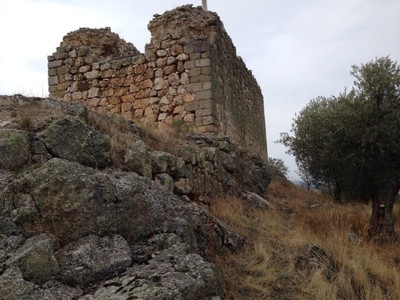
The town hall building faces the Plaza Mayor, the main square that has traditionally been the social heart of Pulgar. A short walk from the square stands the Church of Santo Domingo de Guzmán, the municipality's principal architectural landmark, which has presided over the village for centuries and remains its religious and social focal point. Further on, on the hill overlooking the village, you can find the remains of a medieval castle built in the 13th century by knights of the Order of Calatrava to defend the area against Muslim raids. Only fragments of its walls and towers survive today, but the short climb rewards visitors with a good view over the valley and the surrounding Montes de Toledo. The village is also home to the Hermitage of Cristo de la Misericordia, tied to local traditions and religious festivities.
Where does the name Pulgar come from?
The name derives from the Latin "pollicaris," a winegrowing term referring to the section of a vine shoot left with two or three buds after pruning, from which new growth sprouts — a hint at the agricultural, and specifically viticultural, roots of settlement in this valley. The earliest references to the settlement date to the 12th century, when the area saw fighting between Christians and Almoravids, and a document from 1214 mentions "Villar de Pulgar," a name that suggests the site may trace back to a Roman villa. In 1243 the Archbishop of Toledo exchanged Pulgar to King Ferdinand III for other towns, and three years later the king sold the wider Montes de Toledo territory to the city of Toledo, bringing Pulgar under Toledo's feudal jurisdiction. From the 15th century onward, the village clashed repeatedly with Toledo's municipal authorities over tax burdens, a dispute finally settled by agreement in 1483.
When is the best time to visit Pulgar?
The best times to come coincide with the town's traditional festivities. The first Saturday of May brings a romería known as "El día de las meriendas," a picnic pilgrimage to nearby shrines. On 4 August the village celebrates its patron saint festivities in honour of Santo Domingo de Guzmán, and on 12 October it honours its co-patron, the Virgen del Pilar. Outside festival dates, spring and autumn are the most comfortable seasons for exploring on foot, since summers in the Montes de Toledo can turn hot and dry.
Frequently asked questions
Is there anything to see in Pulgar besides the town hall? Yes — the Church of Santo Domingo de Guzmán, the ruins of the medieval castle on the hill, and the Hermitage of Cristo de la Misericordia are the main stops on a short walking visit.
How much time do you need to see Pulgar? The village itself is small, so a relaxed walk covering the main sights takes about one to two hours, not counting the climb up to the castle ruins.
Is Pulgar suitable for a family trip? Yes, the town centre is mostly flat, and the short climb to the castle plus the nearby trails through the Montes de Toledo are gentle enough for families looking for some time outdoors.
What is left of the castle in Pulgar today? Of the original 13th-century fortress built by the Order of Calatrava, only fragments of the defensive walls and towers remain, but the viewpoint over the valley still makes the visit worthwhile.
Nearby places

Earn badges for the places you visit
Download NextOnTrip, discover new places and check off your trails.