About this place
Aven Armand is a limestone cave on the Causse Méjean plateau, in the commune of Hures-la-Parade, in the Lozère department, within the Cévennes National Park. It is famed for one of the largest underground chambers in Europe and for the tallest known stalagmite on Earth, rising 30 metres from the cavern floor. The cave sits along the route linking Meyrueis and Sainte-Enimie and has welcomed visitors for decades.
Who discovered Aven Armand?
The shaft was explored on 19 September 1897 by Louis Armand, a blacksmith and amateur caver from the nearby village of Le Rozier, working alongside the renowned speleologist Édouard-Alfred Martel. Local shepherds had long known of the opening as a hazardous hole in the ground, but its descent revealed a chamber whose scale nobody had suspected.
What is inside the cave?
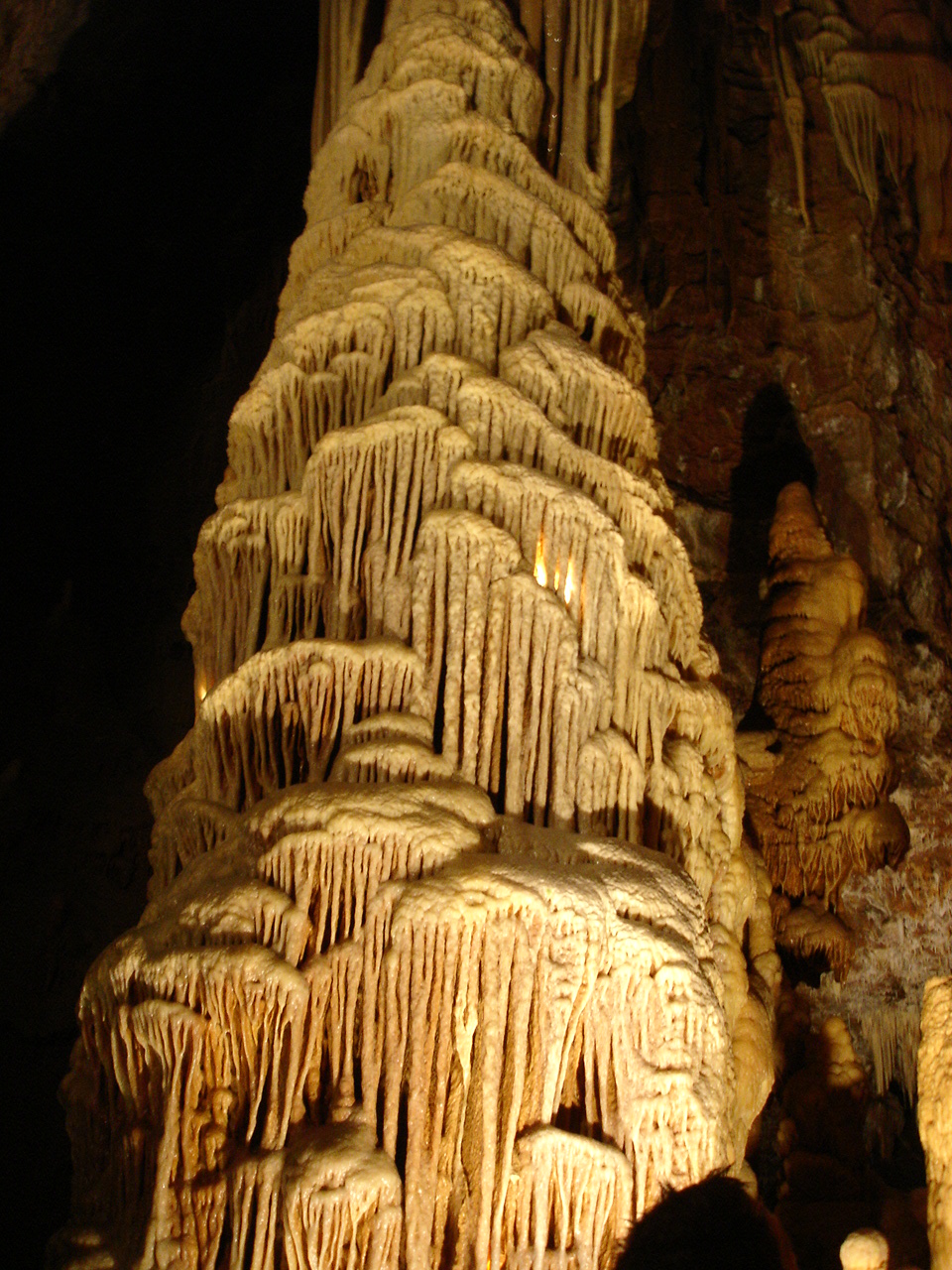
The main chamber, known as the Grande Salle, lies roughly 100 metres below the surface of the plateau. It stretches about 110 metres in length, 60 metres in width, and reaches an average height of around 45 metres, making it one of the largest natural cave halls in Europe. Its floor is covered by a genuine stone forest: more than 400 stalagmites ranging from barely a metre to thirty metres tall. The tallest, known as the Grande Stalagmite, measures 30 metres and is recognised as the highest known stalagmite in the world. The sheer density and variety of these formations give the chamber the look of a petrified forest frozen in stone.
How is the cave visited?
Because the natural entrance is a deep vertical shaft, a separate access tunnel had to be built for visitors. In the 1960s a funicular railway was installed inside it, carrying visitors underground in roughly two minutes. Unusually, the cars run on rubber tyres rather than steel wheels, a design meant to cut down on vibration and noise that could otherwise damage the fragile formations. Once at the bottom, visitors continue on foot through the Grande Salle, climbing several flights of stairs along a guided route that winds past the stalagmite forest and opens up the full scale of the cavern.
Why visit Aven Armand?
Few caves combine a chamber the size of a cathedral with such a dense concentration of formations in one place, which is why Aven Armand remains a highlight among the show caves of the Grands Causses and the nearby Tarn gorges. Its setting within the Cévennes National Park also ties the visit to the surrounding limestone landscape of the Causse Méjean, with its dry pastures, scattered woodland, and classic karst scenery.
FAQ
Where exactly is Aven Armand located? On the Causse Méjean plateau, in the commune of Hures-la-Parade (Lozère), between Meyrueis and Sainte-Enimie, within the Cévennes National Park.
Who discovered the cave, and when? Louis Armand, a blacksmith and amateur caver from Le Rozier, explored it on 19 September 1897 together with speleologist Édouard-Alfred Martel.
What makes Aven Armand famous? Its Grande Salle, a chamber comparable in size to a cathedral, and a forest of more than 400 stalagmites, including the 30-metre Grande Stalagmite, the tallest known stalagmite in the world.
How do visitors reach the underground chamber? Through a purpose-built tunnel served by a rubber-tyred funicular that descends in about two minutes, followed by a guided walk on foot, including stairs, through the main chamber.
Is the cave accessible to everyone? It is a well-established show cave open to guided group visits, though the route includes stairs and uneven rocky ground, so a basic level of mobility is needed.
Nearby places

Earn badges for the places you visit
Download NextOnTrip, discover new places and check off your trails.