About this place
Dargilan Cave (French: Grotte de Dargilan) is one of the largest and best-known karst caves in the Causses and Cévennes region of southern France, located in the commune of Meyrueis in the Lozère department. Its entrance opens on the flank of the Causse Noir plateau, high above the scenic Gorges de la Jonte. Because of the intense ochre and orange tones of its rock formations, locals and visitors alike know it simply as the "Pink Cave."
Where exactly is Dargilan Cave?
The cave lies at the heart of the Grands Causses, a limestone plateau straddling the border of Lozère and Aveyron, not far from the town of Millau. The nearest settlement is Meyrueis, reached by a winding road that climbs through rocky terrain toward the cave entrance. The surrounding landscape forms part of the UNESCO World Heritage Site "Causses et Cévennes, Mediterranean agro-pastoral cultural landscape."
Why is it called the "Pink Cave"?
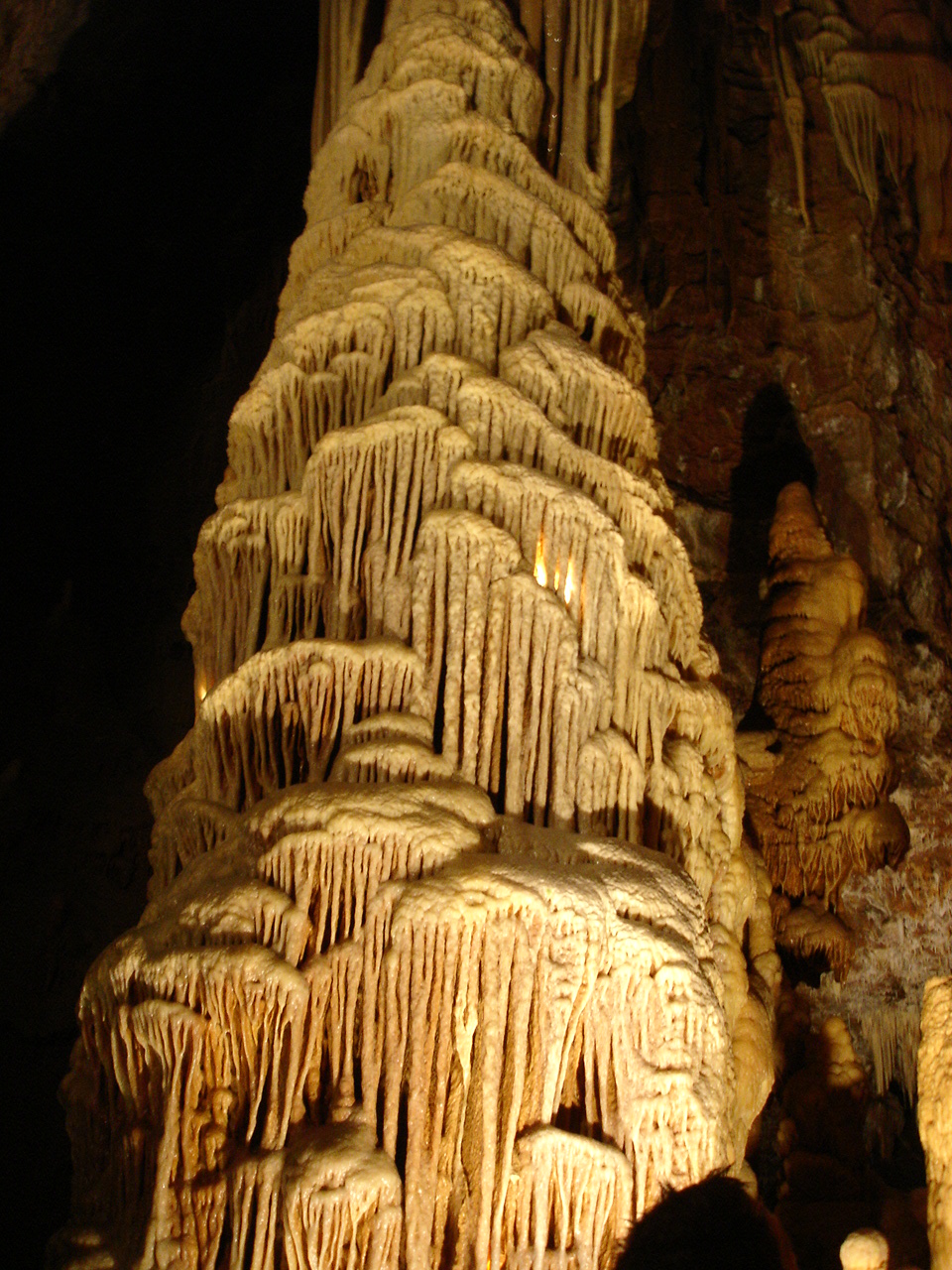
The nickname has nothing to do with folklore — it comes from a genuine geological feature. Iron oxides embedded in the limestone give the cave's dripstone formations a palette running from pale beige to deep orange and pink. This unusual coloring sets Dargilan apart from many neighboring caves in the region, which tend to display grey and white tones instead.
How was the cave discovered and developed?
The entrance was found in the autumn of 1880 by a young shepherd named Sahuquet, who was chasing a fox that had darted into a hole in the ground. A full exploration did not take place until 1888, when the French speleologist Édouard-Alfred Martel — often credited as the founder of modern speleology in France — mapped the underground system in detail. Just two years later, in 1890, Dargilan opened to the public, becoming one of the very first caves in France to be equipped with a marked route and lighting for visitors.
What can visitors see inside?
The visitor route covers roughly one kilometer, tracing the path of a former underground river through a sequence of chambers. It begins in the vast Chaos Room, where collapsed rock blocks and dripstone columns create the impression of a frozen landscape. Further along, the path passes a striking "petrified waterfall" — a flowstone formation that mimics a cascade suddenly turned to stone — as well as crystal-clear underground pools. The tour ends in a chamber known as the Bell Tower Room, where tall, slender formations rise like the interior of a Gothic spire. Along the way, visitors pass columns estimated to be hundreds of thousands of years old and an extensive wall of limestone draperies, ranked among the more remarkable formations of its kind in Europe.
What is a visit to the cave actually like?
Dargilan can only be visited with a guide, and the tour typically lasts around ninety minutes. Inside, the temperature holds steady at roughly 10°C year-round, so warm clothing is advisable even in summer. The route is developed and lit throughout, making it accessible to most visitors, though it does include some sections with stairs.
FAQ
Where is Dargilan Cave located? In the commune of Meyrueis, Lozère department, within the Grands Causses region, close to the Gorges de la Jonte.
Why is it called the "Pink Cave"? Because iron oxides in the limestone give its dripstone formations natural shades of ochre and pink.
Who discovered the cave, and when? A shepherd named Sahuquet found the entrance in 1880; speleologist Édouard-Alfred Martel carried out the first full exploration in 1888.
How long does a visit take, and how cold is it inside? Guided tours last about an hour and a half, and the cave maintains a steady temperature of around 10°C all year.
Is Dargilan Cave part of a UNESCO site? Yes — it lies within the area listed as a UNESCO World Heritage Site under "Causses et Cévennes."
Nearby places

Earn badges for the places you visit
Download NextOnTrip, discover new places and check off your trails.