About this place
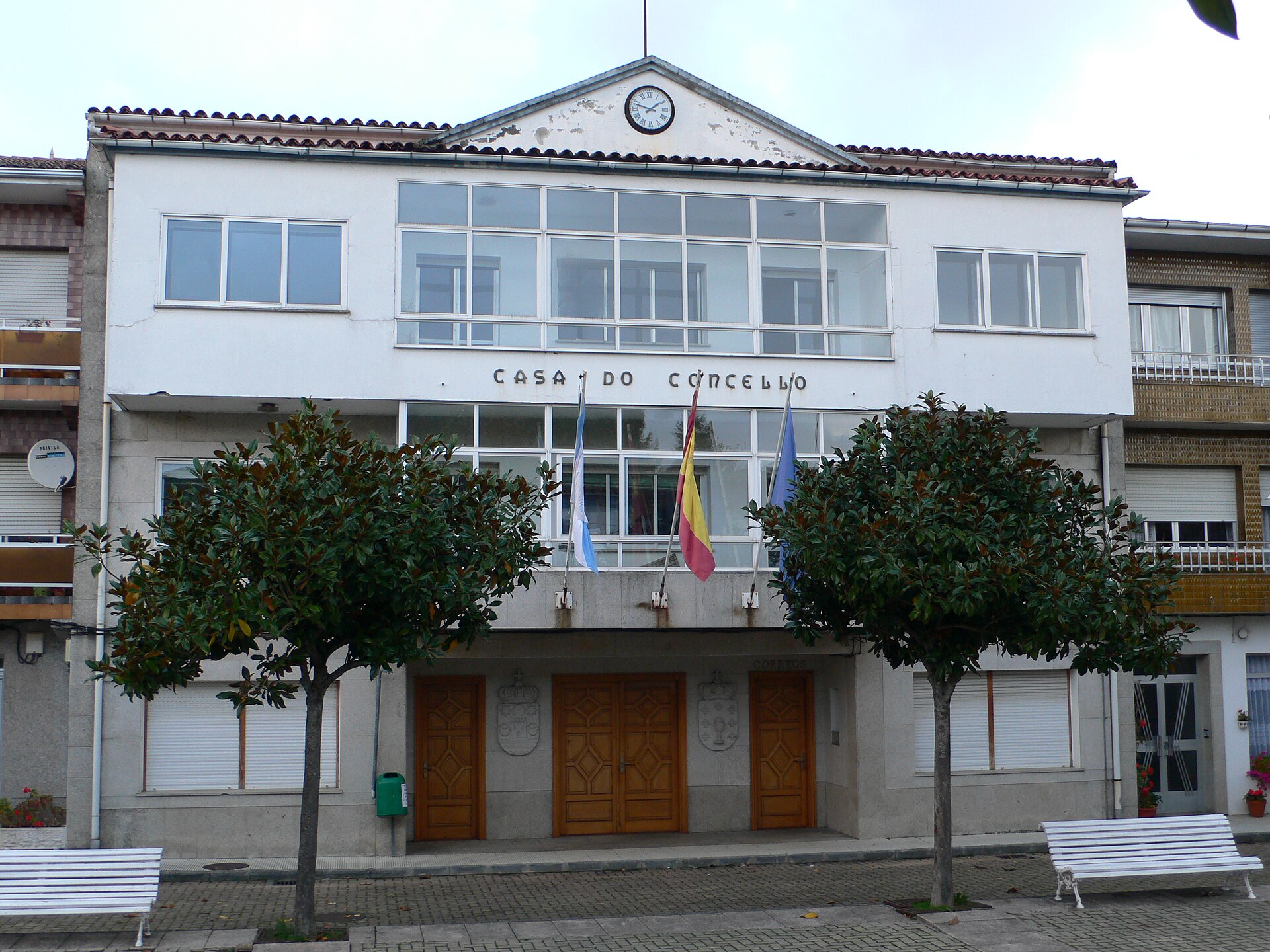
Antas de Ulla town hall sits in the centre of Antas de Ulla, a small municipality in the province of Lugo, within the Ulloa region. It is a working administrative building, but its setting is the real curiosity: the town marks the geographic centre of Galicia, which makes it a fitting base for exploring the surrounding countryside.
Where is Antas de Ulla?
The municipality lies roughly 45 km from the city of Lugo, right on the border with the province of Pontevedra. The name "Antas" comes from a word for dolmen — a megalithic burial monument — a hint that people have lived in this area for millennia. Until well into the 20th century, the administrative seat itself was known as Seoane, while "Antas de Ulla" referred to the wider municipality; today the two names are used together.
The river Ulla rises within the municipality's boundaries. Its river basin is the second largest in Galicia after the Miño, and the landscape is framed to the south by the Monte Farelo mountain range.
What can you see around the town hall?
The municipality preserves a dense layer of heritage from very different periods:
- Torre de Amarante — a medieval tower and one of the emblems of the Ulloa region.
- Castillo de Amarante — a castle built in the 13th century by the Counts of Amarante on the site of an earlier hillfort (castro), later destroyed during the Irmandiño wars of the 15th century; its ruins can still be visited.
- Pazo de Santa Mariña — a Galician manor house typical of the region's noble architecture.
- Numerous petroglyphs, dolmens, burial mounds (mámoas) and remains of castros scattered across the municipality, evidence of megalithic and Celtic-era settlement.
This mix of defensive, religious and prehistoric sites has earned the Ulloa region a reputation as an open-air record of Galicia's history.
How do you get to Antas de Ulla?
Travelling by car is the most practical option, since the municipality sits along the roads connecting Lugo and Pontevedra, right in the geographic middle of Galicia. The nearest larger cities are Lugo (about 45 km away) and Santiago de Compostela, both linked by regular road connections. Public transport in this rural stretch of the region is limited, so a car makes it far easier to reach the scattered historical sites.
When is the best time to visit?
Spring and early autumn are the best seasons, when inland Galicia's climate is mild and the Ulla valley is at its greenest. Summer is warmer and good for walks along the river, while winter in this inland area can turn cold and damp.
Frequently asked questions
What is the Antas de Ulla town hall building? It houses the local government (Concello de Antas de Ulla) and serves as the administrative centre for the whole municipality.
Are Antas de Ulla and Seoane the same place? Historically they referred to the same area under two names — Seoane was the administrative seat, and Antas de Ulla the whole municipality. Today both names are used interchangeably for the town.
What is the main historical attraction in the municipality? The ruins of Castillo de Amarante and the nearby Torre de Amarante, remnants of the medieval power of the Counts of Amarante.
Are there traces of the area's oldest settlements? Yes — petroglyphs, dolmens and mámoas found across the municipality point to its megalithic roots, which also gave the town its name, "Antas".
Nearby places

Earn badges for the places you visit
Download NextOnTrip, discover new places and check off your trails.