About this place
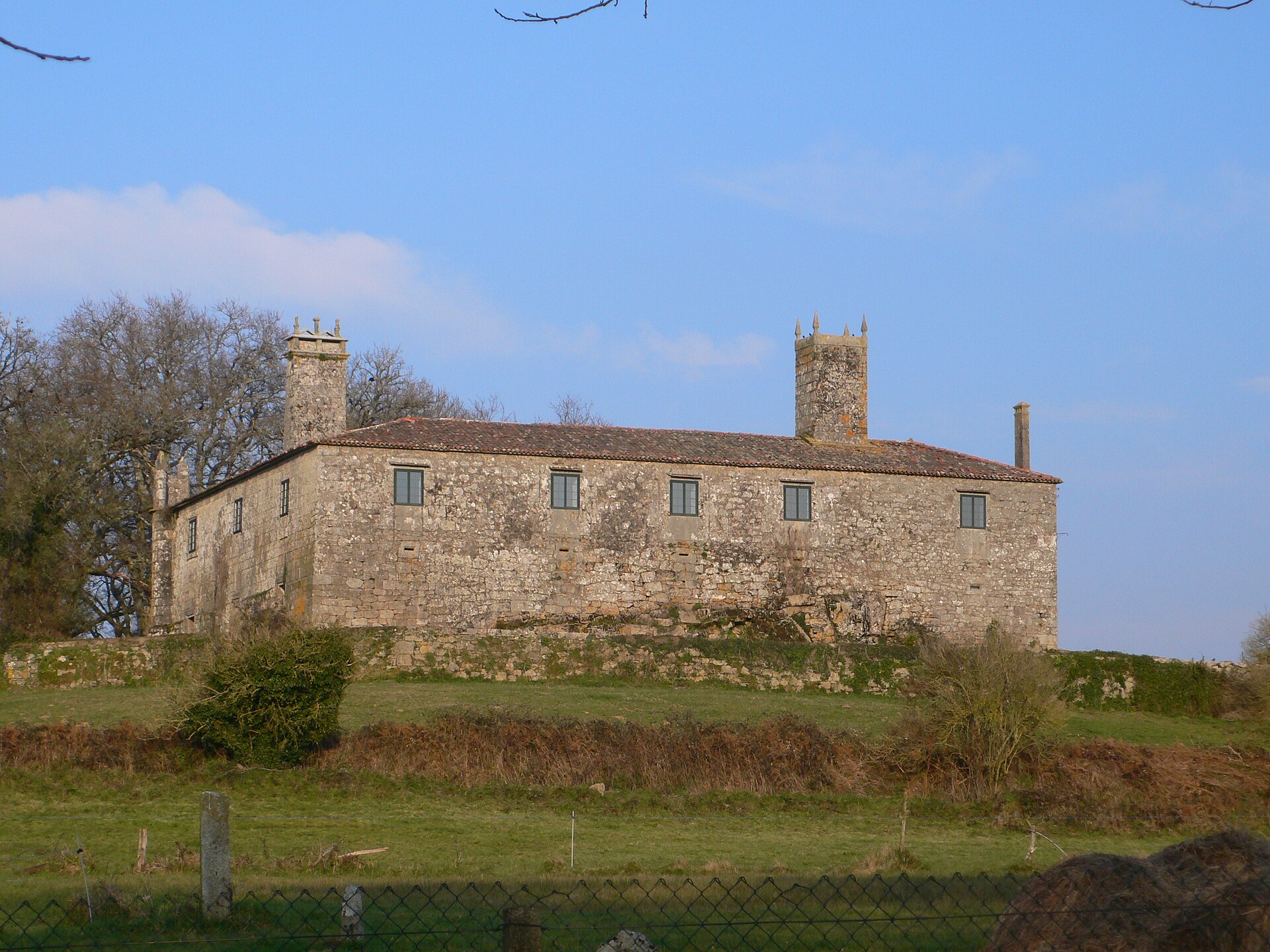
Fortaleza de Castro de Amarante stands in the village of Amarante, within the parish of Santo Estevo do Castro de Amarante, in the municipality of Antas de Ulla, province of Lugo, Galicia. Also known as Pazo de Amarante, the fortress occupies the site of an older castro — a pre-Roman Celtic hillfort — and today offers travelers a quiet, off-the-beaten-path stop for exploring Galicia's layered history.
Where does this fortress come from?
The stronghold was built in the 13th century by the Noguerol family, who held the title of Counts of Amarante. The building never stayed unchanged for long: it was torn down and rebuilt several times over the centuries. It suffered serious damage during the Irmandiño War (Guerra Irmandiña), the 15th-century uprising of Galician peasants and lesser nobility against the region's powerful lords. Roi Fernández Noguerol later led the reconstruction, restoring the fortress to its defensive role.
What will you see there?
What survives today is mainly a large, oval-shaped structure believed to be the remains of a tower or the fortress's main keep. The entrance is framed by a pointed (ogival) archway, a detail suggesting construction work carried out in the 14th or 15th century. The overall impression is one of solid, unadorned defensive architecture — typical of Galician noble strongholds of the period, built for withstanding sieges rather than for show.
The site was declared a Bien de Interés Cultural (Spain's designation for assets of cultural interest) by decree in 1949, formally recognizing its historical and architectural value.
How has the fortress changed over time?
During the 20th century, the medieval building served as a barracks for the Guardia Civil, Spain's national gendarmerie, until 1961. In the early 21st century it was converted for hosting private events and congresses, giving it a new lease of life as a venue rather than a ruin. It's worth checking current access before visiting, since the property remains privately owned — as of April 2024 it belonged to an heir of Carmela Arias, Countess of Fenosa, and was listed for sale at €1,050,000.
How do you get there?
Fortaleza de Castro de Amarante sits deep in rural Galicia, in the municipality of Antas de Ulla, province of Lugo. This is hilly, sparsely built countryside, and the most practical way to reach the fortress is by car via the local roads connecting Antas de Ulla to nearby towns. The larger towns in Lugo province offer car rental and regional transport connections, making them a sensible base for exploring this part of rural Galicia.
When should you visit?
Spring and early autumn are the best times to explore rural Galicia, with mild temperatures and lush, green scenery. Summers run warmer but stay comfortable thanks to the region's Atlantic climate. Because the fortress is privately owned and occasionally used for events, it's worth confirming ahead of time whether the surrounding area is open to visitors on your chosen date.
Frequently asked questions
Can you visit Fortaleza de Castro de Amarante? The fortress is privately owned and is sometimes used for events and congresses, so access for individual visitors can be limited — check current conditions before planning a trip.
Where does the name Pazo de Amarante come from? It's an alternative name for the same building, referring to the Noguerol family, Counts of Amarante, who built the fortress in the 13th century.
What does the Bien de Interés Cultural designation mean? It's Spain's legal status for sites of special cultural significance — this fortress received that protection by decree in 1949.
What role did the fortress play in the 20th century? Until 1961, its buildings housed a barracks of the Guardia Civil, Spain's national law enforcement force.
Nearby places

Earn badges for the places you visit
Download NextOnTrip, discover new places and check off your trails.