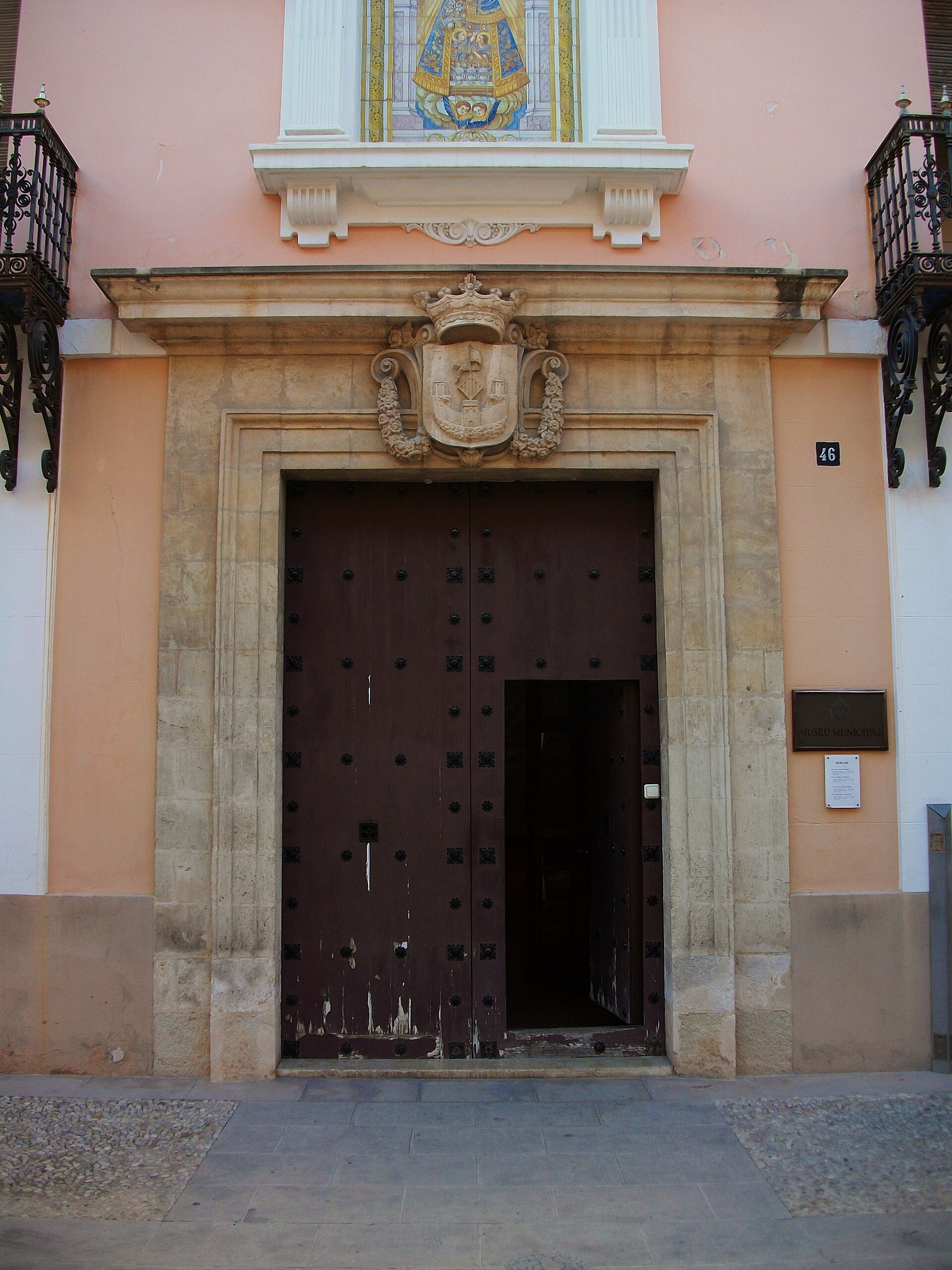
About this place
Almodí de Xàtiva is a historic former grain market building in Xàtiva, in the province of Valencia. It now houses the town's municipal museum, covering local history from antiquity through the early modern period.
What was an "almodí" and where does the name come from?
An "almodí" was a public grain store — a building where towns across the Crown of Aragon stored and sold wheat under municipal control. Xàtiva's almodí served exactly that purpose, and the building's commercial and administrative role still shows in its layout: a spacious ground floor and a stately inner courtyard.
When was the building constructed, and in what style?
The almodí was built between 1530 and 1548. It counts as one of the last examples of Valencian Gothic architecture in the town, and at the same time the first building in Xàtiva to introduce the language of the Renaissance. The façade keeps its Gothic character, while the inner courtyard — with columns topped by Ionic capitals — already speaks the new Renaissance idiom. That mix of two architectural periods in a single structure makes the building an unusually clear marker of the stylistic transition in the region.
What should visitors look for on the building itself?
Three shields of the Crown of Aragon appear on the façade, marking the public nature of the institution — a sign that the granary belonged to the town, not to private owners. A cartouche on the façade records the completion date, 1548. Inside, the Renaissance courtyard, with arcades resting on Ionic columns, is the most photographed feature of the building.
What can visitors see in the museum?
The museum occupies not only the almodí itself but also the adjoining building, which had its own separate history: it served as the Royal Weighing House (Pes Reial), then as the customs office, and later as a branch of the Bank of Spain, before being absorbed into the museum.
Among the collections, the Islamic period stands out, represented by arches taken from public baths and the double arch from the Pinohermoso palace, together with an extensive collection of ceramics from that era. The display also includes objects from antiquity, among them the skull of an Iberian man dated to the 4th century BC and Roman funerary inscriptions.
Where exactly is Almodí de Xàtiva located?
The building stands in the historic center of Xàtiva, a town in the province of Valencia, in the La Costera region. Its geographic coordinates are approximately 38.988°N, -0.522°E.
Frequently asked questions
What does the word "almodí" mean? It refers to a public grain store — a building where a town kept and sold wheat under the supervision of municipal authorities.
When was Almodí de Xàtiva built? Construction ran from 1530 to 1548, a date confirmed by the cartouche on the façade.
What is the oldest item in the museum's collection? The skull of an Iberian man dated to the 4th century BC, the oldest known piece in the collection.
Does the museum occupy only the almodí building? No — the exhibition also spans the adjoining building, which was previously the Royal Weighing House, then a customs office, and later a branch of the Bank of Spain.
Nearby places

Earn badges for the places you visit
Download NextOnTrip, discover new places and check off your trails.