About this place
Jauregia is a medieval defensive tower standing in the heart of Zumaia, a small coastal town in the Basque Country. The building rises right beside the Gothic parish church of San Pedro and has long been one of the landmarks of the old town.
How do you get to Jauregia in Zumaia?
Zumaia sits in the province of Gipuzkoa, roughly 40 km west of San Sebastián, along the GI-638 coastal road toward Deba and Mutriku. The town is also served by a Euskotren train line connecting Donostia-San Sebastián with Bilbao, and the station is within walking distance of the old town. Jauregia stands right in the middle of the historic quarter, so from the station or a nearby car park it's a walk of ten to fifteen minutes through the narrow streets that form the old town's distinctive triangular layout.
What will you see at Jauregia?
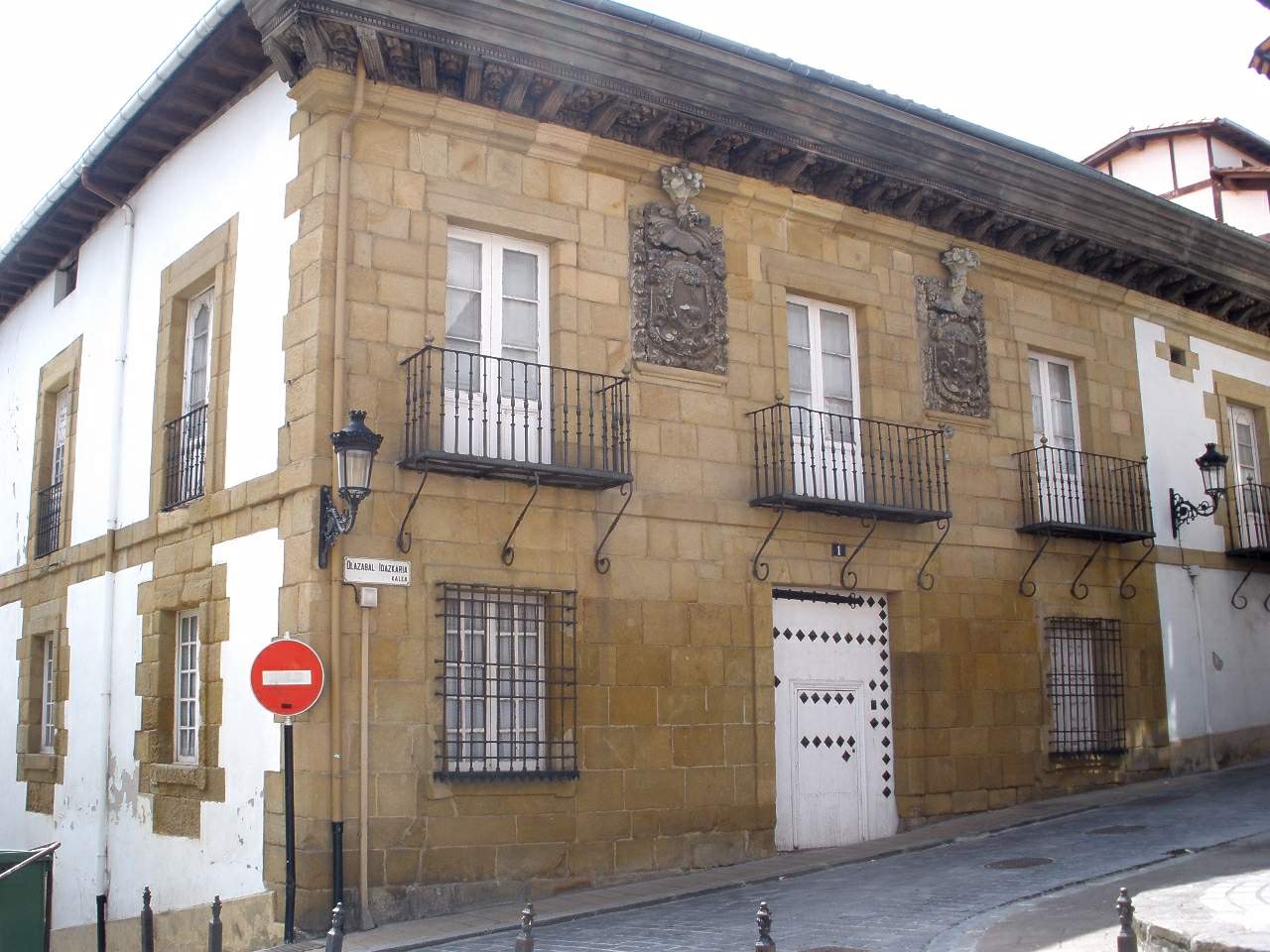
Jauregia is a four-storey tower, most likely built in the 15th century by the Gamboa family, one of the wealthiest and most influential lineages in Zumaia at the time. The building witnessed violent clashes between rival Basque factions — the so-called Banderizo wars — a common feature of the late medieval period in this region. Although the tower has been reworked many times over the centuries and now serves different purposes than it originally did, several details still hint at its age: sandstone ashlar masonry, a lobed window, and a pointed arch. These fragments are what let you read the outline of a once-powerful family's stronghold in an otherwise modest building.
The history of the Gamboa family tower
The Gamboa family built their residence right next to the parish church, a location that in medieval Basque towns was a clear marker of status — proximity to the church meant proximity to power. Defensive towers like Jauregia served both as homes and as fortifications: thick walls and narrow window openings were designed to protect residents during the local armed conflicts that regularly flared up between competing lineages across Gipuzkoa.
What else is worth seeing in Zumaia?
Zumaia is best known as the gateway to the famous flysch — layered rock formations exposed by coastal erosion that record tens of millions of years of the Earth's history in their stacked strata. The best viewpoint is near Itzurun beach, reached via a path from the San Telmo hermitage — the same beach used as a filming location for "Game of Thrones." It's also worth visiting the Algorri Interpretation Centre, which explains the geology behind the cliffs in accessible terms, and boat tours departing from Zumaia's harbour let you view the flysch cliffs from the water.
When should you visit?
Spring and early autumn are the best times to explore the old town and Jauregia, with mild temperatures and fewer crowds on the beaches and trails than in July and August. In summer, an early morning visit is worth planning, especially if you also intend to walk to Itzurun and see the flysch — the rock formations are best exposed at low tide.
Frequently Asked Questions
Can you go inside Jauregia? The tower now serves purposes different from its original ones and isn't open as a public museum — check with the local tourist office for current access before visiting.
How long does it take to explore Zumaia's old town, including Jauregia? A walk through the historic centre, with a stop at Jauregia and the church of San Pedro, takes roughly an hour to an hour and a half, depending on your pace.
Is it easy to reach the flysch and Itzurun beach from Zumaia? Yes — Itzurun beach lies within the town itself, a short walk from the old quarter, and the trail past the San Telmo hermitage leads straight to the best viewpoints over the rock formations.
Does Zumaia work as a day trip from San Sebastián? Absolutely. Thanks to the train connection and short distance, Zumaia is a popular day-trip destination that combines a walk through the old town with time on the coast.
Nearby places

Earn badges for the places you visit
Download NextOnTrip, discover new places and check off your trails.