About this place
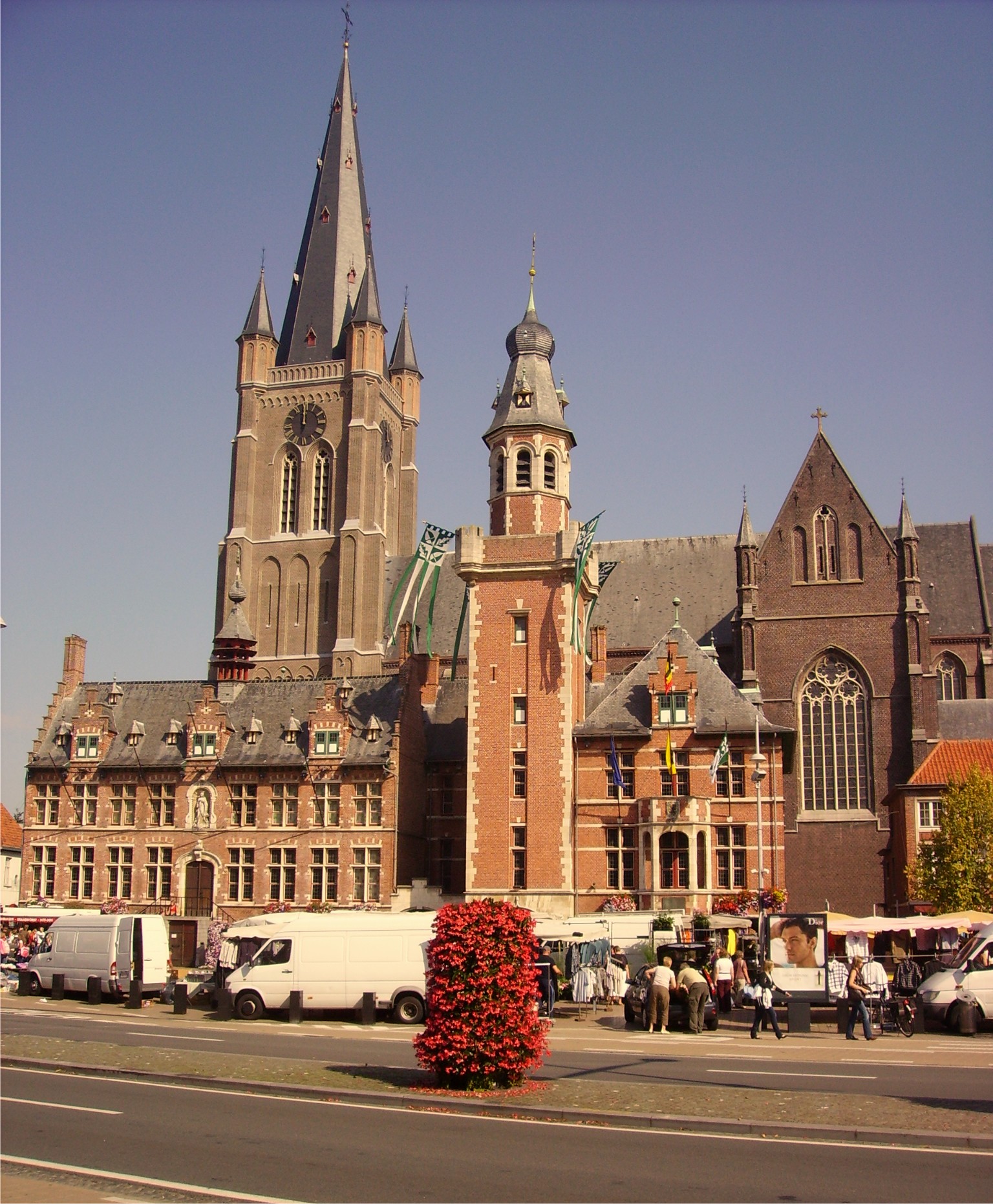
Zomergem Town Hall (Dutch: Gemeentehuis Zomergem) occupies the narrow western side of the Market Square in this East Flanders town, today part of the municipality of Lievegem. More than an administrative building, it stands as physical evidence of the community's recovery from the devastation of the First World War.
Why did Zomergem need a new town hall?
The town's earlier town hall, built in 1870 on the eastern side of the Market, did not survive the war. Zomergem's position along the Schipdonk canal placed it directly in the path of the final Allied offensive of October 1918, and the fighting reduced much of the town, including its town hall, to ruins. Rebuilding the municipal seat became part of the wider reconstruction effort that reshaped Zomergem in the years that followed.
Who designed the current building?
The design was drawn up in 1920 by the respected Ghent architect Valentin Vaerwyck. Vaerwyck's portfolio placed him among the leading architects of the region at the time: he had already designed the courthouse in Dendermonde and the provincial government building in Ghent, and later carried out restoration work on Ghent's belfry. Construction of the Zomergem town hall was completed in 1923.
What architectural style did Vaerwyck choose?
The building was executed in a neo-traditional style that fit squarely within the regionalist movement guiding much of Flanders' post-war reconstruction — an approach that deliberately drew on historic local building forms rather than modern or international styles. Vaerwyck leaned heavily on an earlier project of his own: the town hall he had built for the "Old Flemish Village" pavilion at the 1913 World's Fair in Ghent. Reworking that model for Zomergem gave the new building an established, tested character rather than an experimental one.
What purpose did the building serve?
Vaerwyck's town hall was conceived as a dominant, freestanding structure on the narrow western edge of the Market Square. From the outset it combined two functions under one roof: it served as the seat of the municipal government and also housed the local justice of the peace court, a common arrangement for smaller Flemish towns of the period, where a single prestigious building would serve multiple public institutions at once.
Is the building protected today?
Yes. In recognition of its architectural and historical value, Zomergem's town hall was listed as a protected heritage monument in 1995. That protected status underscores the building's importance as an example of post-war regionalist architecture in East Flanders, and as a lasting monument to the municipality's rebuilding after the destruction of 1918.
Frequently asked questions
When was the current Zomergem town hall built? It was designed in 1920 and completed in 1923.
Why doesn't the earlier town hall still exist? The previous town hall, built in 1870 on the opposite, eastern side of the Market, was destroyed by shelling during the fighting of October 1918, when Zomergem lay directly along the front near the Schipdonk canal.
Who was the architect? Ghent architect Valentin Vaerwyck, also known for the Dendermonde courthouse and the East Flanders provincial government building.
Is Zomergem's town hall a protected monument? Yes, it has been listed as a protected heritage building since 1995.
Did the building serve any function besides local government? Alongside municipal administration, it also housed a justice of the peace court, making it a central hub of public life on the Market Square.
Nearby places

Earn badges for the places you visit
Download NextOnTrip, discover new places and check off your trails.