About this place
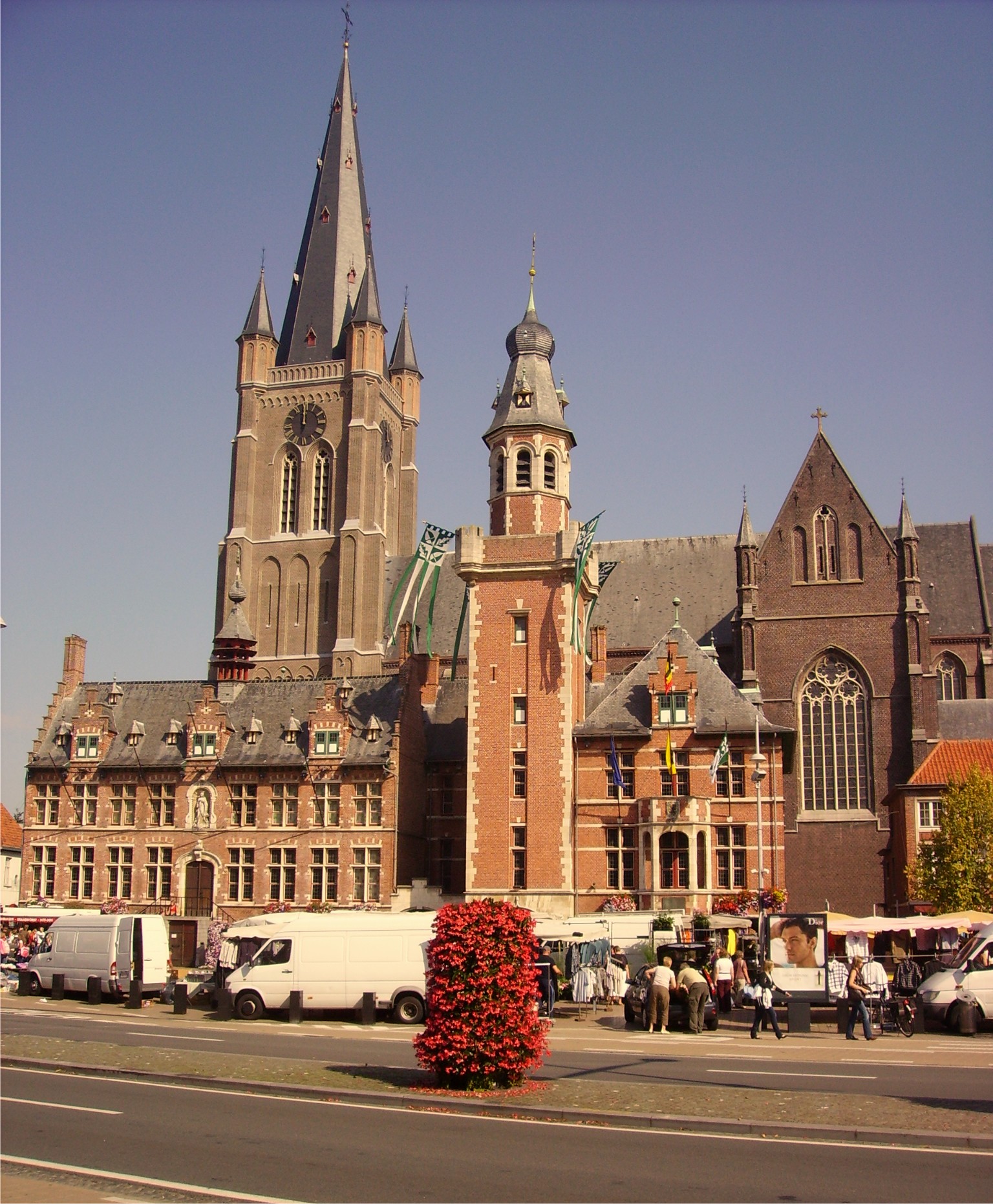
The Belfry of Eeklo rises as part of the town hall in this East Flemish town, roughly 20 km north of Ghent. At first glance it might resemble one of Flanders' many medieval belfries, but its story is much younger than most — the tower itself only took shape in the 20th century, even though the town hall it belongs to has roots stretching back to the 13th century.
Where does the tower come from?
Eeklo's town hall, built in Flemish Renaissance style, occupies a site whose history dates to 1240, though the building visitors see today dates from the 17th century. The ground where the belfry now stands was previously occupied by a church, which was demolished in 1878, clearing the way for a later extension.
Why is a "medieval-style" tower only a century old?
The town hall's new wing, topped by a 35-metre belfry, was completed in 1932. This wasn't a random architectural whim — the extension was built partly as a memorial to the victims of the First World War. The design came from architect Amand Janssens, who chose red brick combined with limestone as building materials, giving the tower a warm, distinctive tone against the sky. Above the entrance, the belfry carries decorative acorns, the symbol of the town of Eeklo, a nod that also echoes the oak woodland once associated with the area's name.
Does such a young tower really deserve heritage status?
It's a fair question many visitors ask. UNESCO's answer was yes: since 1999, the belfry of Eeklo has been inscribed on the World Heritage list alongside 55 other belfries across Belgium and France. What mattered wasn't primarily the building's age, but the fact that it is a belfry at all, and the symbolic weight this type of tower carries for towns in the Low Countries — since the Middle Ages, a belfry signaled a town's independence from feudal or church authority.
What should visitors look out for?
Despite its relative youth, the belfry blends smoothly with the town hall's Renaissance-Baroque body, forming a coherent silhouette visible from Eeklo's central market square. It may not be as monumental as the belfries of Bruges or Ghent, but it offers a compelling example of how 20th-century architecture drew on a medieval civic tradition and gave it new, commemorative meaning.
Frequently asked questions
How tall is the Belfry of Eeklo? The tower stands 35 metres high.
When was it built? In 1932, as part of an extension to the existing town hall.
Who designed it? Architect Amand Janssens.
Why is it a UNESCO World Heritage site despite being modern? Because of the symbolic value attached to belfries as a shared heritage feature of Belgian and French towns, rather than the age of this particular building.
What stood on the site before the belfry? A church, demolished in 1878.
Nearby places

Earn badges for the places you visit
Download NextOnTrip, discover new places and check off your trails.