About this place
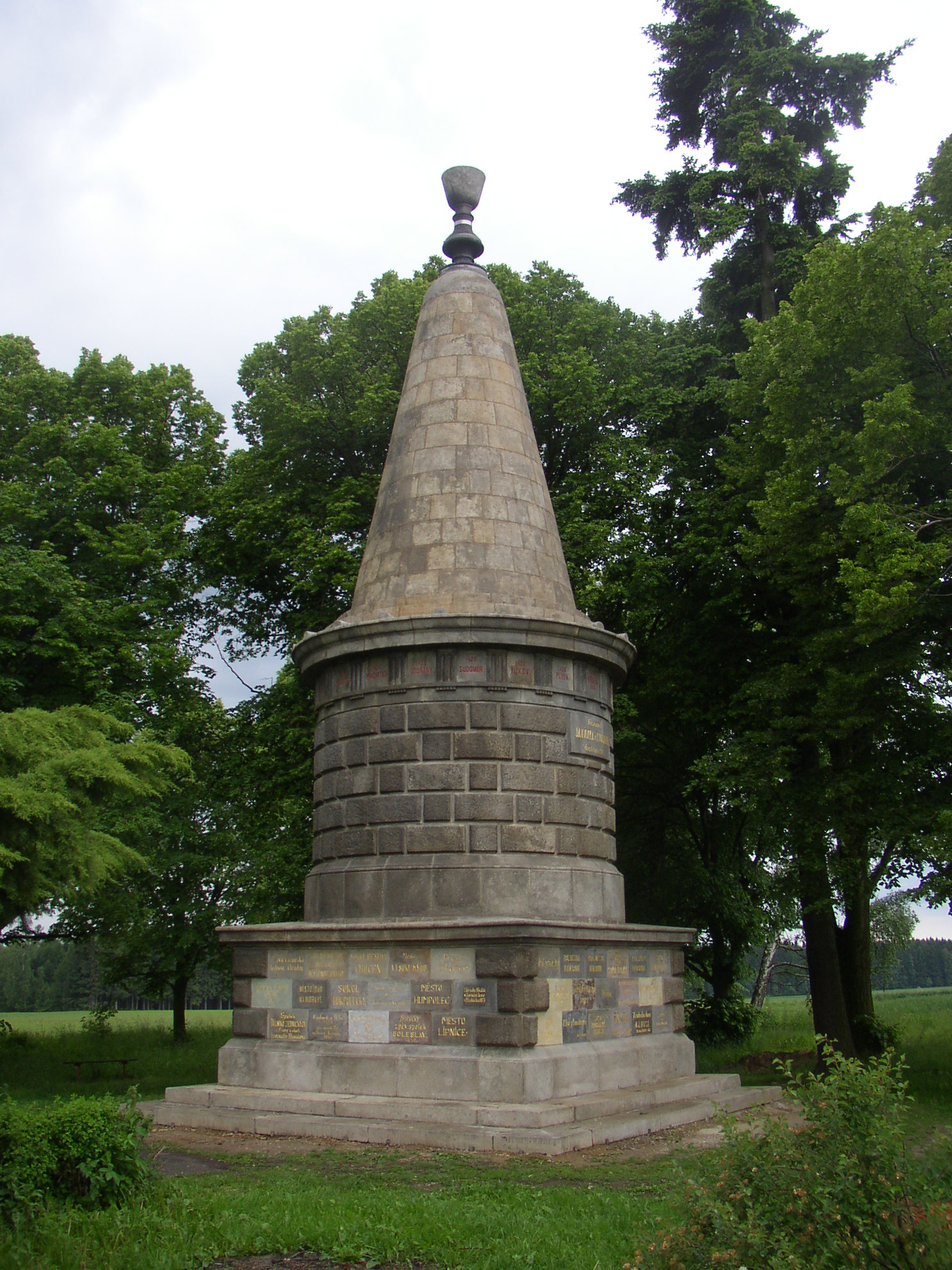
Žižka's Mound (Žižkova mohyla) is a memorial mound in the village of Žižkovo Pole in the Vysočina region of the Czech-Moravian Highlands, raised in honor of the Hussite military leader Jan Žižka of Trocnov. It stands in open fields on the spot traditionally identified as the place where the commander died in 1424, a few kilometers from the town of Přibyslav.
Where is Žižka's Mound located?
The mound stands next to the village of Žižkovo Pole, formerly known by its German name Schönfeld, about 3 km north of Přibyslav. It rises among open farmland away from any built-up area, giving the site a quiet, monumental character. The land and the mound itself belong to the town of Přibyslav.
Why was the mound built at this exact spot?
Tradition holds that Jan Žižka died in this area on 11 October 1424, during the siege of nearby Přibyslav — not from a battle wound, but from an illness whose exact nature sources do not specify. The precise location of his death is still disputed among historians, yet this field near Žižkovo Pole has become the accepted symbolic site of the commander's final days. A large cross also stands in the middle of the field, marking the supposed exact spot of his death, separate from the mound itself.
When was it built, and by whom?
The mound was unveiled on 20 September 1874, a year marking the 450th anniversary of Žižka's death. It was designed by Antonín Wiehl, an architect associated with the Czech Neo-Renaissance movement. The structure was conceived as a lasting, collective memorial — not just a local monument, but a rallying point for the Czech patriotic movement of the late 19th century.
What does the mound look like?
Its base is a square stone plinth roughly 5 meters to a side, built of hewn stone blocks. Built into the structure are memorial stones brought from places significant to Hussite history, along with commemorative plaques donated by various patriotic societies from the Czech lands and from abroad. The earthen mound itself rises to a height of over ten meters, topped by a stone chalice — the symbol of the Hussite movement — standing nearly two meters tall.
What should you know before visiting?
Žižka's Mound lies off the region's main tourist routes, so it is visited mainly by people interested in Hussite history and by residents of the Přibyslav area. It makes a good destination for a short trip from town — a walk or bike ride across the fields of the Vysočina highlands — combined with a visit to Přibyslav itself, historically tied to the final days of Žižka's life.
Frequently asked questions
Who was Jan Žižka, the man honored by this mound? Jan Žižka of Trocnov was a Hussite military commander, one of the most important leaders of the Bohemian Hussite Wars in the 15th century.
When did Jan Žižka die, and how is that connected to this place? Žižka died on 11 October 1424, likely in the vicinity of Žižkovo Pole, during the siege of nearby Přibyslav — not in battle, but from an illness.
When was the mound unveiled? It was unveiled on 20 September 1874, on the 450th anniversary of Žižka's death.
Who designed the mound? It was designed by the architect Antonín Wiehl, a representative of Czech Neo-Renaissance architecture.
What is the mound made of? Its square base, about 5 meters to a side, is built of stone blocks and incorporates memorial stones and plaques donated by various patriotic societies; the top is crowned with a stone Hussite chalice nearly 2 meters tall.
Who owns the mound today? The land and the mound belong to the town of Přibyslav.
Nearby places

Earn badges for the places you visit
Download NextOnTrip, discover new places and check off your trails.