About this place
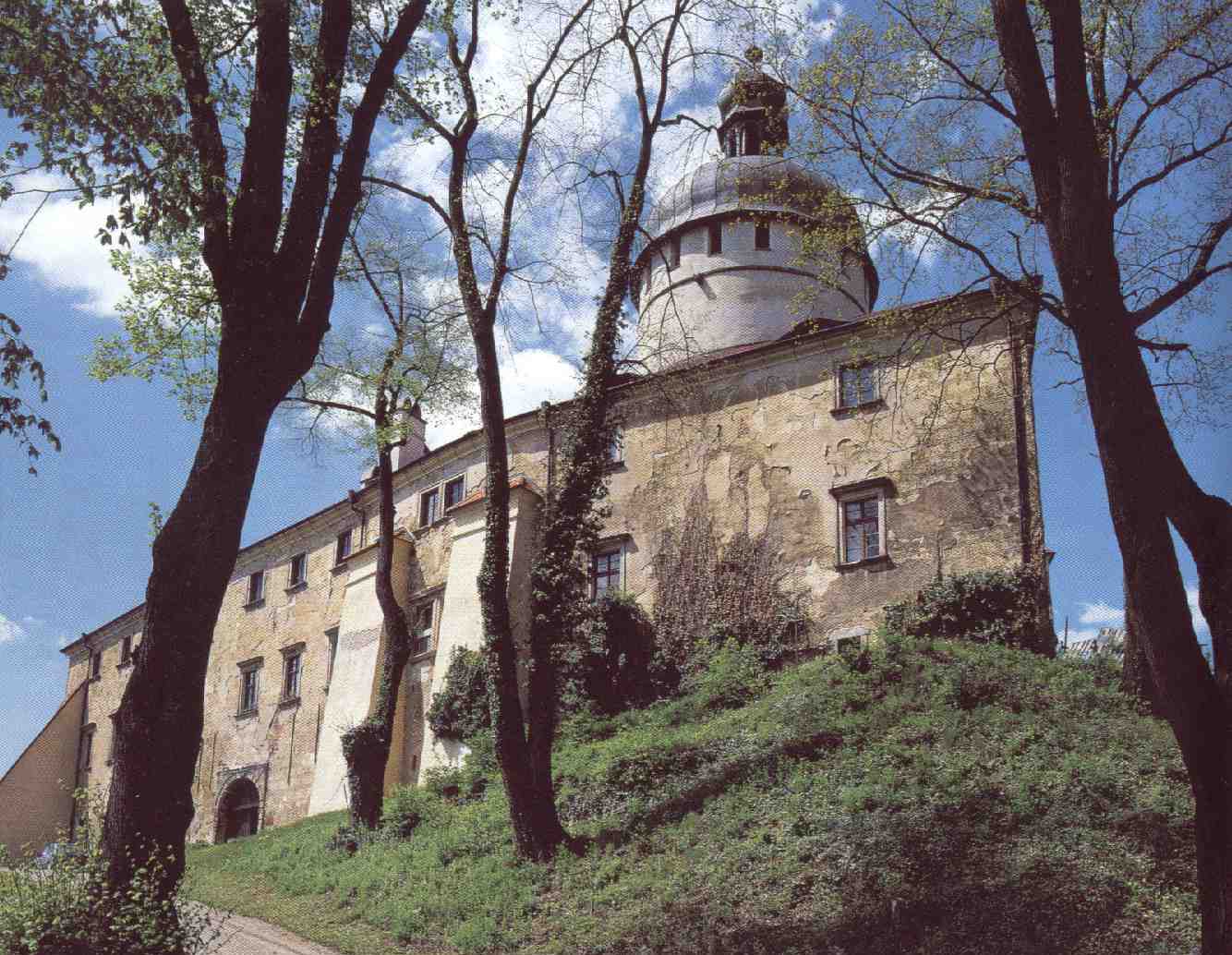
Lemberk Castle is one of the oldest strongholds in northern Bohemia — founded in the 13th century, reshaped many times over the following centuries, and now protected as a national monument a few kilometers from Jablonné v Podještědí in the Liberec Region. Its fame rests as much on its architecture as on the woman who once lived within its walls: Saint Zdislava of Lemberk.
Who founded Lemberk Castle?
The original stronghold was built in the mid-13th century by Havel of Markvartice, a knight who served at the court of King Wenceslaus I and later his son, Přemysl Otakar II. The oldest surviving part of the complex dates from this period — a massive main tower, around which the rest of the castle gradually grew. The lords of Lemberk held the estate until the end of the 14th century.
What is the castle's connection to Saint Zdislava?
Havel's wife was Zdislava of Lemberk, who came from Křižanov in Moravia. She is the reason the castle is known well beyond the region: in 1995, Pope John Paul II canonized her. After marrying Havel, she settled at Lemberk and, together with him, supported the growth of nearby Jablonné, where the couple founded a church and Dominican monasteries, with another monastery established in Turnov. Zdislava showed remarkable social conscience for her era — she cared personally and financially for the poor and the sick, supported a monastic hospital and almshouse in Jablonné, and worked to establish a hospital at the Hospitaller monastery in Český Dub.
How did ownership change after the Middle Ages?
During the Hussite Wars of the 15th century, the castle changed hands frequently, passing mostly among Lusatian and Saxon nobility. Its austere, early Gothic character gradually gave way to Renaissance alterations, and ownership remained unsettled until the mid-17th century.
When did the castle take on its present Baroque appearance?
The turning point came in 1647, when the Lemberk estate was acquired by General Jan Rudolf Breda, who set out to restore the ailing residence. Between 1660 and 1680, under the Breda family, the castle underwent a thorough early Baroque rebuilding, carried out with artists and builders brought in from Italy and the Netherlands. This work produced the closed courtyard decorated with stucco, the Chapel of the Descent of the Holy Spirit with statues of female saints and a grand altar, and a representative hall covered in stucco and frescoes — the form it largely retains today.
What happened to the castle from the 18th century onward?
In 1726 the estate passed to the House of Gallas and later to the related Clam-Gallas family, who remained its owners until 1945. No major rebuilding took place after the mid-18th century; subsequent owners focused mainly on routine upkeep and minor repairs, which is why the Baroque form of the castle has survived largely unchanged.
What can visitors see today?
Visitors can now explore interiors bearing traces of several centuries of history, from the medieval tower and Renaissance sections to the richly decorated Baroque halls and the chapel tied to the veneration of Saint Zdislava. The castle is listed as a national cultural monument of the Czech Republic, reflecting its exceptional historical and architectural value, and its proximity to Jablonné v Podještědí makes it an easy stop on a trip through the Lusatian Mountains.
Frequently asked questions
Who built Lemberk Castle? The stronghold was founded in the mid-13th century by the knight Havel of Markvartice, a courtier of Kings Wenceslaus I and Přemysl Otakar II.
Why is the castle associated with Saint Zdislava? She was the founder's wife and lived at Lemberk, devoting herself to helping the poor and the sick; Pope John Paul II canonized her in 1995.
When did the castle get its Baroque look? The Breda family rebuilt it between 1660 and 1680, bringing in Italian and Dutch artists who created the chapel and a representative hall decorated with stucco.
Who owned the castle the longest? From 1726 to 1945 the estate belonged to the House of Gallas and later the Clam-Gallas family.
Can Lemberk Castle be visited today? Yes, it is open to the public as a national monument, showcasing interiors and history connected to Saint Zdislava and the castle's later owners.
Nearby places

Earn badges for the places you visit
Download NextOnTrip, discover new places and check off your trails.