About this place
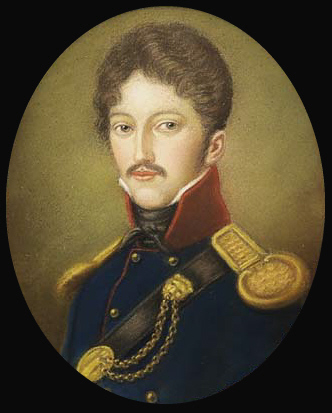
The Theodor Körner Relief is a small but unusual rock-carved monument at Dutý kámen ("Hollow Stone"), a sandstone rock labyrinth east of Cvikov, near Kunratice u Cvikova in the Lužické hory (Lusatian Mountains) of northern Bohemia. The carving depicts the head of a German poet crowned with a laurel wreath — a tribute to a man who, as far as records show, never actually set foot here.
How to get there?
Dutý kámen lies along the road connecting Liberec and Nový Bor, east of the town of Cvikov, close to the Cvikovský rybník pond. A path follows the crest of the rocky labyrinth to a small clearing enclosed by sandstone walls, where the relief is carved. The visit takes roughly an hour, dogs are welcome, and the site falls within the Lužické hory Protected Landscape Area, administered from Jablonné v Podještědí.
What will you see?
The rock formation itself — a sandstone ridge around 600 meters long and up to 30 meters high — was once known as "Kunratické Švýcarsko," or Kunratice Switzerland, for its jagged, miniature-mountain silhouette. Carved into one of its vertical faces is a relief of the poet's head in a laurel wreath, framed by stylized wreath motifs incorporating a lyre and a sword — symbols drawn from his poetry collection "Leier und Schwert" ("Lyre and Sword"), written in the final months of his life. Above the carving, a small viewing platform still holds the remnants of an old sundial.
The relief dates to 1913, the centenary of the poet's death, and was carved by two residents of nearby Kunratice: schoolteacher Karl Beckert and gendarmerie officer Karl Bundesmann, both members of the local Kunratice branch of the Gebirgsverein für die nördliche Böhmen (Mountain Association for Northern Bohemia). Monuments and viewpoints like this one, scattered across the Lusatian Mountains, owe their existence largely to the activity of such regional tourist associations around the turn of the 20th century.
Who was Theodor Körner?
Theodor Körner (1791–1813) was born in Dresden and had already built a reputation as a poet, playwright, and opera librettist before, at the age of twenty-two, joining the Lützow Free Corps to fight Napoleon for German liberation. He was killed on 26 August 1813 in a skirmish near Gadebusch. His patriotic verse — above all the collection "Leier und Schwert" — turned him into an icon of German Romanticism and the national liberation movement. Through the 19th and into the early 20th century, his cult was especially strong in German-speaking areas, including the Sudetenland and northern Bohemia, which explains why a relief honoring him appears far from any place he actually visited in life.
When to visit?
Spring and summer are the best times for the rocky labyrinth, when longer daylight hours make it easy to combine the short walk to the relief with a longer hike through the surrounding Lusatian Mountains. Autumn brings fewer visitors and a quieter atmosphere, though the sandstone paths can turn slippery after rain, so some caution is worthwhile.
Frequently asked questions
Who is depicted on the relief at Dutý kámen? The German poet and soldier Theodor Körner (1791–1813), shown as a laurel-wreathed head framed by lyre and sword motifs.
When was the relief carved? In 1913, on the centenary of the poet's death, by Karl Beckert and Karl Bundesmann of the local Kunratice mountain association branch.
Where exactly is the relief located? In the Dutý kámen rock labyrinth, east of Cvikov, near Kunratice u Cvikova and the Cvikovský rybník pond, along the road from Liberec to Nový Bor.
Did Theodor Körner ever visit Kunratice? There's no evidence he did — the relief reflects the poet's cult status among the German-speaking population of the region rather than a memory of any actual visit.
Nearby places

Earn badges for the places you visit
Download NextOnTrip, discover new places and check off your trails.