About this place
The castle in Kocobędz survives today only as an abandoned ruin, standing in the municipality of Kocobędz — known in Czech as Chotěbuz — in the Karviná District of the Moravian-Silesian Region. The village lies in Zaolzie, the historic strip of Cieszyn Silesia on the Czech side of the border, home to a long-established Polish minority, which explains the Polish name still used for the place today.
How did a fortified manor first appear here?
The story starts in the 13th century. Between 1229 and 1268, Benedictine monks from the Tyniec abbey built a manor farm on the site to supply a monastery in nearby Orlová with food. In time, the estate passed to the Piast dukes of Cieszyn, who then ruled this part of Silesia.
What remains from the earliest structure?
The oldest surviving element is a cylindrical watchtower roughly 10 metres tall, built of rough, unhewn stone and tapering toward the top like a truncated cone. It is what is left of a Gothic defensive complex from the turn of the 13th and 14th centuries — a reminder of how modest the original stronghold once was.
When did the manor become a castle?
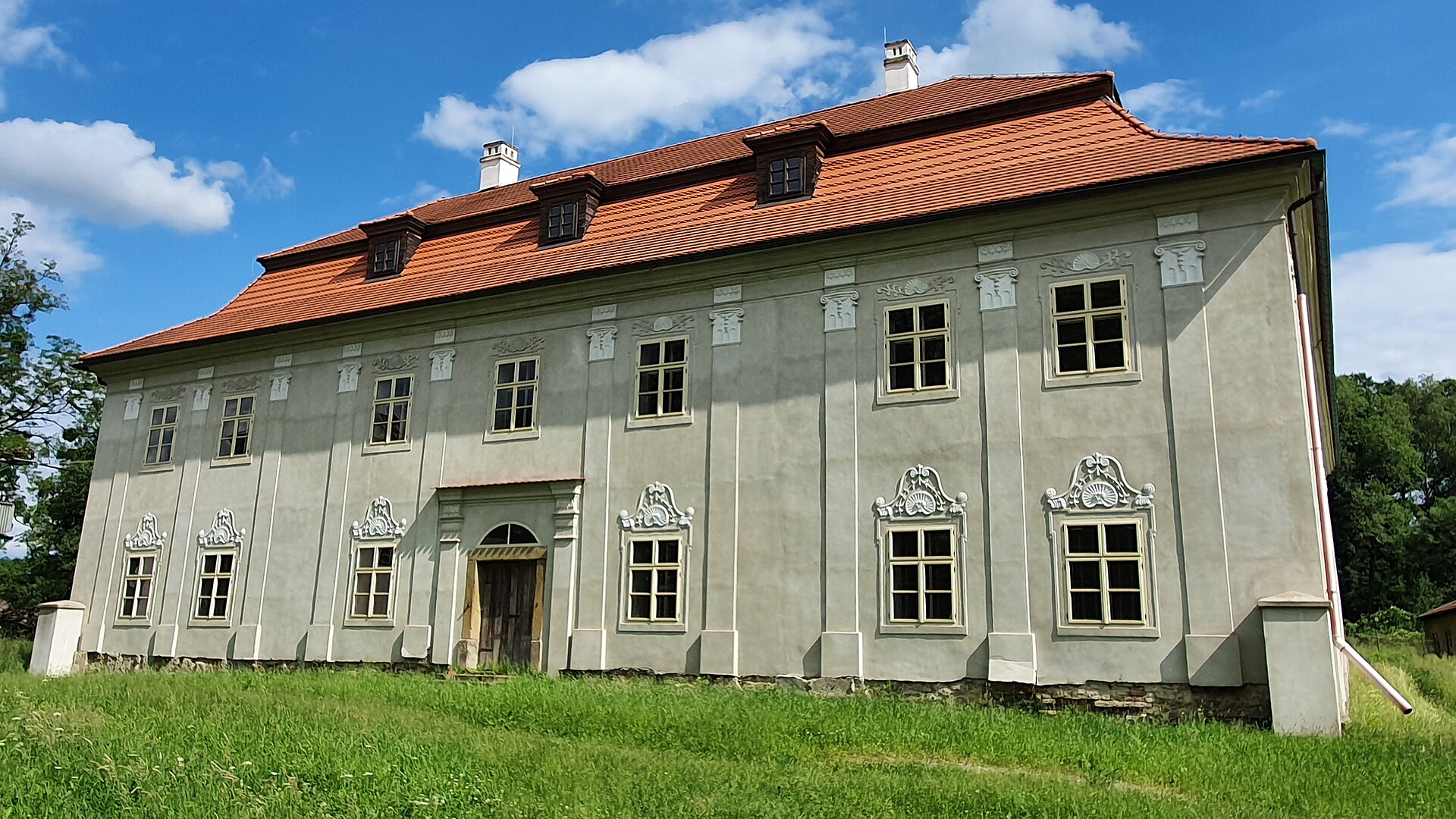
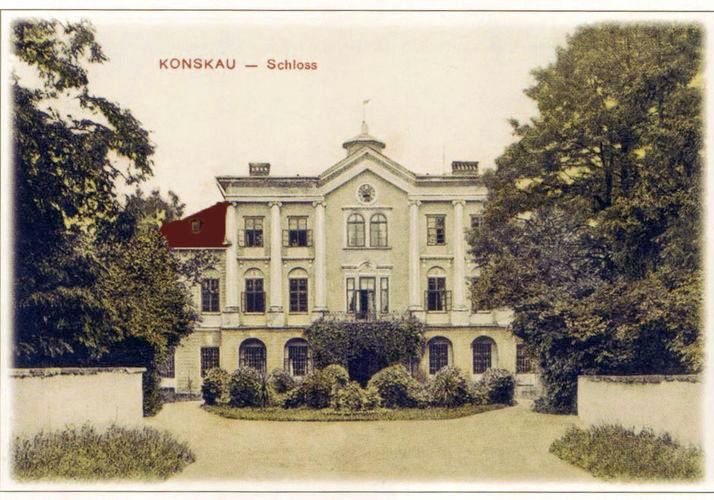
The turning point came in 1552, when the estate was bought by Chancellor Wacław Rudzki, of the Rudzki family of Rudz. He had the modest manor rebuilt into a Renaissance stronghold. A second major transformation followed at the end of the 18th century: between 1780 and 1782, the Trach family of Brzezie converted that Renaissance stronghold into a Baroque castle — and it was this Baroque form that would go on to shape the building's later fate.
Who else owned the castle?
In 1817 the Trach family sold the estate to Archduke Albert, who folded it into the Cieszyn Chamber, the vast Habsburg holdings across Cieszyn Silesia. From 1840 the castle served as a hunting lodge. Later, between 1872 and 1923, an agricultural school operated inside its walls, which brought further alterations to the interior and facade to suit its new purpose.
What led to today's ruined state?
The decisive blow came in 1970, when a fire tore through the building. Since then the main structure has stood devastated — roofless, its interior gutted. Plans to rebuild it have been floated over the years but never fully carried out. Some relief finally came in 2004, when the gatehouse and the historic watchtower were restored. The rest of the complex is still waiting for its turn.
Is it worth the trip?
The castle in Kocobędz today appeals more to fans of abandoned places and Zaolzie's history than to visitors expecting a fully equipped tourist attraction. You can see the restored tower and gatehouse and trace the outline of the former palace, but keep in mind the main building itself is off-limits and remains in ruins.
Frequently asked questions
Are Kocobędz and Chotěbuz the same place? Yes. Kocobędz is the Polish name long used by the local Polish minority in Zaolzie, while the municipality's official Czech name is Chotěbuz.
Who owned the castle over the centuries? The estate passed through the hands of the Benedictine monks of Tyniec, the Piast dukes of Cieszyn, the Rudzki family (from 1552), the Trach family of Brzezie (from 1780), and the Habsburgs via the Cieszyn Chamber (from 1817).
What turned the castle into a ruin? A fire in 1970, after which the main building was never fully rebuilt.
Can you visit the castle? Partially — the gatehouse and watchtower, restored in 2004, are visible, but the interior of the fire-damaged main building remains inaccessible.
What is the oldest surviving part of the castle? The cylindrical watchtower from the turn of the 13th and 14th centuries, a remnant of the original Gothic fortifications.
Nearby places

Earn badges for the places you visit
Download NextOnTrip, discover new places and check off your trails.