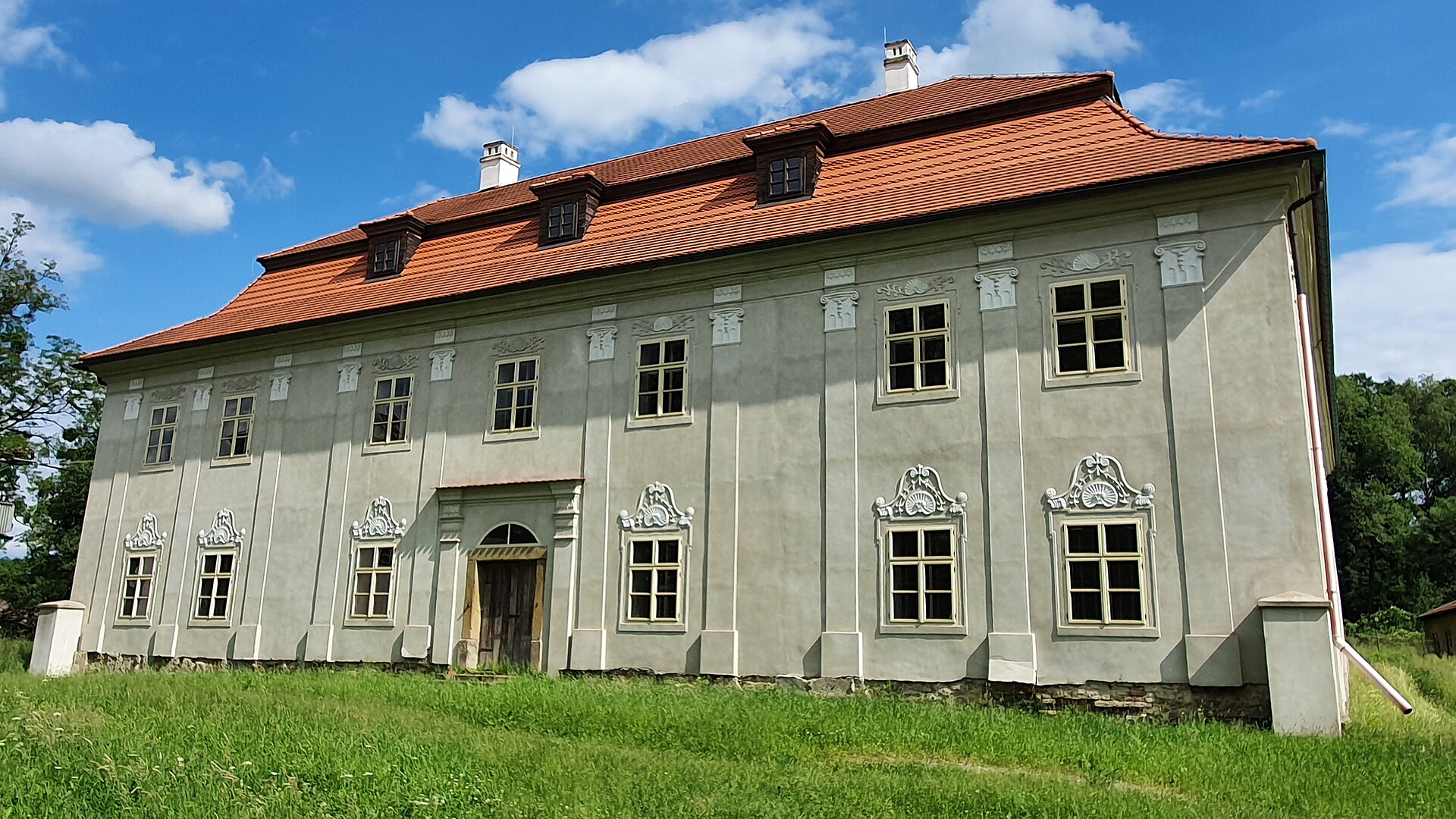
About this place
Ropice Palace is an abandoned late-Baroque manor house in Ropice, a village in the Moravian-Silesian Region of Czechia, right on the border with Poland. Today it stands as a ruin, but its shape and centuries-long history still draw visitors interested in the past of the Cieszyn Silesia region and in abandoned heritage sites.
How do you get to Ropice Palace?
Ropice lies a few kilometers from Třinec and close to Český Těšín, so driving from the Polish side of the border usually takes no more than half an hour. Local buses run from Třinec and Český Těšín to the village center; from the bus stop it's a short walk, typically under fifteen minutes, through the residential part of the village to reach the ruins. Sturdy footwear is worth packing, since the ground around the building tends to be overgrown and uneven, and there is no paved or officially marked visitor route through the site.
What will you actually see there?
The palace's current shape dates back to an early-18th-century rebuilding, when Baron Filip Saint Genois d'Anneaucourt and his successors turned an earlier noble residence into a rectangular, two-story building topped with a distinctive mansard roof. The facade was decorated with Ionic pilasters, fragments of which are still partly visible despite the ongoing decay of the walls. In 1785 the estate passed to Baroness Gabriela Cselestowa of Celestyna, who added a rear wing containing a kitchen and guest rooms, expanding the residence to support a larger household.
The history of Ropice itself goes back much further than the palace. The village was first documented in 1305 and belonged from the start to the Dukes of Cieszyn. The first known private owner, recorded in 1430, was Sobko Kornicz of Ropice, and by the 15th century the village had become the main seat of the Sobek family, who built a defensive stronghold there — the direct predecessor of today's palace. The estate changed hands several more times over the centuries: in 1676 Baron Rudolf Sobek of Ropice sold it to Maximilian Pröckl of Procksdorf, who in turn sold it in 1700 to Baron Saint Genois.
What happened to the palace in the 20th century?
The building's fortunes turned after the Second World War. In 1945 the estate was nationalized, and the palace itself was converted into housing for workers of the state agricultural cooperative — a fate shared by many manor houses across post-war Czechoslovakia. That use, far removed from the building's original purpose, accelerated its physical decline. After 1989 the property passed into private hands, but without systematic conservation or renovation investment it gradually deteriorated into the ruin visible today.
Who is this place for?
Ropice Palace is primarily a stop for people interested in the history of Cieszyn Silesia, residential architecture, or urbex-style exploration of abandoned buildings. It is not a fully equipped tourist attraction, so a visit is best approached as a historical walk combined with cautious exploration of the surrounding grounds rather than a guided sightseeing trip.
When is the best time to visit?
Dry weather and full daylight work best — spring and autumn, when the vegetation around the ruins is thinner, make it easier to walk around the site and photograph the surviving facade details. In summer, dense greenery can partly hide the building, while in winter the ground around the ruins can turn muddy or slippery, which calls for extra care given the uneven terrain.
Frequently asked questions
Can you go inside Ropice Palace? The building is a ruin with no official, maintained visitor route inside — approaching or entering the structure requires caution and checking the current state of access on site.
How old is the site's history? The village of Ropice has been documented since 1305, and the earlier defensive stronghold of the Sobek family on the site of today's palace was built in the 15th century, more than 300 years before the Baroque rebuilding.
Who last rebuilt the palace? Its current late-Baroque form dates to Baron Filip Saint Genois d'Anneaucourt and his successors in the early 18th century, with Baroness Gabriela Cselestowa of Celestyna adding the rear wing in 1785.
Why is the palace in ruins today? After being nationalized in 1945, the building was converted into worker housing, which sped up its deterioration; despite passing into private ownership in 1989, it has never undergone a systematic restoration.
Nearby places

Earn badges for the places you visit
Download NextOnTrip, discover new places and check off your trails.