About this place
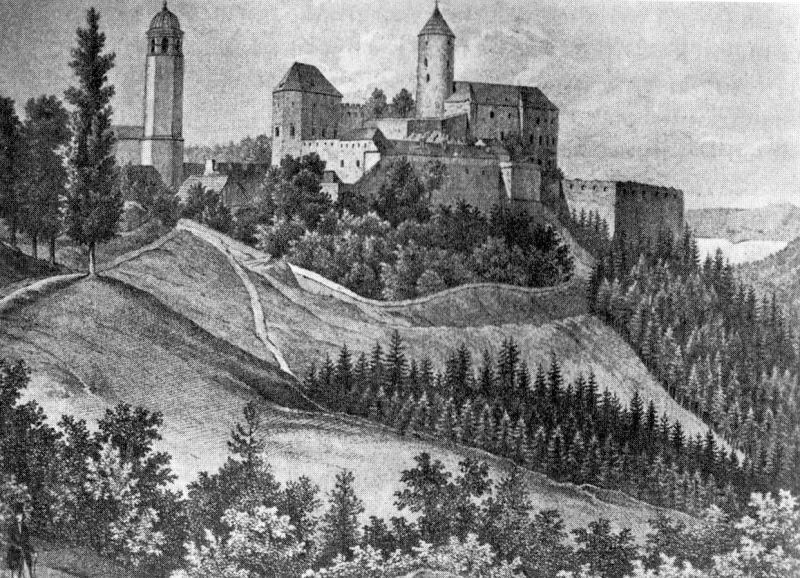
Šternberk Castle stands above the town of Šternberk in the Olomouc District of Moravia, Czech Republic, and holds the status of a national cultural monument.
Where is the castle and what makes it worth visiting?
The castle rises over the town of Šternberk in the Olomouc region and has served as a landmark of this part of Moravia for centuries. Its walls hold several layers of history — from a medieval knight's stronghold, through a bishop's residence, to a 19th-century historicist rebuild. For visitors, this means walking through several architectural eras within a single complex.
Who founded the castle, and when?
The castle was built in the mid-13th century, most likely on the initiative of Zdeslav of Chlumec and Šternberk, a member of a powerful noble family that gave its name both to the castle and to the town itself. The first written record of the castle dates to 1269. At that time, the stronghold served a defensive role, guarding trade routes and family estates in northern Moravia.
How did the castle change over the centuries?
In the 14th century, the castle underwent a significant transformation under Bishop Albert II of Šternberk, who turned the austere fortress into a representative residence. It was during his time that the castle chapel was decorated in a style echoing the court of Emperor Charles IV, reflecting the family's ambitions and standing at the time.
Another major phase came in the 16th century, when the castle belonged to the Berka of Dubá and Lipá family. The new owners carried out a Renaissance reconstruction, adding a wing that housed the so-called Visiting Card Hall, notable for its intricate vaulted ceiling that still impresses visitors today.
The 17th century proved difficult for the castle. The Hussite Wars, and later the Thirty Years' War, caused damage and periods of abandonment. Reconstruction and stabilization only followed under later owners.
What role did the House of Liechtenstein play?
Around 1699, the castle was purchased by Prince Johann Adam Andreas of Liechtenstein. The Liechtenstein family retained ownership until 1945 — nearly two and a half centuries. It was under their stewardship, in 1886, that a major historicist reconstruction took place, designed by Viennese architect Karl Gandolph Kayser. This rebuild gave the castle much of the appearance it retains today, including its characteristic towers and neo-Gothic elements.
Between 1907 and 1909, again at the family's initiative, architect Albert Esch designed the extensive forest park surrounding the castle, which became a natural complement to the residential grounds.
Who manages the castle today?
Šternberk Castle is now cared for by the National Heritage Institute (Národní památkový ústav), which opens the site to visitors and oversees its conservation. Its status as a national cultural monument underscores the castle's importance to the historical heritage of Moravia and the Czech Republic as a whole.
What can visitors see during a tour?
Visitors can admire interiors blending Gothic, Renaissance, and historicist styles, including the Visiting Card Hall with its ribbed vaulting and the castle chapel with decoration inspired by the era of Charles IV. The surrounding park, laid out in the early 20th century, adds an extra reason to combine a castle tour with a walk through greenery.
Frequently asked questions
When was Šternberk Castle built? The castle was founded in the mid-13th century, with the first written mention dating from 1269.
Who was the castle's most notable owner? The Šternberk family, including Bishop Albert II, held particular importance, followed later by the House of Liechtenstein, which owned the castle from around 1699 until 1945.
Was the castle ever damaged? Yes, it suffered during the Hussite Wars and the Thirty Years' War in the 17th century, leading to a period of neglect before later reconstruction.
Who manages the castle today? The castle is managed by the National Heritage Institute (Národní památkový ústav), which opens it to the public as a national cultural monument.
Nearby places

Earn badges for the places you visit
Download NextOnTrip, discover new places and check off your trails.