Save this place and discover nearby attractions with NextOnTrip
In the app you can add it to your favorites, see what else is worth visiting nearby on the map, and earn a badge for your visit.
The app is available for iPhone and Android.
About this place
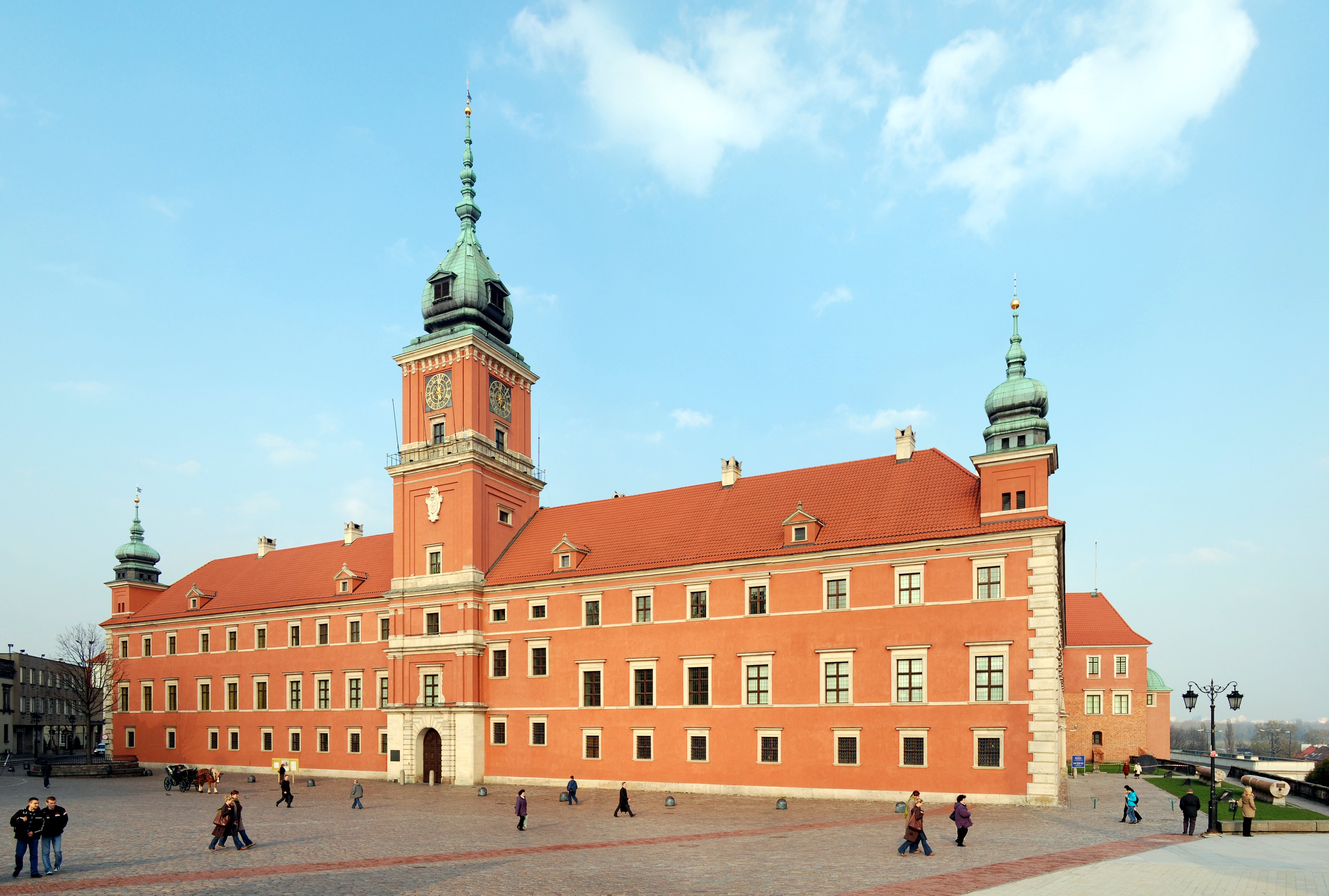
The Royal Castle in Warsaw is a Baroque and Neoclassical royal residence that now serves as a museum and a venue for state ceremonies. It stands on Castle Square, at the entrance to the Old Town, and is one of the most photographed buildings in the capital.
How did the castle come to be?
The site began as a medieval stronghold of the Dukes of Masovia, first timber and later brick, on the edge of the Vistula escarpment. The turning point came in 1595. Sigismund III Vasa, who had made Warsaw his capital, decided on a major expansion. Work in a Mannerist and early Baroque style ran from 1598 to 1619 and gave the castle its distinctive pentagonal layout around a courtyard. The building was altered over the following centuries, and under King Stanisław August Poniatowski the interiors took on a Neoclassical character. The castle also became a centre of cultural and political life.
Why does it matter in Polish history?
The Sejm met within these walls, and on 3 May 1791 the Constitution of 3 May was adopted here, one of the first modern constitutions in Europe. For many Poles the castle is therefore a symbol of statehood and independence.
What happened during the war?
German troops demolished the castle in September 1944. Before that, museum staff and conservators, at great personal risk, managed to save part of the furnishings. Reconstruction took place between 1971 and 1988, and voluntary donations from Poles at home and abroad played a major role in funding it. Thanks to surviving fragments of walls, sculptures and decorative elements, the rebuilt castle follows its historic appearance very closely.
What can you see inside?
The castle houses state rooms and rich collections of Polish and European art.
- Royal Apartments – ceremonial rooms, including the Throne Room and the Knights' Hall, furnished in the spirit of Stanisław August's era.
- The Canaletto Room – an interior hung with views of Warsaw painted by Bernardo Bellotto, who signed his work "Canaletto" in Poland. The paintings later became a valuable reference when the city was rebuilt.
- The Great Assembly Hall – one of the most impressive interiors in the castle, used for state occasions.
- Picture gallery – the works on display include paintings by Rembrandt, among them "Scholar at the Lectern" and "Girl in a Picture Frame".
How should you plan your visit?
Most visitors spend two to three hours in the castle, though art lovers can easily stay longer. Check current opening hours and available routes beforehand, as some rooms are occasionally closed or used for exhibitions. Afterwards, the Old Town lanes, Sigismund's Column and the Vistula riverbank are only a few steps away.
Frequently asked questions
Where is the Royal Castle in Warsaw? On Castle Square, at the start of the Royal Route and at the entrance to the Old Town.
Is the castle original? The present building is a reconstruction from 1971–1988, carried out after the castle was destroyed in 1944. It incorporates surviving original elements and furnishings.
What is most valuable in the collections? The Rembrandt paintings and Bellotto's views of Warsaw, known as Canaletto, draw particular attention.
Is a guided tour worth it? If you are interested in Polish history, a guide helps you understand the significance of individual rooms and the events that took place in them.
What else is nearby? Sigismund's Column, the Old Town Market Square, St John's Cathedral and the Vistula boulevards.
Nearby places

Earn badges for the places you visit
Download NextOnTrip, discover new places and check off your trails.