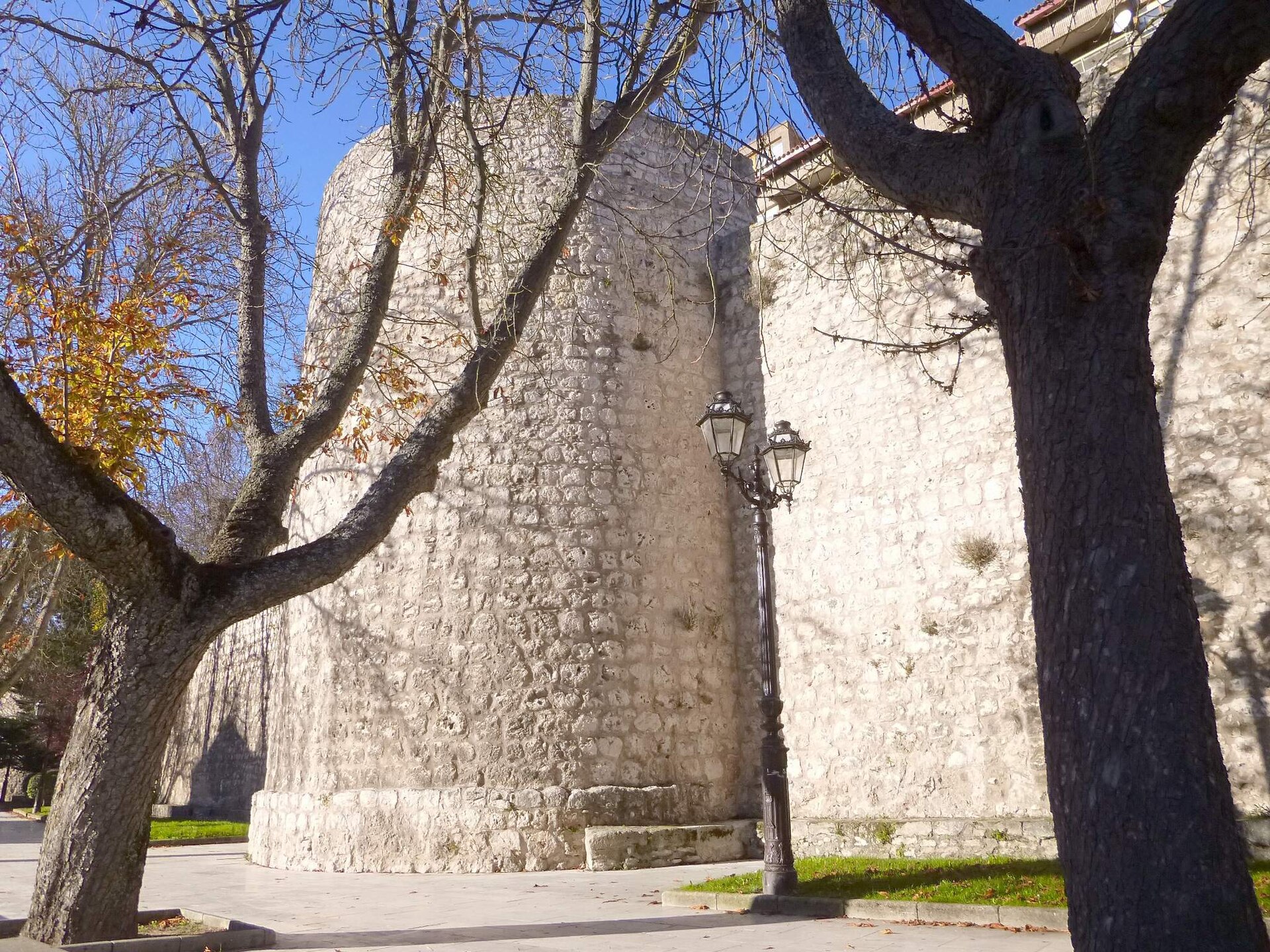
About this place
The Walls of Burgos (Spanish: Murallas de Burgos) are the surviving medieval fortifications that once enclosed the historic center of Burgos, in northern Spain. The earliest defenses on this site date back to shortly after the city's founding in 884, but the walls were substantially built up from the 13th century onward, eventually encircling the whole of the old town. Beyond military defense, the walls had administrative functions too: they controlled who entered and left the city, allowed authorities to collect tolls, and helped enforce public order and basic sanitation rules. Gates were shut at night, a common practice for fortified towns of the period.
What survives today?
Large sections of the fortifications were dismantled from the 18th century onward as the city expanded and the walls lost their defensive purpose. Even so, several stretches and gates have survived. The best-preserved and longest remaining section is the Paseo de los Cubos, a walking route along the old wall line where semicircular defensive towers — called "cubos" — alternate with connecting stretches of stone wall. Walking this route gives the clearest sense of what the fortifications looked like at their peak.
Which gates are worth seeing?
Of the original dozen or so gates, a handful remain. The most striking is the Arco de Santa María, originally a 14th-century gate and tower that was rebuilt in the 16th century on the orders of Emperor Charles V, as a gesture of gratitude to the city for its loyalty during the Revolt of the Comuneros. The remodeling was carried out by master builders Juan de Vallejo and Francisco de Colonia, who turned it into a Renaissance triumphal arch with a facade resembling a carved stone altarpiece. Its niches hold statues of Charles V, the legendary knight El Cid, and Diego Rodríguez Porcelos, credited as the city's founder. The gate building today houses a cultural center.
Another key gate is the Arco de San Martín, historically the entry point used by the kings of Castile — which is why it is sometimes called the "royal gate." Also still standing are the Arco de San Gil, the Arco de San Esteban, and the gate that once led into the city's former Jewish quarter.
How do you get there, and when should you visit?
The walls and their surviving gates sit right in the center of Burgos, within easy walking distance of the cathedral and the city's main sights, so the simplest way to reach them is on foot. Walking the Paseo de los Cubos stretch is an easy, level stroll that typically takes 30 to 45 minutes and pairs naturally with a broader walk through the old town. Since the site is an open-air outdoor route accessible year-round, the most comfortable times to visit are morning or late afternoon, avoiding the midday heat in summer and catching better light for photos.
What will you see on site?
Along the surviving stretches you'll find the characteristic semicircular defensive towers, sections of stone wall now woven into the surrounding modern city, and the standout gates — especially the Arco de Santa María, which is worth viewing from both sides: it looks noticeably different from the riverside of the Arlanzón than from the old town side. The wall route also offers good vantage points over the rooftops of Burgos.
Frequently asked questions
Is visiting the Walls of Burgos free? Yes — walking along the surviving sections and viewing the gates from outside is free, since they form part of the open public streetscape.
How much time should I set aside? Walking the Paseo de los Cubos and taking in the main gates typically takes between thirty minutes and an hour, depending on pace and how many photo stops you make.
Is it worth going inside the Arco de Santa María? Yes — the gate building now operates as a cultural center and periodically hosts exhibitions related to the city's history.
Is the area accessible for visitors with limited mobility? The Paseo de los Cubos itself is a paved walking path, but some of the surrounding old-town streets near the gates have uneven, historic paving, which is worth factoring into route planning.
Nearby places

Earn badges for the places you visit
Download NextOnTrip, discover new places and check off your trails.