About this place
Villanueva de Cañedo Castle, also known as Castillo del Buen Amor, is a Renaissance-era fortress standing in the municipality of Topas, in the province of Salamanca, Castile and León. It occupies the site of the former settlement of Villanueva de Cañedo, a place name that has since vanished from the map, though the building itself still carries traces of a much older structure.
Where is the castle located?
The castle sits amid open farmland northwest of the city of Salamanca, within the municipal boundaries of Topas. The surrounding countryside belongs to the Campo Charro area, a quiet agricultural landscape with little traffic beyond visitors to the castle itself.
What is the history behind it?
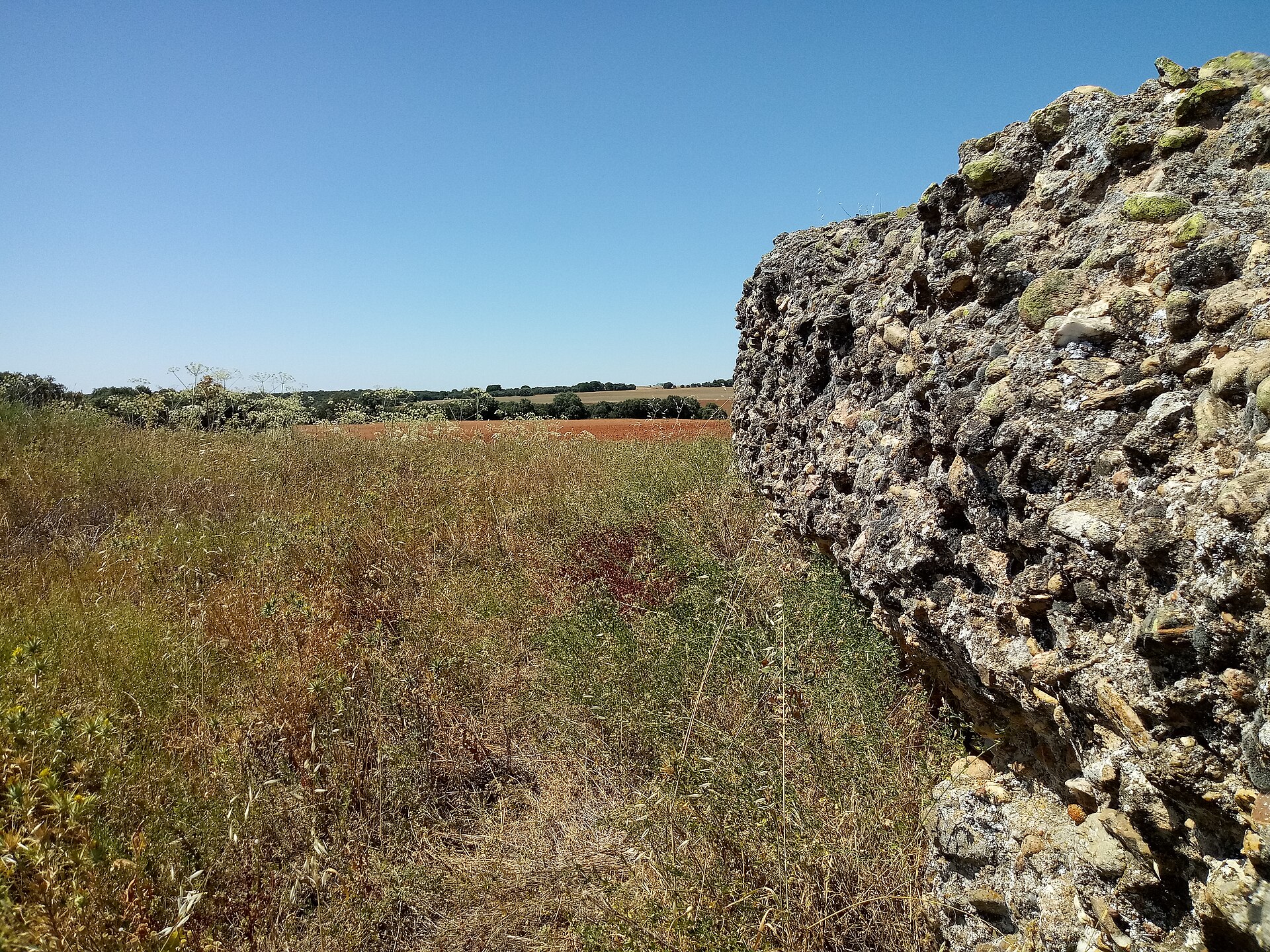
Parts of the foundations and cellars date back to the 11th century, remnants of an earlier stronghold on whose ruins the present castle was raised. Construction of the current structure was authorized by King John II of Castile at the initiative of the House of Alba, with most of what stands today dated to the 15th century.
The castle played a part in the political turmoil of the late 15th century. In 1475 the settlement and its fortress passed into the hands of the Catholic Monarchs, and the castle itself hosted Ferdinand II of Aragon as he traveled toward the Battle of Toro, fought during the war over the Castilian succession against supporters of Joanna, known as la Beltraneja.
Later, under Philip II, the county of Villanueva de Cañedo was created around the castle and granted to Antonio de Fonseca Enríquez, a descendant of Bishop Alonso de Ulloa Fonseca Quijada. The title and estate remained with successive counts for centuries, until the early 20th century, when the Duke of Sesto and tenth count of Villanueva de Cañedo sold the property.
What is the castle used for today?
In 1931 the building was declared a Spanish Historic-Artistic Monument. Restoration work took place between the late 1950s and 1960, when the property passed to the Fernández de Trocóniz family, its current owners. Since July 2003, the castle has operated as a 41-room luxury hotel, combining its historic fabric with a high-end hospitality function.
What can visitors see there?
Visitors can take in the Renaissance-era structure alongside surviving elements of medieval fortification, including remnants of the original 11th-century masonry in the lower sections of the walls. The setting itself — the wide fields and rural landscape of the Campo Charro — is part of the appeal for anyone looking to get away from the bustle of nearby Salamanca.
Frequently asked questions
Can Villanueva de Cañedo Castle be visited? The building now functions as a hotel, so access to the interior is generally reserved for guests staying overnight or using its dining facilities.
How far is the castle from Salamanca? It sits within the municipality of Topas, northwest of Salamanca, an easy day trip by car from the city.
Why is it also called Castillo del Buen Amor? That is simply an alternative name for the same building, used interchangeably with Villanueva de Cañedo Castle in sources and tourism material about the area.
Does the castle hold historical significance for the region? Yes — it was linked to events of the Castilian war of succession in the 15th century and remained the seat of the counts of Villanueva de Cañedo for several centuries.
Nearby places

Earn badges for the places you visit
Download NextOnTrip, discover new places and check off your trails.