About this place
Veliko jezero is one of the twelve Upper Lakes in Plitvice Lakes National Park, Croatia, sitting at an altitude of roughly 607 metres above sea level. It ranks among the smaller lakes in the whole sixteen-lake chain, with a surface area of under two hectares, a length of around 120 metres and a width of barely 45 metres. Despite its modest size, it reaches a maximum depth of 8 metres — a surprising figure for such a compact body of water.
Where does Veliko jezero sit within the park?
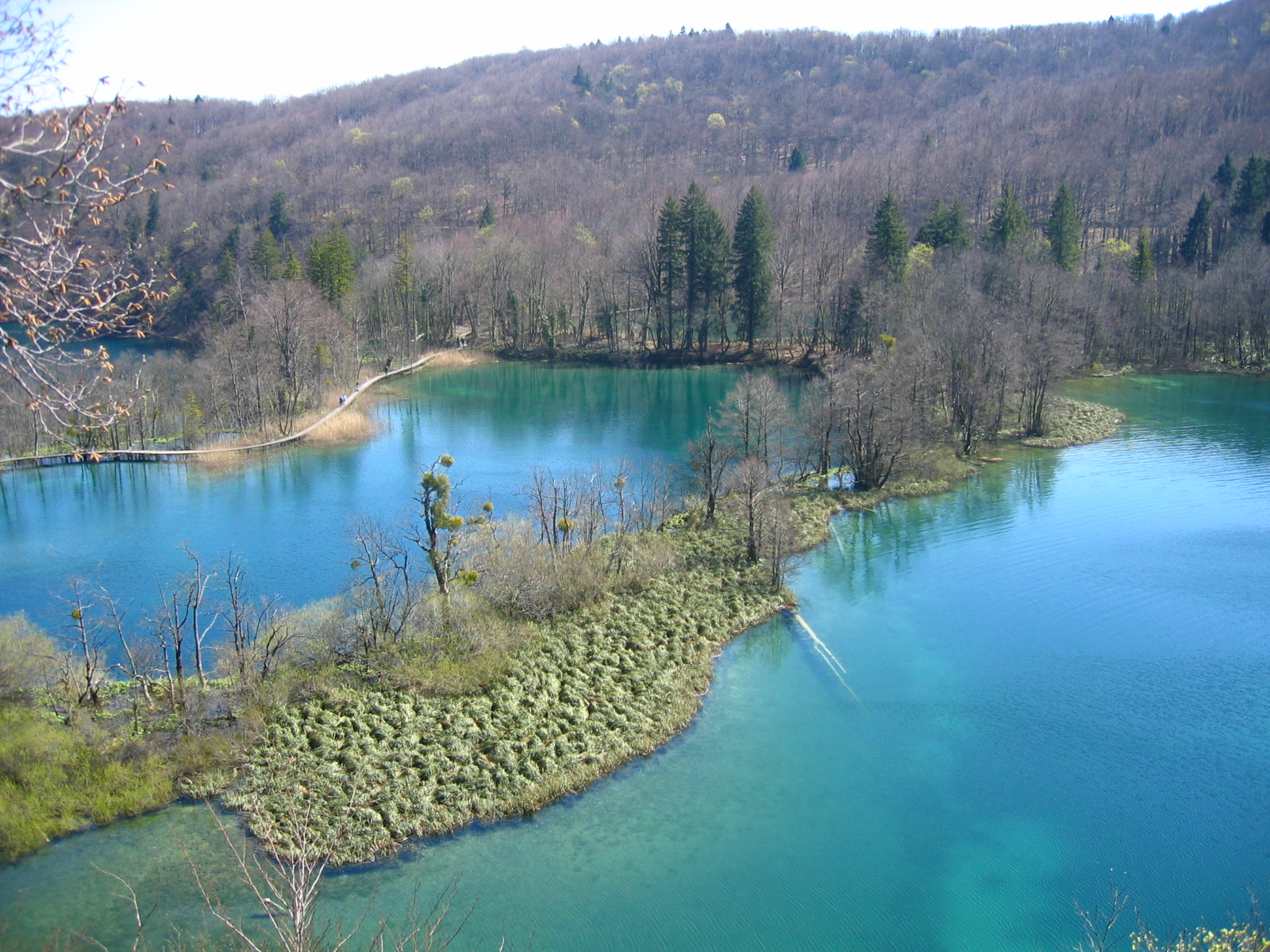
The lake belongs to the upper section of the cascading lake system known as the Upper Lakes (Gornja jezera). The whole chain sits on impermeable Triassic dolomite bedrock, which forces the water to spill from one basin into the next rather than seeping into the ground. Veliko jezero is separated from its neighbours by tufa (sedra) barriers — natural limestone ridges built up over centuries, over which the water tumbles in small cascades.
How is the lake fed?
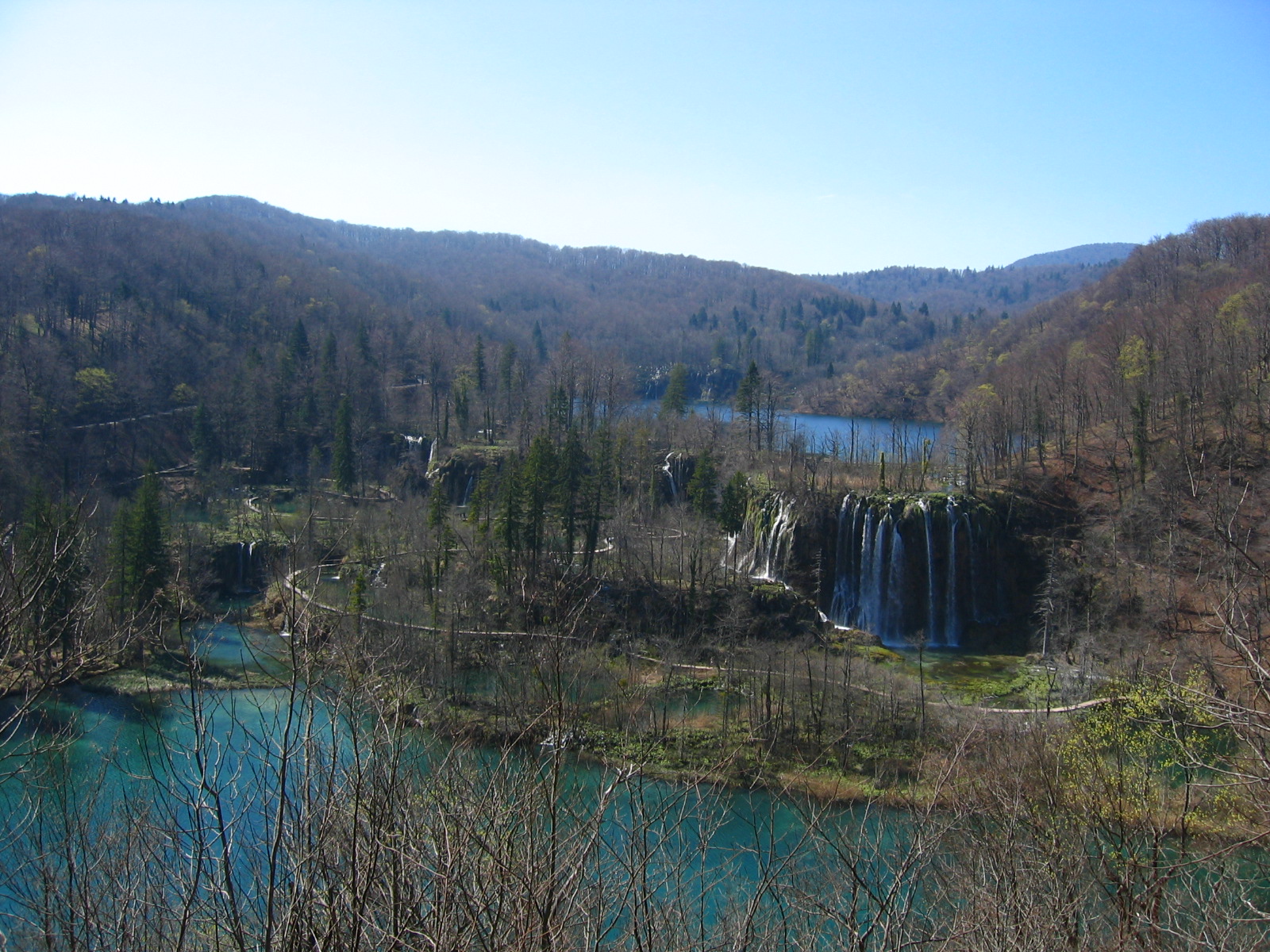
The Upper Lakes system works as a chain: water flows down from higher lakes, through Veliko jezero, and onward to the next lake below it. This continuous overflow across natural tufa dams is exactly what produces the terraced waterfalls and cascades that made Plitvice world-famous. Because the tufa barriers keep forming and dissolving over time, the shape of the lakes and their connecting waterfalls slowly changes across generations.
What can visitors see around it?
The shoreline of Veliko jezero is lined with low shrubs and a handful of tall trees, and the water shows the characteristic Plitvice clarity, shifting between turquoise and deep green depending on light and mineral content. Although the lake itself is small, it forms part of the Upper Lakes walking route, where wooden boardwalks let visitors follow the cascades and limestone barriers at close range.
How do you get there?
The Upper Lakes, including Veliko jezero, are reached on foot from the park's main entrances (Entrance 1 and Entrance 2). Wooden boardwalks run directly over and alongside the water, so no special fitness level is required to walk the route. Plitvice Lakes National Park has held UNESCO World Heritage status since 1979 and has been protected as a national park since 1949.
When is the best time to visit?
Spring and early summer bring the highest water levels and the fullest waterfalls, while autumn adds vivid foliage reflected in the lakes. Summer draws the largest crowds, so an early-morning visit is the best way to enjoy the Upper Lakes route without the queues.
Frequently asked questions
Is Veliko jezero the same lake as the one on Mljet? No. This Veliko jezero lies inland within Plitvice Lakes National Park, while the lake of the same name on the island of Mljet is a saltwater lake connected to the sea.
Which group of lakes does Veliko jezero belong to? It belongs to the Upper Lakes (Gornja jezera), the higher-altitude section of the twelve-lake Plitvice chain.
Can you swim in Veliko jezero? No, swimming is prohibited in all lakes within the national park to protect the natural environment.
How big is the lake? Veliko jezero is one of the smaller lakes in the system, with a surface area under two hectares and a maximum depth of around 8 metres.
Nearby places

Earn badges for the places you visit
Download NextOnTrip, discover new places and check off your trails.