About this place
Valtajeros town hall (Ayuntamiento de Valtajeros) sits on Plaza 1, at the heart of the tiny village of Valtajeros, in the Tierras Altas y El Valle district of Soria province, Castile and León. It is the administrative seat of one of the smallest municipalities in the region and a natural landmark for anyone exploring this remote corner of the Soria-Aragón borderland.
How do you get to Valtajeros town hall?
Valtajeros lies in the far north-east of Soria province, in the Tierras Altas area, where roads twist through empty highland terrain and distances between villages feel longer than the map suggests. A car is essentially the only practical option — from the city of Soria, local roads head north past Magaña toward the Aragón border. The building's coordinates, 41.9380° N, -2.2225° W, are worth entering into a navigation app, since signage in villages this small can be minimal. The town hall stands right on the village's main square, so once you reach the center of Valtajeros you cannot miss it — together with the church nearby, it anchors the whole settlement.
What is there to see in Valtajeros?
The town hall itself is a modest, functional building, fitting for a municipality that today counts its permanent residents in the single digits. Its interest for visitors lies less in the architecture and more in what it represents — a gateway into a village whose roots reach back to the Middle Ages. Valtajeros once belonged to the Comunidad de Villa y Tierra de Magaña, one of the 42 communities into which the Castilian frontier territory was organized during the medieval repopulation, and it was the smallest grouping in that whole system, made up of just five villages. Fourteenth-century documents record the village under the name "Val de Texeros," likely a reference to the tejeros — tile- and roof-makers — who once worked here.
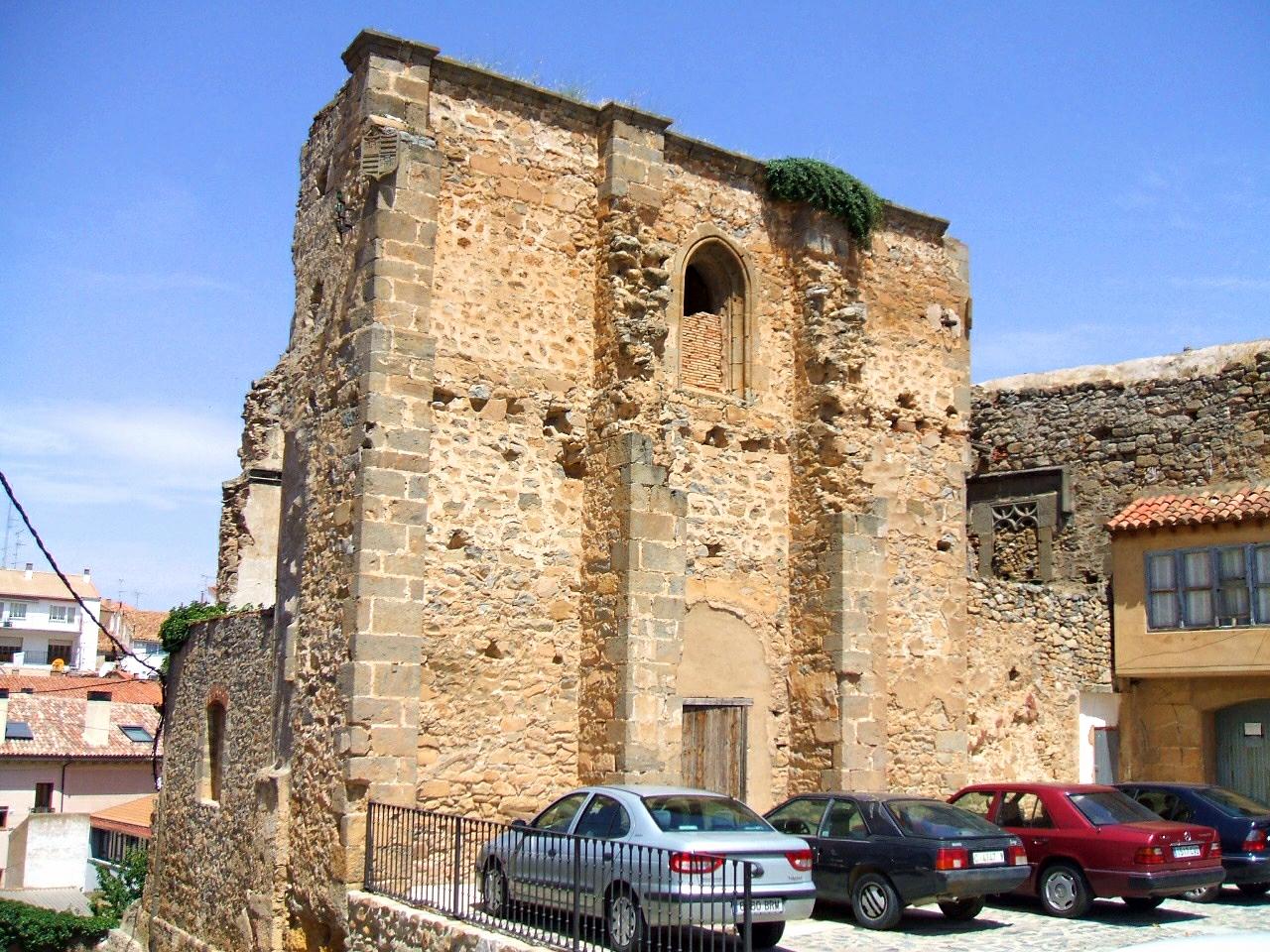
A short walk from the town hall stands Valtajeros' real landmark: the church of Nuestra Señora del Collado, raised in the advanced thirteenth century. It is a classic iglesia-fortaleza, a fortress-church: battlements with merlons, arrow slits, thick defensive walls and a projecting machicolation over the entrance give it the profile of a small castle rather than a place of worship. Set against the plain, administrative town hall building, that defensive architecture tells the fuller story of a community that once had to organize its own protection.
When should you visit?
The best time to come is the second Saturday of August, when Valtajeros celebrates the feast of its patroness, the Virgen del Collado — the village comes to life, if only on a scale that matches its size. Outside that date, the surroundings are quiet and largely empty, which has its own appeal for travelers seeking solitude, but also means local services — food, lodging — are essentially nonexistent on site. It is worth basing a trip in a larger nearby town, such as Ólvega or the city of Soria itself.
Frequently asked questions
Can you go inside Valtajeros town hall? The building serves as the working seat of the municipal government and is not set up for tourist visits — it is best appreciated from the outside, as the centerpiece of the village square.
How many people live in Valtajeros? It is one of the smallest municipalities in Soria province, with a permanent population in the low double digits or less, typical of the depopulating Tierras Altas district.
What else is worth seeing nearby? The fortress-church of Nuestra Señora del Collado on the main square is the must-see, and more broadly the whole string of Tierras Altas y El Valle villages, which preserve their medieval layout and thirteenth-century defensive churches.
Is it worth visiting Valtajeros without a special occasion? Yes, for travelers drawn to Castile's emptied-out corners — Valtajeros is a frozen fragment of the region's medieval repopulation history, not a destination with developed tourist infrastructure.
Nearby places

Earn badges for the places you visit
Download NextOnTrip, discover new places and check off your trails.