About this place
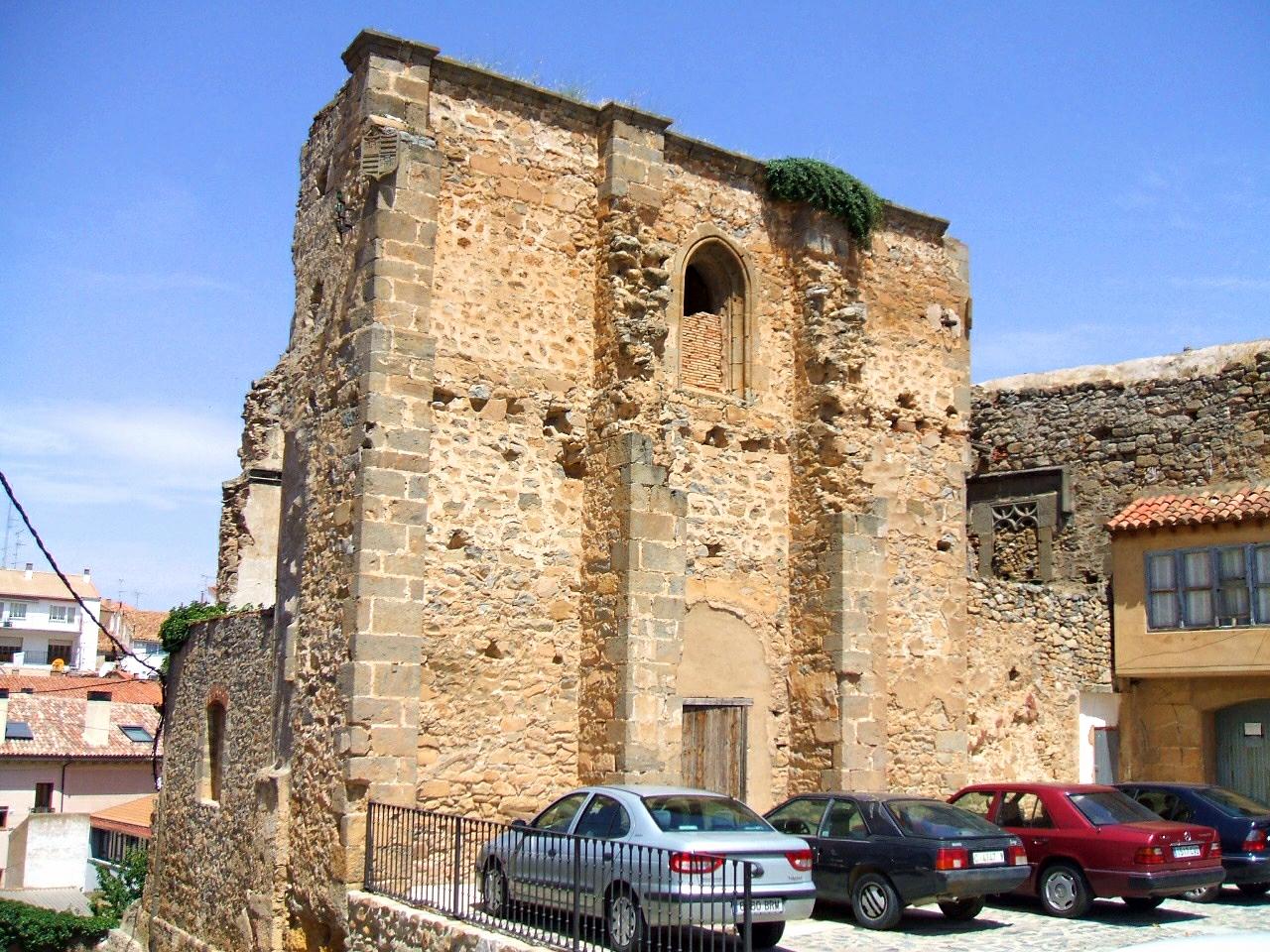
The Church of Nuestra Señora de Yanguas is a ruined Gothic church standing on Plaza de Castejón in Ágreda, a town in the province of Soria, in the Castile and León region of northeastern Spain. Only part of its chancel survives today, but the site carries a layered history tied to medieval settlement and later noble patronage in Ágreda.
Where is the church located?
Ágreda sits near the eastern edge of Soria province, close to the borders with Aragón and La Rioja, in a historic region once dotted with fortified towns guarding routes between Castile and its neighbors. The ruins of the Church of Nuestra Señora de Yanguas stand in the Barrio de la Peña neighborhood, on Plaza de Castejón, one of the notable squares of Ágreda's old quarter. The town is also known for its association with Sor María de Ágreda, a 17th-century nun and mystical writer remembered for her correspondence with King Philip IV, adding another layer of historical interest to the area.
What is the history behind the church?
The church's origins go back to the 12th century, when it was built by settlers who had arrived from the town of Yanguas and established themselves in what became Ágreda's Barrio de la Peña. It was originally dedicated to Saint Martin (San Martín), a name it kept for several centuries.
The turning point came in the first quarter of the 16th century, when the building was substantially rebuilt in the late Gothic style. The reconstruction was funded by the Castejón family, specifically Diego González de Castejón and his wife Catalina del Río. It was at this time that the church's dedication also changed, from San Martín to Nuestra Señora de Yanguas, honoring the memory of the settlers who had given the neighborhood its name.
The church eventually lost its central religious role when devotion to the Virgen de los Milagros (Our Lady of Miracles) was transferred to the more sumptuous church of Ágreda's Augustinian convent, which today is known as the Basílica de Nuestra Señora de los Milagros. Once that shift took place, the church of Yanguas gradually fell into disuse and decay, a state it remains in today.
What can visitors see today?
The best-preserved part of the structure is its chancel, covered by a ribbed Gothic vault — a detail that, five centuries on, still hints at the quality of the late Gothic stonework and the original proportions of the building. The rest of the church is in ruins, though the outline of its walls and overall layout remain visible to visitors.
The site makes for an interesting stop for anyone exploring Ágreda's historic center, particularly alongside nearby landmarks such as the town walls, its other churches and convents, and Plaza de Castejón itself, one of the characteristic public spaces of the old town. The contrast between the modest ruin visible today and its layered past — from 12th-century settlement, through noble patronage, to the eventual transfer of Marian devotion elsewhere in town — makes it a worthwhile addition to any tour of Ágreda's heritage sites.
Frequently asked questions
What was the Church of Nuestra Señora de Yanguas originally? It began in the 12th century as a church dedicated to Saint Martin, built by settlers from Yanguas, before being rebuilt in the late Gothic style in the early 16th century and rededicated to Nuestra Señora de Yanguas.
Why was the church's dedication changed? The new dedication honored the settlers from Yanguas who established the Barrio de la Peña neighborhood in the 12th century, where the church stands.
Who funded the 16th-century reconstruction? The late Gothic rebuilding was funded by the Castejón family, namely Diego González de Castejón and his wife Catalina del Río.
Why is the church in ruins today? Devotion to the Virgen de los Milagros was moved to the grander church of Ágreda's Augustinian convent, and the abandoned church of Yanguas gradually fell into ruin afterward.
What remains of the original building? The best-preserved element is the chancel, covered by a late Gothic ribbed vault; the rest of the structure survives only as ruins.
Nearby places

Earn badges for the places you visit
Download NextOnTrip, discover new places and check off your trails.