About this place
Triana is a historic district in the center of Las Palmas de Gran Canaria, stretching north of the Guiniguada ravine, right next to the original core of the city known as Real de Las Palmas. Its roots go back to the 15th century, and its name is a direct nod to Seville's own Triana district — many of the conquistadors who settled on Gran Canaria came from Seville, and the way the ravine split the new city reminded them of how the Guadalquivir river divides Seville. Today Triana is one of the most recognizable and frequently visited corners of the island's capital, valued for its architecture, commercial atmosphere, and proximity to the historic Vegueta quarter.
How did the district develop over time?
By the mid-16th century, the district's main street stretched all the way to the defensive walls of Las Palmas, which closed off the city on its northern side. It was there that numerous street vendors, known as treceneras, set up stalls selling everyday goods. The nearby Port of Las Palmas gave Triana, for a long time, the character of a maritime district tied to fishermen, merchants, and craftsmen connected to the sea. That profile began to change in the early 20th century, when port activity shifted to the newly built Puerto de la Luz on the La Isleta peninsula, and Triana gradually turned into a commercial and bourgeois district.
What makes Calle Mayor de Triana notable?
The heart of the district is Calle Mayor de Triana, a prominent shopping street lined with buildings representing several architectural styles from the turn of the 19th and 20th centuries: neoclassical, academic eclecticism, and Art Nouveau (modernismo). The facades, balconies, and stucco details reflect the period when the local merchant bourgeoisie invested in representative headquarters for their businesses and residences. The street served as the city's main commercial artery long before modern shopping centers existed, and it remains one of the most important shopping streets in Las Palmas today.
Why does Triana hold protected status?
Because of the historical and architectural value of its overall built environment, the Triana district was declared a Bien de Interés Cultural under the Conjunto Histórico (historic ensemble) category in 1990. This designation formally protects the urban layout and building facades, which has helped preserve the district's characteristic, compact arrangement of turn-of-the-century townhouses despite the natural pressures of urban development.
What is worth seeing while walking through Triana?
Walking through Triana is above all about discovering architectural details — wrought-iron balconies, ornate facades, and Art Nouveau flourishes that sit side by side within a compact area. The district borders directly on Vegueta, the oldest part of the city, making it easy to combine both areas into a single walking route. Triana's former identity as a commercial and port district is still visible in its street layout and in the many ground-floor units of its townhouses, which continue to house shops and small businesses.
Frequently asked questions
Are Triana and Vegueta the same district? No — they are two neighboring but distinct historic districts of Las Palmas, separated by the Guiniguada ravine. Vegueta is the older, original core of the city, while Triana developed as its northward extension.
Where does the district's name come from? It was named by settlers from Seville, referencing that city's own Triana district on the far bank of the Guadalquivir river — the similar geography, with a ravine or river splitting the city in two, led them to reuse the name.
What was Triana before it became a commercial district? For centuries, until the early 20th century, Triana functioned as a maritime district linked to the activity of the Port of Las Palmas, before port traffic shifted to Puerto de la Luz.
Nearby places
-

Plaza de Cairasco
Las Palmas na wyspie Gran Canaria
-
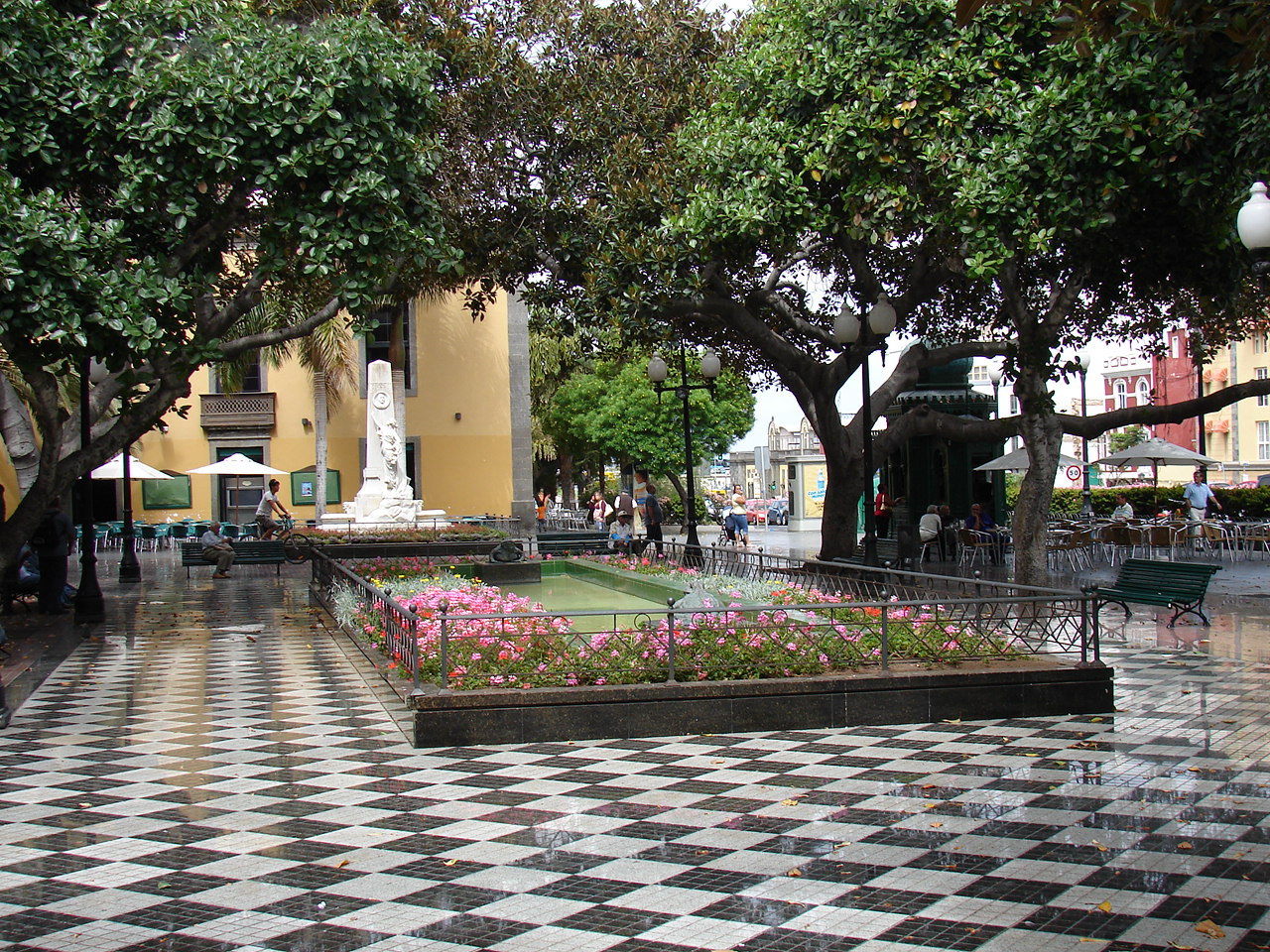
Plaza Hurtado de Mendoza
Las Palmas na wyspie Gran Canaria
-
Muralla de Las Palmas
Las Palmas na wyspie Gran Canaria
-
Castillo de Mata
Las Palmas na wyspie Gran Canaria
-
Castle of San Francisco
Las Palmas na wyspie Gran Canaria
-
Plaza de la Feria
Las Palmas na wyspie Gran Canaria
Earn badges for the places you visit
Download NextOnTrip, discover new places and check off your trails.