About this place
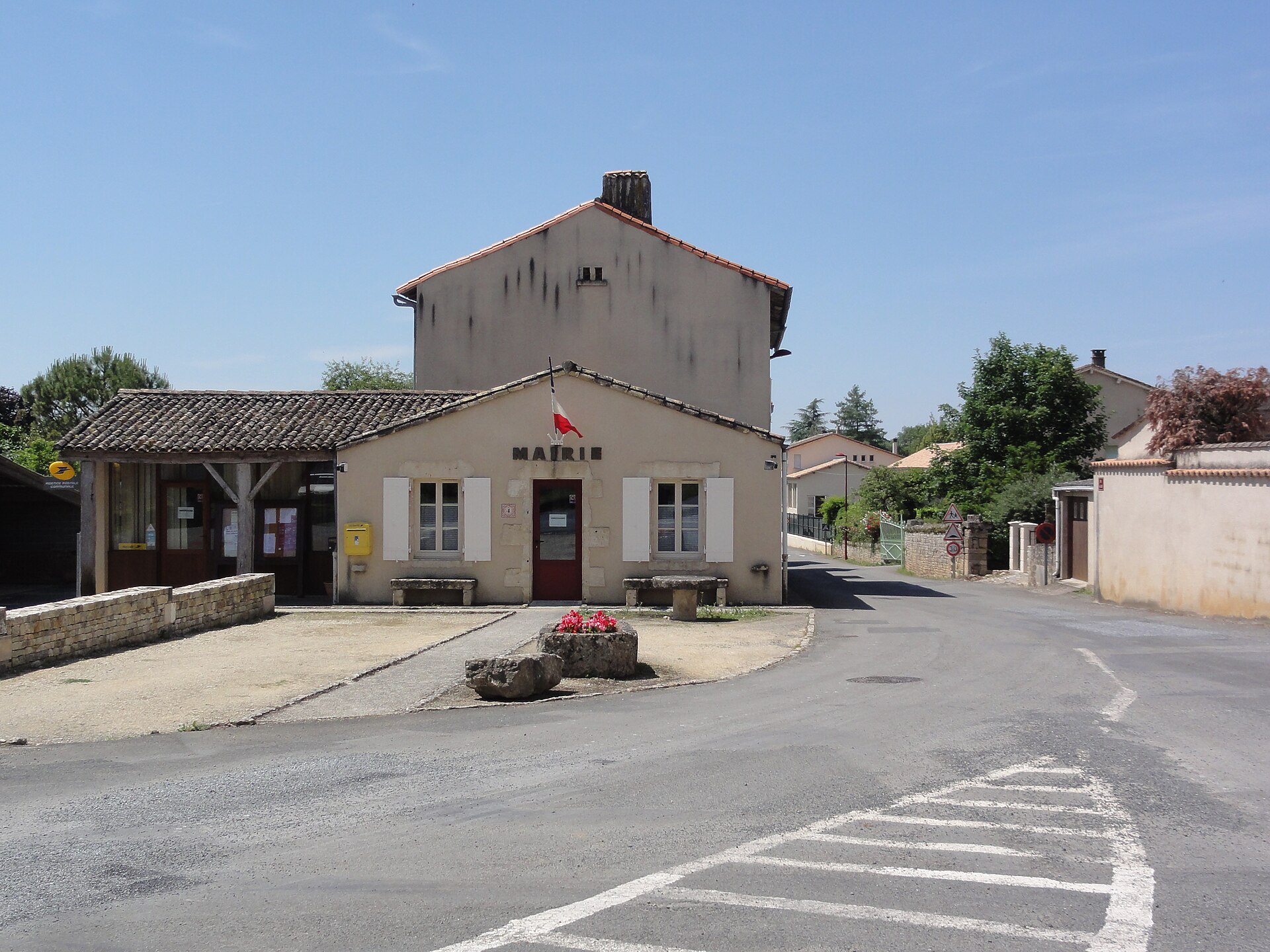
The town hall of Prahecq stands on the Place de l'Église, right at the heart of this small commune in the Deux-Sèvres department, in the Nouvelle-Aquitaine region. It houses the local administration, but for visitors passing through it also works as a handy landmark for getting your bearings in a village that sits just a short drive from Niort.
Where is Prahecq, and how far is it from Niort?
Prahecq is home to roughly 2,200 residents and lies about 12 kilometres from Niort, the departmental capital and the largest city nearby. That proximity has shaped the commune into something of a satellite community: many residents commute into Niort for work, while Prahecq itself has built up its own light-industrial and craft business zone, which has drawn new companies and new residents alike. For travellers, that makes Prahecq a convenient base — easy to combine with a day trip into the Marais Poitevin, the region's famous network of canals and wetlands, without needing to book a room in Niort itself.
Where does the name Prahecq come from?
Two explanations circulate for the village's name. One traces it to Pratius, a wealthy notable among the Pictones, the Gallic tribe that once inhabited this part of western France. The other derives it from the Latin word "pratium", meaning a wet or flooded meadow — a fitting description for this corner of Poitou, criss-crossed by streams and low-lying, waterlogged ground.
What history lies behind this quiet corner of Poitou?
The current town hall is a far more recent building, but the ground Prahecq sits on has a history stretching back to the Middle Ages. A castle was raised here in the 11th century, belonging to the House of Lusignan, one of the most powerful feudal families in Poitou. In 1242, the stronghold was captured by Alphonse of Poitiers, brother of King Louis IX (Saint Louis), who then had it partly demolished — a deliberate punishment aimed at its owner, who had led the Poitevin barons in revolt against royal authority. That episode places Prahecq squarely within the broader 13th-century struggle between local nobility and the French crown that played out across Poitou.
What is there to see in the village itself?
Today's village centre revolves around the Place de l'Église, where the town hall sits alongside the parish church. That layout is typical of small communes across Deux-Sèvres: the church square doubles as the civic and social heart of the village, combining administrative, religious, and everyday community life in one small space. A walk through Prahecq offers a glimpse of how a rural commune in the shadow of a larger city can still hold onto its own identity and its own pace of economic growth, driven in large part by its local business zone.
Frequently Asked Questions
How far is Prahecq from Niort? Prahecq lies roughly 12 kilometres from Niort, making it a convenient stop or base for exploring the departmental capital of Deux-Sèvres.
Are there any visible remains of the old castle in Prahecq? The medieval Lusignan castle was already partly demolished in 1242 following its capture by Alphonse of Poitiers, so the village today doesn't offer extensive ruins — its historical interest lies more in the story of those events than in standing stonework.
How many people live in Prahecq? According to 2020 figures, the commune had a population of around 2,242.
What drives the local economy in Prahecq today? Alongside farming typical of the Poitou region, the commune's economy has been boosted by a local craft and light-industrial business zone that has attracted new companies and new residents in recent years.
Nearby places

Earn badges for the places you visit
Download NextOnTrip, discover new places and check off your trails.