About this place
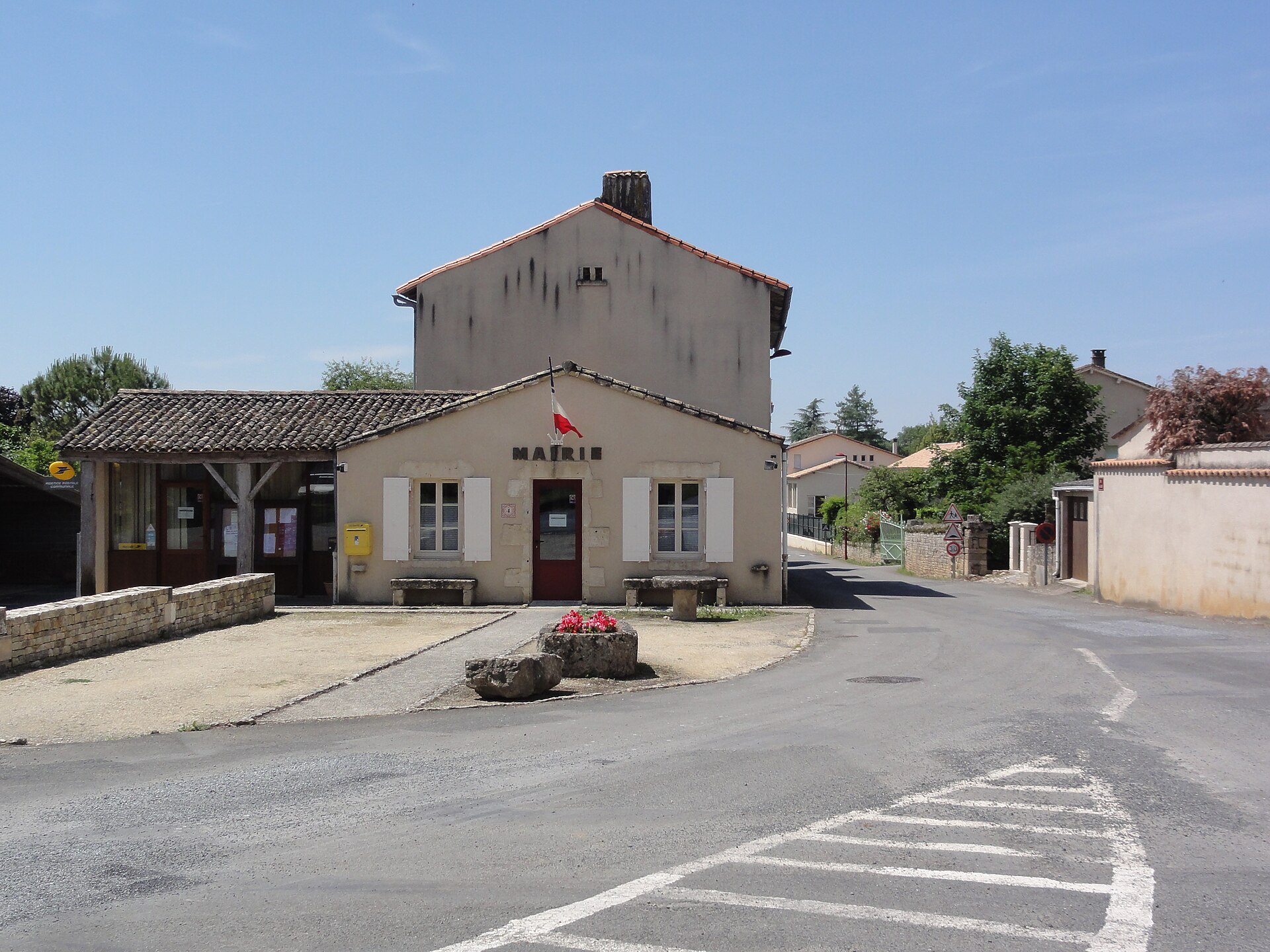
Mairie déléguée de Saint-Martin-lès-Melle is the local town hall of the former commune of Saint-Martin-lès-Melle, now a delegated commune within Melle, in the Deux-Sèvres department of the Nouvelle-Aquitaine region. The village sits barely a kilometre west of central Melle and roughly 26 km from Niort, the departmental capital. It's a quiet corner of Poitou, threaded by the Béronne river, whose story is closely bound up with the much larger town next door.
How did Saint-Martin-lès-Melle become a delegated commune?
On 1 January 2019, the once-independent commune of Saint-Martin-lès-Melle merged with Melle, Mazières-sur-Béronne, Paizay-le-Tort and Saint-Léger-de-la-Martinière to form a single, larger commune under the name Melle. Saint-Martin-lès-Melle kept its own identity through this merger as a "commune déléguée," complete with a local mairie déléguée that still handles residents' administrative needs on site, even though the main municipal government now sits in Melle. This kind of commune merger has become common across France in recent years, letting smaller villages retain a piece of local identity while simplifying administration across the wider territory.
What is worth seeing in and around Saint-Martin-lès-Melle?
At the heart of the village stands the Romanesque church of Saint-Martin, a listed historic monument and a fine example of the many stone churches scattered across the Pays Mellois. The wider region is known for the three great Romanesque churches of Melle itself and for the remains of medieval town fortifications, both testaments to how prosperous this hub once was.
The name of the nearby Argentière stream and valley is no accident — it comes from "argent," the French word for silver, mined in the surrounding countryside as far back as the Carolingian era. Silver from the Melle mines was struck into coinage under Charlemagne, making this stretch of Poitou one of the more significant early medieval minting centres in Western Europe.
What walking trails pass through Saint-Martin-lès-Melle?
From the square in front of the mairie, a circular walking route called "Des lavoirs de l'Argentière à la Béronne" sets off, running roughly 13.2 km and taking about three and a half hours on average. The trail blends nature and history: it passes stone public washhouses (lavoirs), the Font Maye spring with its stone-built well, the church at Saint-Romans-lès-Melle and its own washhouse, the Béronne valley, the Loubeau caves with a historic washhouse, and the château de Chaillé, where further washhouses line the Argentière stream. Part of the route overlaps with the "Chemin de la Découverte" nature trail and with the French section of the Way of St James to Santiago de Compostela, making Saint-Martin-lès-Melle a natural starting point for both pilgrims and hikers exploring rural Poitou.
The area also lends itself to longer outings linking Saint-Martin-lès-Melle with neighbouring Saint-Romans-lès-Melle — the two villages are close enough that a combined loop takes in another Romanesque church and a scenic stretch of the Béronne valley.
Frequently Asked Questions
Is Saint-Martin-lès-Melle still its own commune? No. Since 1 January 2019 it has been a delegated commune within Melle, though it keeps its own mairie déléguée serving residents locally.
How far is Saint-Martin-lès-Melle from central Melle? About 1 km, close enough to combine visits to both on foot or by bike.
What can visitors see within walking distance of the mairie? The Romanesque Saint-Martin church, the Béronne valley, stone washhouses, and the starting point of the lavoirs de l'Argentière walking loop.
Does the Way of St James pass through the village? Yes, part of the local walking network overlaps with the French section of the Camino de Santiago as it crosses the Poitou region.
Nearby places

Earn badges for the places you visit
Download NextOnTrip, discover new places and check off your trails.