About this place
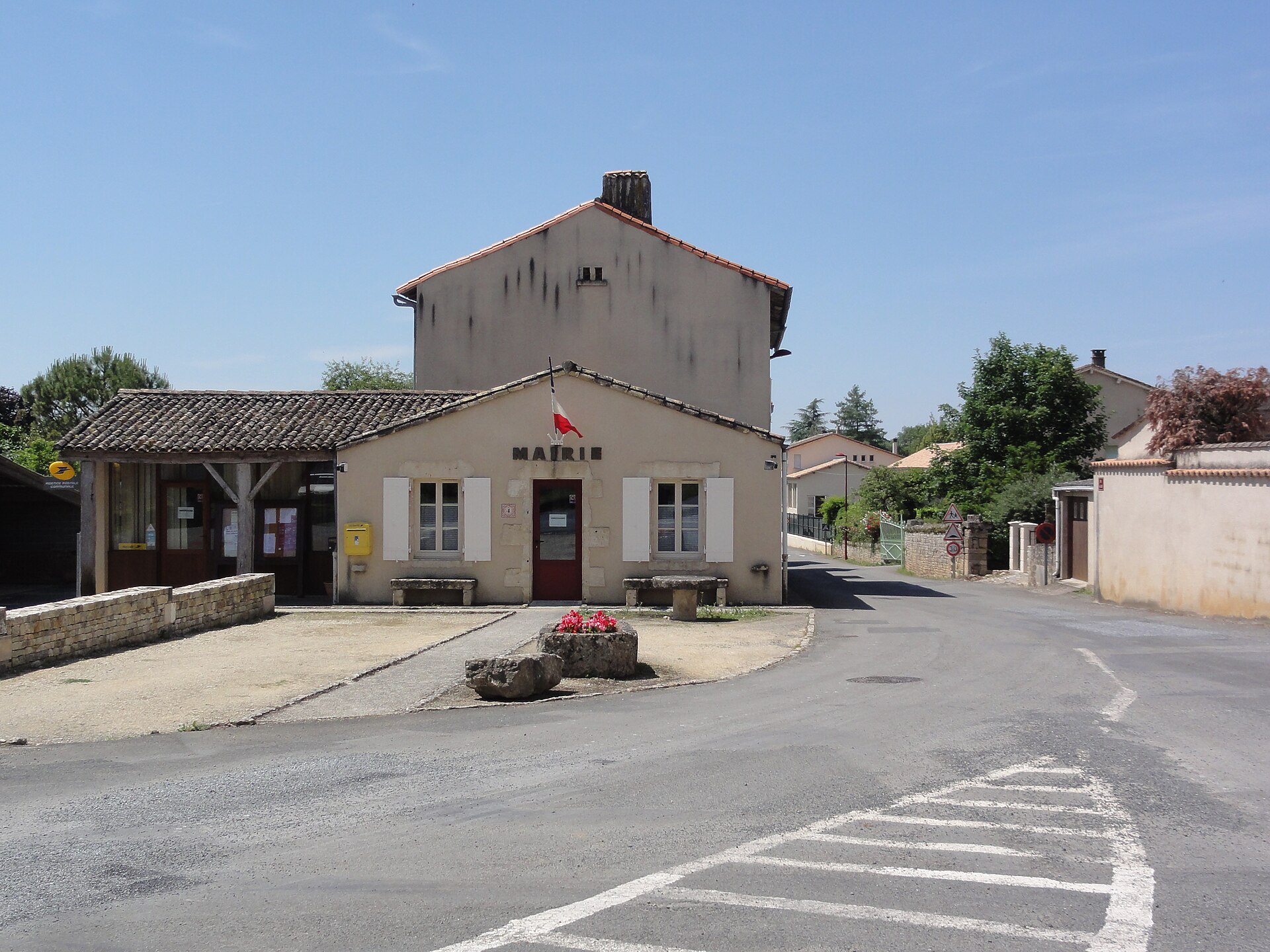
The Town Hall of Aubigné serves as the administrative seat of the small commune of Aubigné, located in the Deux-Sèvres department in the Nouvelle-Aquitaine region of western France. The building on Rue des Écoles runs the day-to-day affairs of a village that, despite its modest size, carries a surprisingly deep and eventful history stretching back to the Roman era.
Where is Aubigné located?
The commune sits in the southern part of Deux-Sèvres, close to the small town of Chef-Boutonne, in a rural stretch of the historic Poitou region. Aubigné belongs to the Communauté de communes de Mellois en Poitou and covers roughly 29 square kilometers. It is one of those quiet French villages where the population has stayed under two hundred residents for decades, giving it a distinctly intimate, countryside feel. Farmland, small woodlands, and stone-built houses typical of the region make up the surrounding landscape.
What is the history behind Aubigné?
The village's name comes from a Gallo-Roman root and literally means "the estate belonging to someone named Albinius" — a naming pattern common across many settlements in this part of France that trace their origins to Roman or immediate post-Roman times. Fragments of Roman roof tiles have in fact been discovered within the commune, suggesting that a Roman villa once stood here, around which a settlement gradually took shape.
The earliest written record of Aubigné dates back to 1081, when a local nobleman, the viscount of Aulnay, donated the village church, along with its priory and grazing rights in a nearby forest, to a Cluniac abbey in Poitiers. The very existence of this donation charter implies the settlement had already been established well before that date.
Twenty years earlier, in the spring of 1061, the area around Aubigné became a battlefield in a conflict between the forces of the Count of Anjou and the Duke of Aquitaine. The fighting destroyed the settlement of the time, at a site whose name still recalls the bloodshed of that day. The village was later rebuilt nearby and went on to endure the centuries that followed as a quiet farming community.
After the French Revolution, when the country's administrative map was being reshaped, the neighboring and even smaller commune of Bret — home to only a few dozen people at the time — was merged into Aubigné. The two settlements have formed a single administrative community ever since, governed from what is now the town hall.
What else is there to see nearby?
Small as it is, the commune makes a good base for exploring the rural corners of Deux-Sèvres, a region known for its network of scenic country roads, Romanesque churches, and an unhurried, largely untouristed atmosphere. It suits travelers looking for an authentic taste of the French countryside, away from the crowds.
Frequently Asked Questions
Which department is Aubigné in? Aubigné is located in the Deux-Sèvres department, in the Nouvelle-Aquitaine region of western France.
Where does the name Aubigné come from? The name has Gallo-Roman roots and refers to a landed estate once belonging to someone named Albinius — a naming pattern found in many villages across the region.
Are there traces of Roman settlement in Aubigné? Yes, fragments of Roman roof tiles have been found within the commune, pointing to a former Roman villa on the site.
Which commune was merged into Aubigné? After the French Revolution, the small neighboring commune of Bret was merged into Aubigné.
Nearby places

Earn badges for the places you visit
Download NextOnTrip, discover new places and check off your trails.