About this place
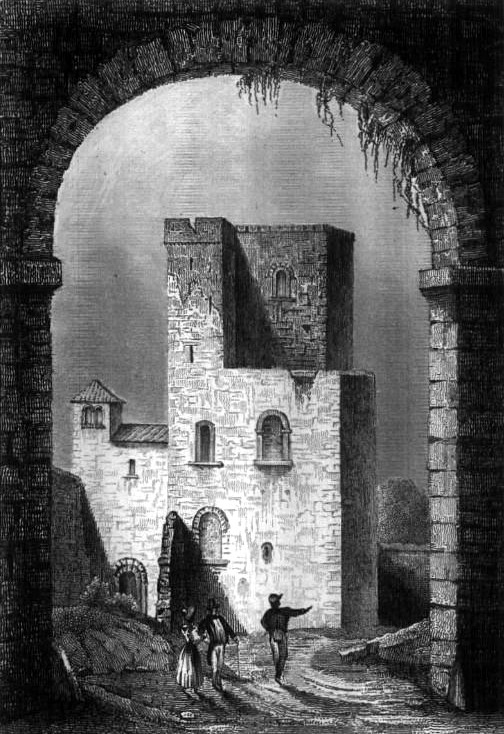
Tour du Jardin is one of the surviving defensive towers of Châteauvillain, a small town in the Haute-Marne department of eastern France. The tower stands along the northern stretch of the castle walls and forms part of the extensive fortification system that protected the town for centuries.
What will you see there?
Tour du Jardin is notable for its machicolations — projecting stone structures at the top of the wall with openings in the floor, through which defenders could drop stones or other objects on attackers standing directly beneath the wall without exposing themselves to return fire. This type of defensive feature was typical of medieval French military architecture and appears on several other towers in Châteauvillain as well.
The tower belongs to the town's second ring of fortifications, built in the 14th century, which at its peak counted more than sixty towers and was pierced by three drawbridges. Around twenty of these towers survive today, and Tour du Jardin — standing next to the castle grounds from which it takes its name (it bordered the castle gardens) — is one of the more recognizable among them.
While exploring the area, it's worth walking a stretch of the roughly four-kilometre chemin de ronde, the defensive walkway that links the individual towers and gives a real sense of the scale of the town's original defensive system. The wall at this point retains considerable height, which helps convey the character of Châteauvillain's medieval fortifications.
How to get there?
Châteauvillain lies roughly twenty kilometres west of Chaumont, the capital of the Haute-Marne department. The town is best reached by car, being well connected to the regional road network of the Grand Est region. Tour du Jardin sits within the old town, close to the castle, and is easily reached on foot from the centre — a walk of just a few minutes from the main square.
History
The name Châteauvillain comes from Latin — "Castrum" (a fortification, a fortified tower) combined with "Villanum" (a settlement or farm). The town's first fortifications date back to the 11th century, and in 1160 Hugues de Broyes, the first lord of Châteauvillain, converted the keep into a residential dwelling. In 1190 a castle surrounded by walls was built. His successors continued expanding the town's defences, and in the 14th century a second, much larger ring of fortifications was raised, featuring sixty towers — Tour du Jardin among them. Châteauvillain's town walls stretched for about 2.6 kilometres in total, making it one of the most developed defensive systems in the Haute-Marne region.
When to visit?
The best time to explore Châteauvillain's fortifications, including Tour du Jardin, is spring or early autumn, when mild temperatures make for comfortable walks along the walls. In summer, aim for morning or late afternoon to avoid the heat, since part of the route runs through open ground along stone walls that heat up considerably in direct sun.
Frequently asked questions
What are the machicolations visible on Tour du Jardin? They are projecting defensive structures at the top of the wall, fitted with floor openings through which defenders could drop stones or other objects on attackers standing directly below.
Why is the tower called Tour du Jardin? The name comes from its position next to the castle gardens ("jardin" means garden in French), which it bordered as part of the northern stretch of the town walls.
How many of Châteauvillain's fortification towers survive today? Of the more than sixty towers built in the 14th century, around twenty survive today, including Tour du Jardin.
Is there an admission fee to see the tower? No — Tour du Jardin forms part of the town's outer walls and can be freely viewed while walking through the old town, with no ticket required.
Nearby places

Earn badges for the places you visit
Download NextOnTrip, discover new places and check off your trails.