About this place
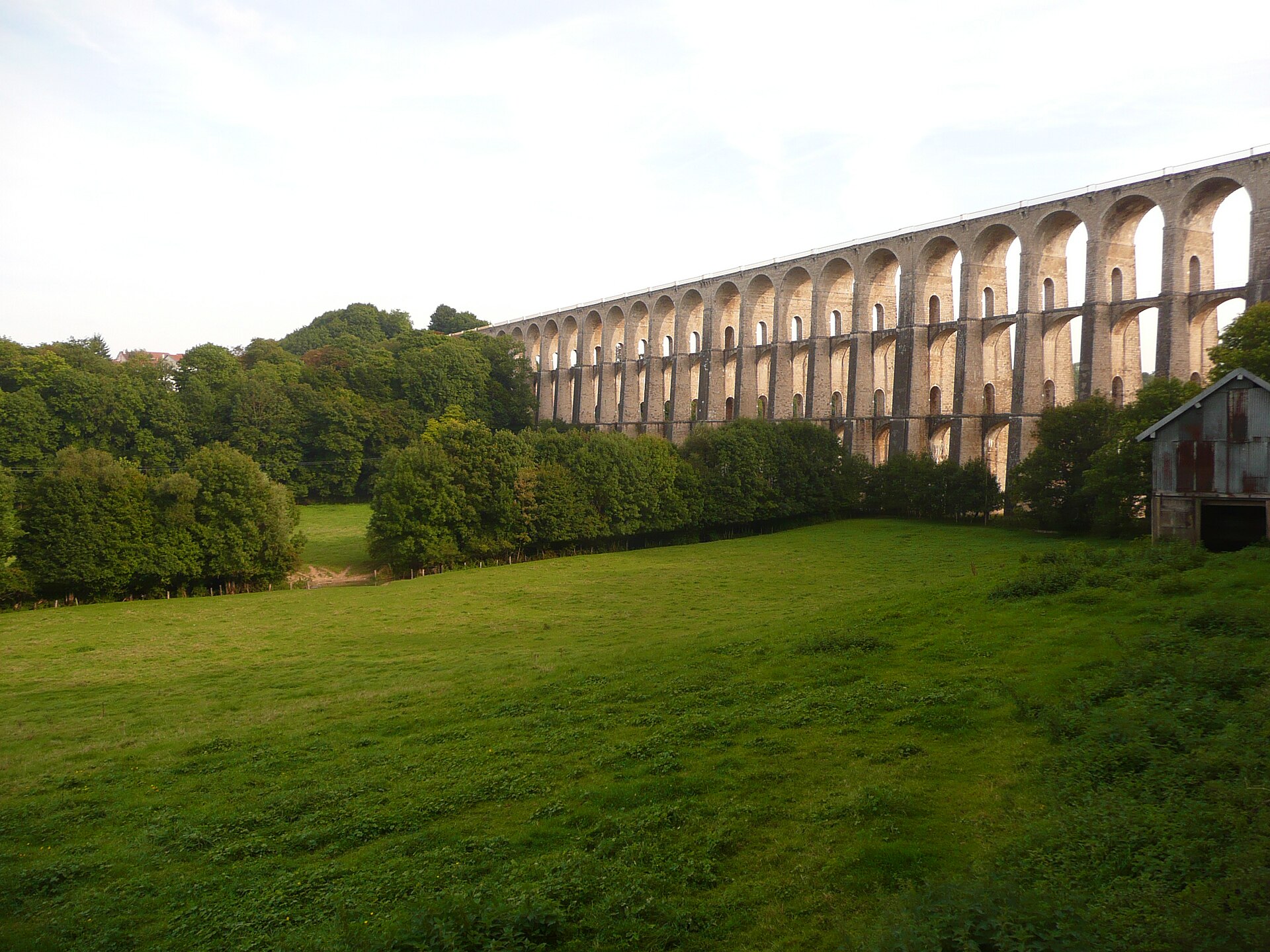
The Chaumont Viaduct is one of the most striking 19th-century railway monuments in France, rising above the Suize valley in the town of Chaumont, in the Grand Est region. For more than 170 years this monumental stone structure has dominated the town's skyline and remains one of the enduring symbols of Haute-Marne.
What is the Chaumont Viaduct?
The viaduct was built as part of the railway line linking Paris-Est to Mulhouse-Ville. Its purpose was to allow trains to reach the upper, historic part of Chaumont, which sits at a considerable height above the Suize valley. The structure stretches 600 meters in length and rests on 50 arches that rise to a height of 52 meters, making it one of the most impressive works of 19th-century railway engineering in Europe. It was designed by architect Eugène Decomble.
How was the viaduct built?
The pace of construction was remarkable for its era. The entire structure was completed in just 15 months, a feat that required 2,500 workers and 300 horses laboring day and night. Around 60,000 cubic meters of stone masonry were put in place during that time. This scale of effort reflected the importance 19th-century France placed on expanding the rail network connecting the capital to its eastern regions.
What happened to the viaduct during the Second World War?
The viaduct survived a difficult chapter in its history. On 31 August 1944, retreating German forces blew up two of its arches, destroying a 45-meter stretch of the structure. The aim was to cut the railway line and block the road connecting Chaumont to Auxerre. Given the strategic importance of this route for the country's post-war reconstruction, a temporary track was already back in service by 28 December 1944, and the viaduct itself was fully rebuilt by 6 November 1945. The speed of this work reflects the priority given to restoring rail links in eastern France immediately after liberation.
What does the viaduct look like today?
Today the viaduct still carries an active railway line while also serving as a defining feature of Chaumont's identity. A pedestrian walkway runs along its first level, offering views over the Suize valley and an unusual vantage point over the town. Since 8 June 2012, the structure has been lit up at night using 430 LED projectors placed at its base and within its arches, turning the viaduct into one of the town's most recognizable sights after dark.
Why visit the Chaumont Viaduct?
For travelers exploring Haute-Marne, the viaduct is close to essential viewing — combining historical, engineering, and aesthetic value in a single landmark. It offers a rare chance to see a 19th-century stone railway structure of this scale up close, still in use for its original purpose. Walking the pedestrian path beneath the arches reveals the true proportions of the structure, while the evening illumination adds a distinctly modern layer to an otherwise historic monument.
Frequently Asked Questions
How long is the Chaumont Viaduct and how many arches does it have? The structure is 600 meters long, made up of 50 arches, and rises to a height of 52 meters above the Suize valley.
Who designed the viaduct? It was designed by architect Eugène Decomble and built in just 15 months by a workforce of 2,500 laborers and 300 horses.
Was the viaduct destroyed during the war? Yes. On 31 August 1944, retreating German forces demolished two of its arches. A temporary track was restored by 28 December 1944, and the full reconstruction was completed on 6 November 1945.
Can visitors walk on or around the viaduct? Yes, a pedestrian walkway runs along the structure's first level, allowing visitors to explore the Suize valley and view the viaduct up close — especially striking after dark thanks to the LED lighting installed in 2012.
Nearby places

Earn badges for the places you visit
Download NextOnTrip, discover new places and check off your trails.