About this place
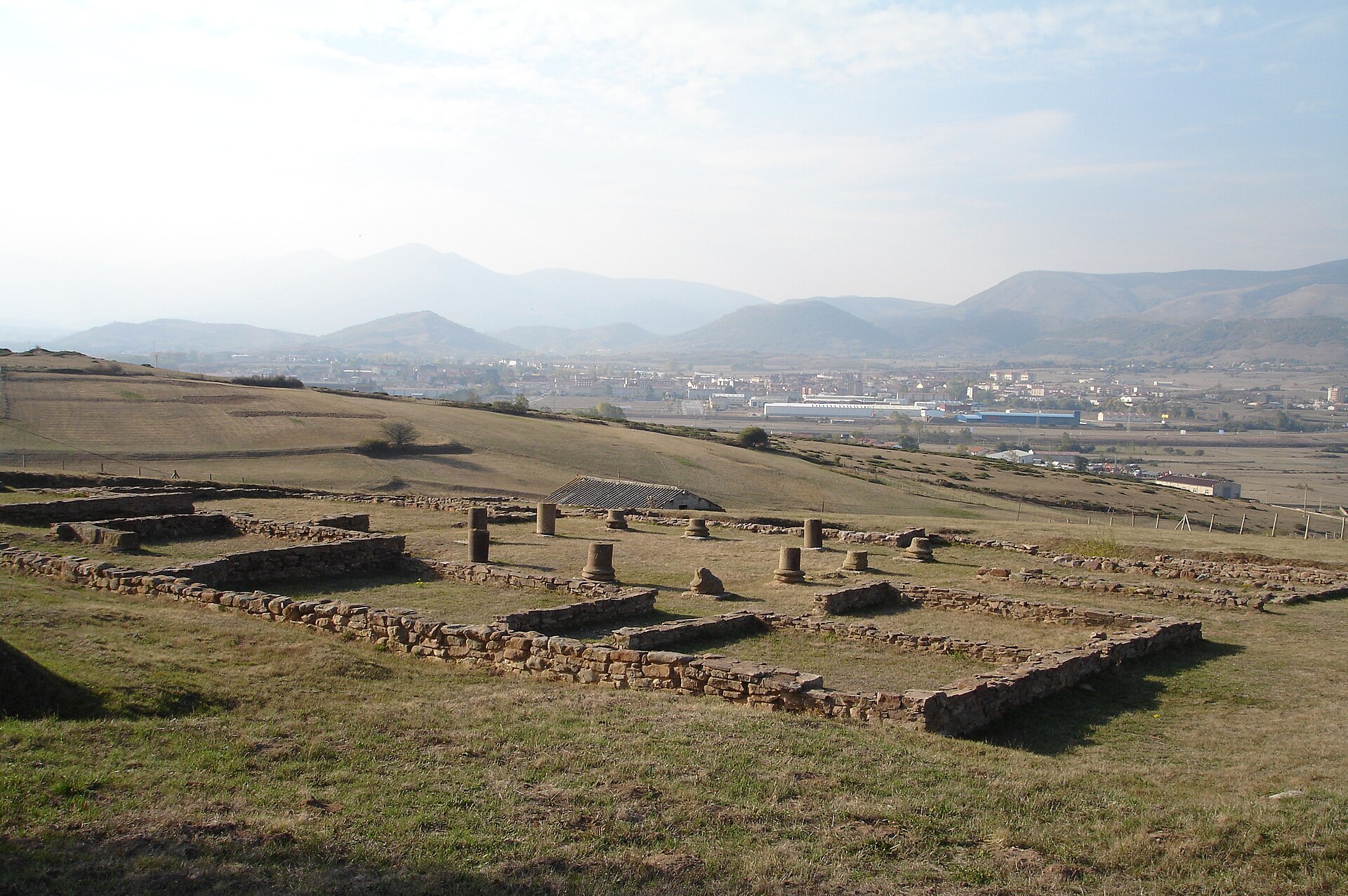
Torrejón de las Henestrosas is a medieval archaeological site in the village of Las Henestrosas de las Quintanillas, in the municipality of Valdeolea (Cantabria) — the remains of a fortified tower-house together with its surrounding defensive complex.
What actually survives on this hill?
On a modest rise in the Valdeolea valley lie the foundations of an almost perfectly square fortified enclosure covering roughly 1,250 square metres — a layout that sets it apart from the irregular early medieval settlements typical of the region. At its centre stood a stone tower-house with walls 1.2 metres thick; the residential building itself measured about 19.7 by 9.2 metres, entered through a 2.4-metre-wide threshold. Excavations showed the upper floor was built from oak planking. The core structure sat on a stone platform ringed by a perimeter wall, beyond which lay a moat roughly 3 metres wide cut straight into the limestone bedrock, plus an outer earthwork raised from the spoil dug out of the moat.
Who built the fortification, and when?
Radiocarbon dating placed construction in the late 11th century (a result of 1090 +/- 130). The estate belonged to Gonzalo González de Lucio, a nobleman who controlled extensive territory spanning three merindades, administrative divisions of medieval Castile. Coin finds spanning the reigns of Sancho IV through Enrique II trace several generations of continuous use.
Why was the tower destroyed?
Destruction came after 1330, most likely tied to the Castilian civil war between Pedro I and Enrique II of Trastámara. Gonzalo González de Lucio's political betrayal is, according to researchers, the likely trigger for the violent end of the complex — excavations turned up clear evidence of structural violence consistent with a punitive military action against a disloyal vassal.
How was the site discovered?
The site had been known locally since the 1940s, when the parish priest, Teótimo Gallo, invited the archaeologist Jesús Carballo to investigate it. It was initially misidentified as a Celtic hillfort (castro). It took Ramón Bohigas Roldán's 1978 licentiate thesis to correctly date the structure to the medieval period. Proper excavations followed between 1984 and 1989, across five field campaigns using an open-area method, uncovering about 400 square metres — roughly a third of the total site.
What did the excavations turn up?
Finds included coins from Sancho IV through Enrique II, pottery produced locally at the Olleros de Paredes Rubias workshops, imported glazed ceramics from Manises in Valencia, iron weapons and tools, household items, decorative bronze fittings, and gaming pieces and personal ornaments. The range of objects points to a household of real status and means.
How do you get there?
Las Henestrosas de las Quintanillas lies about 7 kilometres from Mataporquera, the municipal capital of Valdeolea. Take the CA-284 road toward Olea; roughly halfway, turn left following signs for Quintanas, then continue almost 4 kilometres along the local CA-834 road to reach the village. Nearby, it's worth also seeing the parish church of Santa María la Real — a listed cultural heritage asset since 1982 — and the Hermitage of Santa Ana, about 220 metres to the southwest of the site.
What protected status does the site hold?
The ruins of Torrejón de las Henestrosas were declared a Local Heritage Asset (Bien de Interés Local) in 2003.
Frequently asked questions
What exactly is Torrejón de las Henestrosas? The remains of a medieval fortified tower-house and its surrounding defensive complex — moat, earthwork and perimeter wall — built in the late 11th century in the Valdeolea valley.
When and why was the fortress destroyed? It was destroyed after 1330, in connection with the Castilian civil war between Pedro I and Enrique II of Trastámara, following the owner Gonzalo González de Lucio's political betrayal.
How do you reach the site? From Mataporquera, take the CA-284 toward Olea, turn left toward Quintanas, then follow the CA-834 for about 4 km to Las Henestrosas de las Quintanillas.
What else is worth seeing nearby? The parish church of Santa María la Real and the Hermitage of Santa Ana, roughly 220 metres from the site.
Nearby places

Earn badges for the places you visit
Download NextOnTrip, discover new places and check off your trails.