About this place
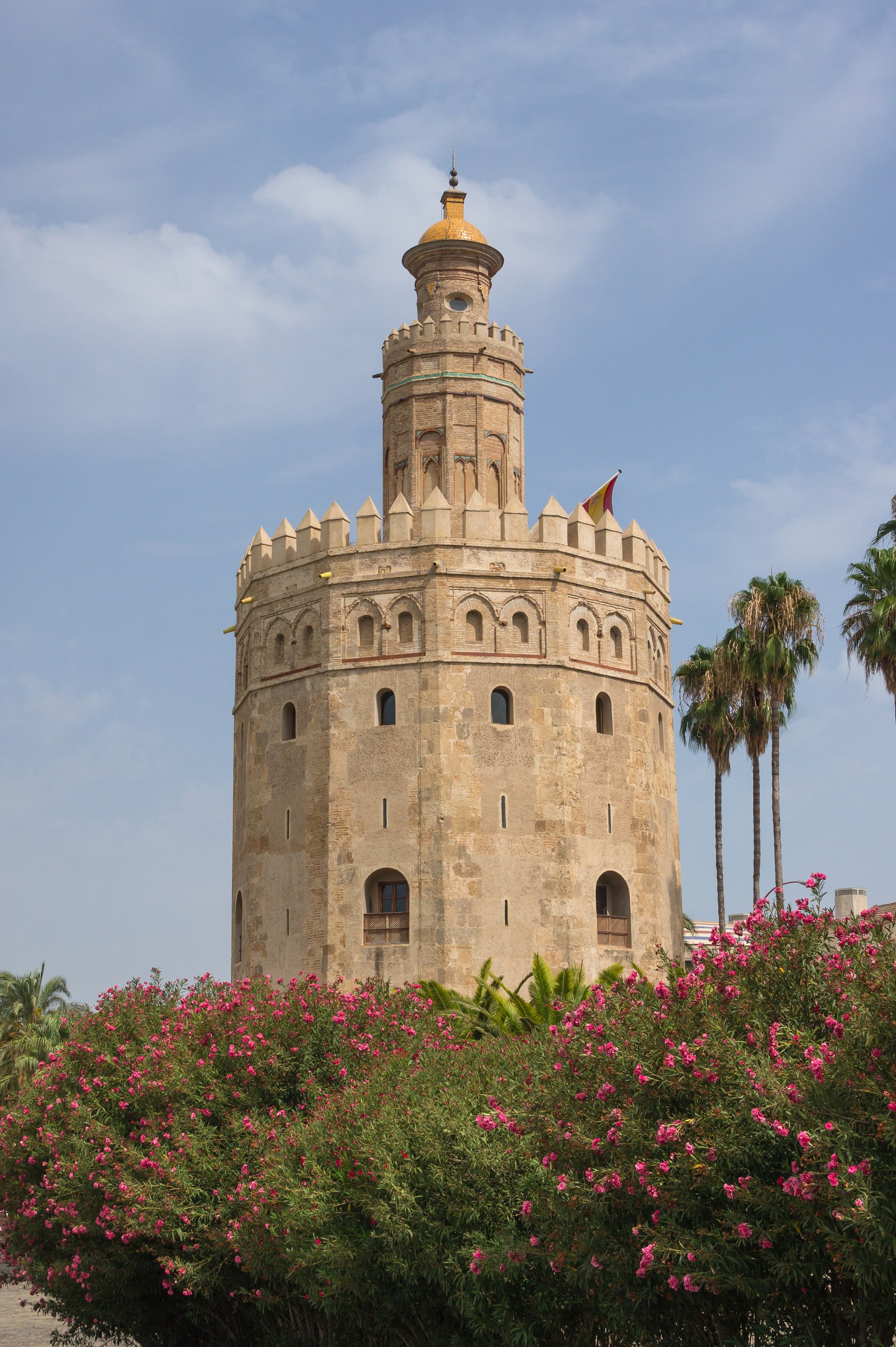
Torre del Oro is a 13th-century watchtower standing on the bank of the Guadalquivir River in Seville, one of the city's most recognizable landmarks. Its twelve-sided shape and golden-toned walls — once even more striking thanks to a lime-and-straw render — have caught the eye of travelers arriving by river or strolling along Paseo de Cristóbal Colón for centuries.
How do you get to Torre del Oro?
The tower sits right in the heart of Seville, on the riverfront, just a short walk from the cathedral and the Alcázar. Walking is by far the easiest way to reach it — following the promenade from the bullring, Plaza de Toros de la Real Maestranza, or crossing over from the Puente de Isabel II bridge. If you prefer public transport, several bus and tram stops are within a few minutes' walk, and the main train station, Santa Justa, is roughly a twenty-minute taxi or bus ride away. Seville's city center gets quite hot in summer, so it's worth timing your walk for the cooler parts of the day.
What will you see there?
Torre del Oro was built by Seville's Muslim rulers as part of the fortifications guarding the city's access from the river. Its main purpose was military: controlling boat traffic on the Guadalquivir. Over the centuries it also served as a landmark for sailors, functioning much like a beacon marking the entrance to the port. Its distinctive twelve-sided form sets it apart from the simpler square towers typical of the region's defensive architecture.
Today the tower houses a small maritime museum dedicated to the history of navigation and Seville's role as a trading port that connected Spain with the Americas for centuries. Visitors can see exhibits on navigation, ship models, and material covering the history of the building itself. The upper level offers a view over the river and the waterfront, which is an attraction in its own right.
The tower is also a popular photo subject from the outside — its golden walls against the blue sky and the river's surface create one of the most iconic images of Seville, especially at sunset.
When should you visit?
Spring (March to May) and autumn (October to November) are the best times to visit, with milder temperatures than the peak of summer. Seville can get extremely hot in summer, which makes long walks along the riverfront uncomfortable. Early morning, right after opening, is a good time to avoid crowds and the strongest sun. In the evening, the area around the tower takes on a special atmosphere as the illuminated structure reflects in the river and the promenade fills with people out for a stroll.
Frequently Asked Questions
What was Torre del Oro originally used for? It was a defensive watchtower, built by Seville's Muslim rulers to control access to the city from the Guadalquivir River.
Where does the name "Golden Tower" come from? The name refers to the golden hue the walls took on from a render once applied to them, especially striking in sunlight.
What can you see inside? A small maritime museum with exhibits on the history of navigation and Seville's seafaring, port-based past.
Is it easy to visit as part of a short stay in Seville? Yes — it's centrally located, close to the cathedral and the Alcázar, so it's easy to combine with visits to the city's other major landmarks.
Nearby places

Earn badges for the places you visit
Download NextOnTrip, discover new places and check off your trails.