About this place
Reales Atarazanas (the Royal Shipyards) in Seville is one of Europe's oldest surviving shipyard complexes, now tucked between the buildings of the El Arenal district right along the bank of the Guadalquivir.
Why was a shipyard built in the middle of the city?
King Alfonso X ordered its construction in 1252, shortly after Seville was retaken from Muslim rule. The crown needed a base for building war galleys, and the river gave direct access to the Atlantic. The complex was raised just outside the Almohad city walls, beyond the old town, so the noise and traffic of shipbuilding wouldn't disturb residents. The original design consisted of seventeen huge parallel bays set perpendicular to the river, each opening directly onto the water so finished hulls could be launched without delay.
How did the building's role change over time?
The yard functioned as a working shipbuilding site for several centuries, but as trade with the Americas expanded, its purpose shifted. From the 16th century onward, several of the bays were taken over by customs and merchant offices, used to store spices, sugar, medicinal plants, and timber brought in from the colonies. In the 18th century, part of the complex became home to the Real Maestranza de Artillería, the royal artillery works where weapons were assembled and maintained. This long string of different uses meant that over time some of the original bays were built over with houses and divided by later walls, so only a portion of the original open structure remains visible today.
What makes the architecture worth seeing?
The surviving interiors show Gothic-Mudéjar brick vaulting carried on massive arches, a construction style typical of 13th-century utilitarian buildings that blends Christian vaulting techniques with the region's Muslim masonry tradition. Atarazanas is considered the oldest surviving shipyard in Spain and the largest medieval shipyard complex in the country — the sheer scale of the bays is striking even seen only from outside.
Can visitors go inside?
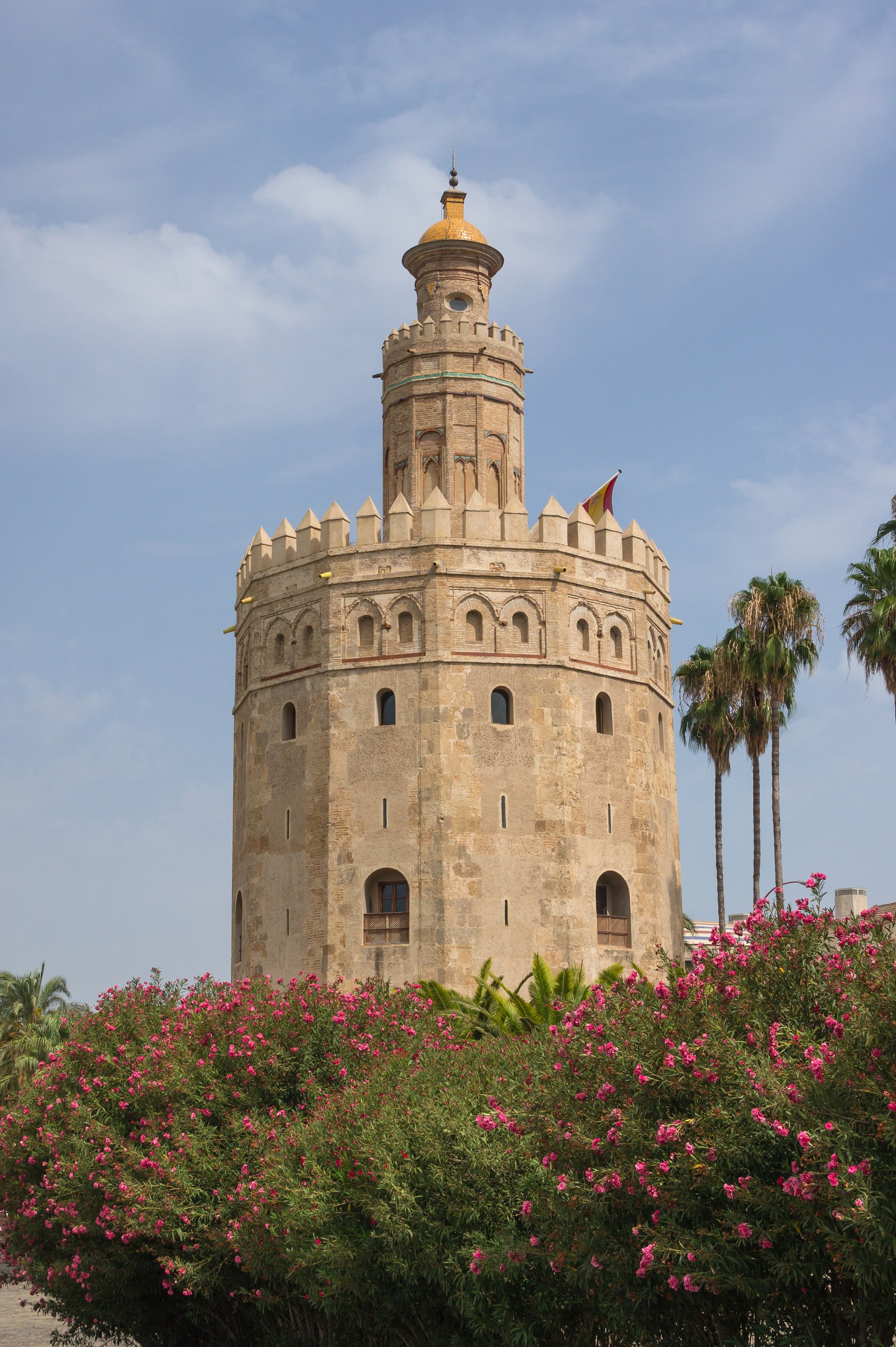
The building is currently closed to the public, though plans to convert it into a cultural centre have been announced for years. Until it reopens, visitors can admire the structure from outside — the raw brick facades and the arched openings of the former shipyard gates are visible from the street bordering El Arenal, close to the Torre del Oro and the riverbank.
How do you get there?
Atarazanas sits right in central Seville, an easy walk from the cathedral and the Alcázar — about ten to fifteen minutes along the river. The nearest landmarks and bus stops cluster around the Torre del Oro and the Plaza de Toros de la Maestranza, so a stop here fits naturally into a walking route through the historic centre.
Frequently asked questions
Who built the Atarazanas and when? The complex was commissioned by Alfonso X in 1252 as a royal war shipyard, built shortly after Seville was retaken from Almohad rule.
How many bays did the original shipyard have? The original design included seventeen parallel bays set perpendicular to the Guadalquivir, allowing newly built ships to be launched directly into the river.
Can you go inside the Atarazanas today? No, the building is currently closed to visitors, though there are plans to turn it into a cultural centre; for now only the exterior can be seen.
Why did the shipyard stop functioning as a shipyard? As trade with the colonies grew, several bays became customs warehouses, and in the 18th century part of the complex was converted into artillery workshops, gradually replacing its original shipbuilding role.
Nearby places

Earn badges for the places you visit
Download NextOnTrip, discover new places and check off your trails.