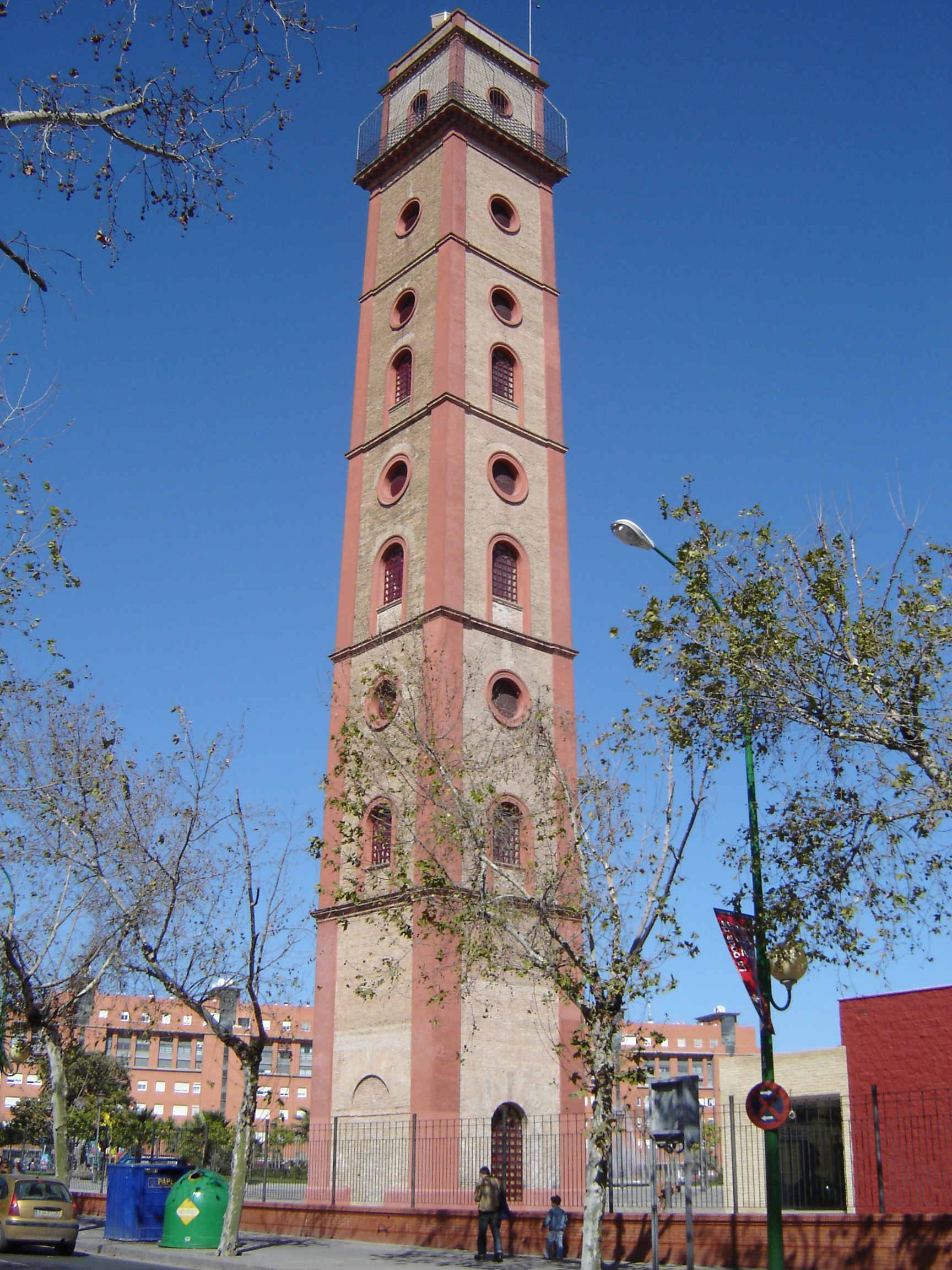
About this place
Torre de los Perdigones is a 19th-century industrial tower in Seville, one of the few surviving witnesses to the city's manufacturing past. It stands in the San Gil district on Calle Resolana, right next to the Puente de la Barqueta bridge, north of the historic centre.
Where does this tower come from?
Construction began in 1885 and finished in 1897, designed by Seville architect José Balbontín de Orta and financed by Manuel Mata. The tower was part of the San Francisco de Paula factory, popularly known as the Fábrica de Perdigones — a plant producing lead shot for hunting ammunition. "Perdigones" is Spanish for shot pellets, and the manufacturing method was as simple as it was dramatic: molten lead was poured from a platform at the top, and as the droplet fell through the air it cooled into a perfectly round pellet before landing in a water basin at the base. The taller the tower, the longer the fall and the rounder the pellet — which is why the structure reaches 46 metres, making it for a long time one of the tallest buildings in Seville.
The factory ran continuously until the 1950s. After it closed, the industrial complex fell into disrepair and most of the surrounding factory buildings and warehouses were demolished. The tower itself survived as one of the last physical traces of Seville's industrial era.
What can you see inside?
After years of neglect, the tower was restored and reopened to the public as a cultural space. Inside, a permanent exhibition explains the history of shot production and the old factory, showing how the manufacturing process worked and why this particular tower shape was necessary. At the top there's a viewing platform with panoramic views over Seville, including the Guadalquivir river and the neighbouring Barqueta bridge. The building also houses a camera obscura — an optical device that projects a live image of the city onto an interior screen, a rare feature among Spain's tourist attractions.
How do you get there and when should you visit?
The tower sits north of the historic centre, an easy walk, bike ride, or short bus trip from the Alameda de Hércules area. It's open Wednesday to Sunday, in the morning and early-afternoon hours — it's worth checking the current schedule before visiting, since opening days can be limited. Admission is charged but it's one of the cheapest tickets among the city's attractions. Given the tower's small footprint, a visit typically takes between 30 and 45 minutes.
The best time to head up to the viewing platform is late afternoon, when the sun is lower and the light flatters the rooftops of old Seville and the line of the river. In summer, morning visits are advisable to avoid the heat on the open-air platform.
Frequently asked questions
What does "perdigones" mean, and why is the tower named after it? It's Spanish for lead shot — small pellets used in hunting ammunition. The tower was built to produce them by dropping molten metal from height.
Is there an elevator inside? Visiting the tower involves climbing stairs to reach the viewing platform, so it's worth factoring in if you're travelling with someone who has limited mobility.
Is it worth combining with other nearby sights? Yes, the tower is close to the Puente de la Barqueta bridge and the San Gil district, from where it's an easy walk to the Alameda de Hércules and on into the historic centre.
How long does a visit take? Usually 30 to 45 minutes, depending on how much time you spend at the viewing platform and the exhibition.
Nearby places

Earn badges for the places you visit
Download NextOnTrip, discover new places and check off your trails.