About this place
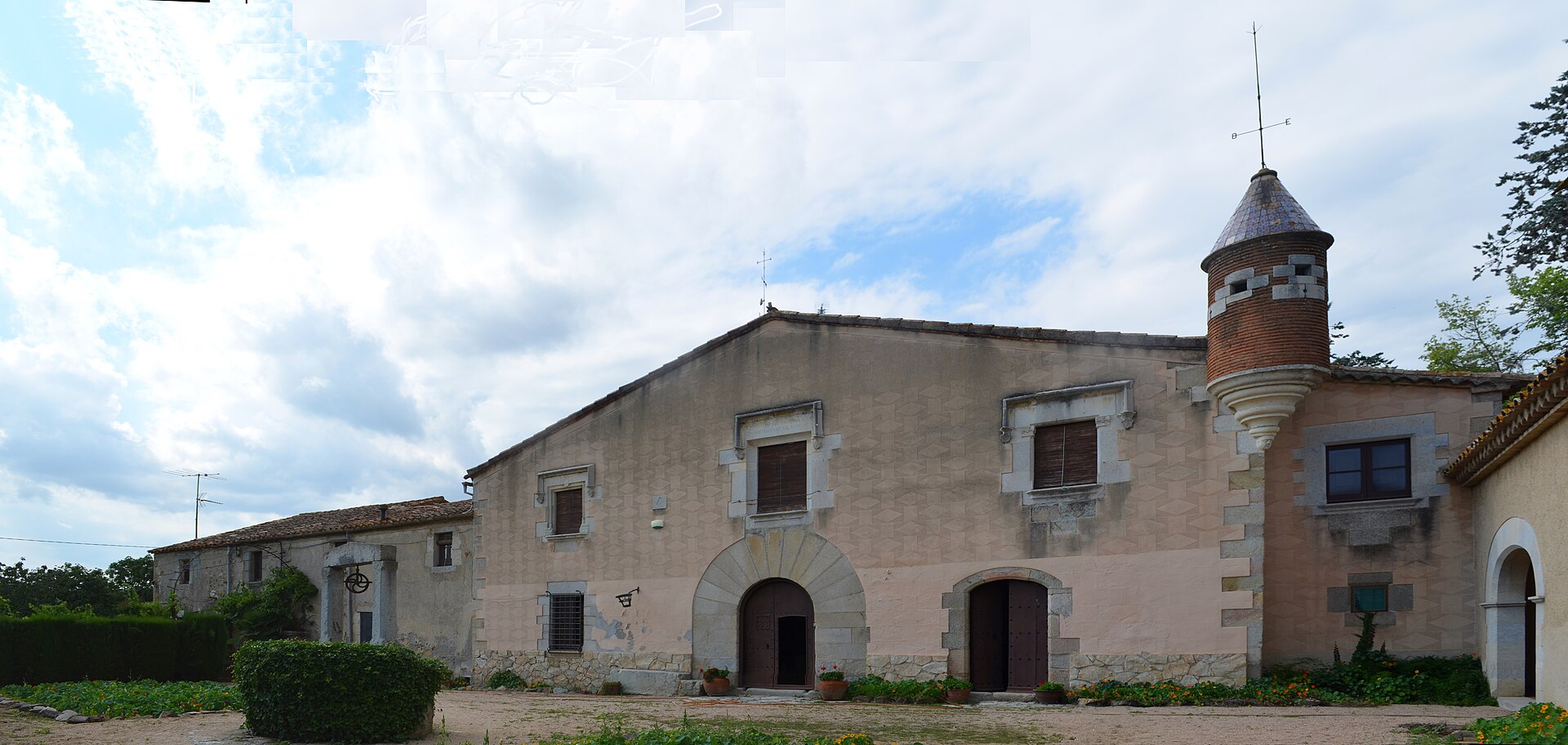
Torre Albertí is a fortified masia — a traditional Catalan farmhouse with a defensive tower — standing on the edge of Llagostera, in the Gironès county. For centuries the tower has shaped the skyline of this corner of the Girona region.
Where does the name come from?
The name traces back to the Albertí family, recorded in Llagostera as early as the 15th century, when they worked as tenant farmers on the Riudaura estate. In 1541 Pere Albertí was knighted by Martí Grau de Cruïlles, eighth baron of Llagostera. Seven years later, in 1548, he bought up the surrounding land and received the baron's permission to build a defensive tower — the structure that gave the estate its present name.
What will you see on site?
The complex is built around two main elements: a stone watchtower and a Gothic chapel dating from 1588. Albertí had the chapel raised in memory of his son, who died in 1581; it still stands as a small sanctuary attached to the main building. Together they form a textbook layout for a 16th-century masia owned by a wealthy landed family — a defensive tower, a family chapel, and farm buildings gathered around a courtyard.
Look closely at the contrast between the two structures: the tower's plain, heavy stonework versus the chapel's more ornamented Gothic front. Pairing a defensive function with a sacred one inside a single rural compound is typical of Catalan countryside architecture from this period.
What is the history behind it?
Between the 16th and 17th centuries, Torre Albertí served as the residence of the Procurator General of the Batllia — the local bailiff's administrative office — of Llagostera. That made it more than a family home: it was also a seat of local authority for several generations of the Albertí line.
The estate's fortunes shifted in the 18th century. In 1718, Caterina d'Albertí i Pallarés married Ramon de Manresa i de Sala, joining the Albertí property to the Manresa family. Their heir, Joan de Manresa i d'Albertí, married twice, first in 1741 to Antònia Andreu i Fontdevila. Ownership continued to pass down through the combined lines of these two families in the generations that followed.
Today Torre Albertí is listed in Catalonia's Inventory of Architectural Heritage, a recognition of its historical and architectural value for the region.
How to get there and when to visit?
Llagostera sits in the Gironès county, a short drive from the city of Girona and within easy reach of the Costa Brava coastline, making Torre Albertí a convenient stop while exploring the Girona area or heading toward the coast. Spring and early autumn are the best seasons to visit: the mild Mediterranean climate makes for comfortable walks around the grounds without the summer heat. Parts of the estate sit on private land, so it is worth checking current access details with local tourism sources before planning a visit.
Frequently asked questions
What is Torre Albertí? It is a historic masia with a defensive tower and a Gothic chapel, built in the 16th century by the Albertí family in Llagostera, in the Gironès region.
When was the tower built? Pere Albertí received permission to build the tower in 1548, and the accompanying chapel was consecrated in 1588.
What was the estate used for historically? Between the 16th and 17th centuries it served as the seat of the Procurator General of the Batllia of Llagostera, combining a family residence with a local administrative role.
Is Torre Albertí a protected heritage site? Yes, it is listed in Catalonia's Inventory of Architectural Heritage as an example of a 16th-century masia belonging to a major landowning family.
Nearby places

Earn badges for the places you visit
Download NextOnTrip, discover new places and check off your trails.