About this place
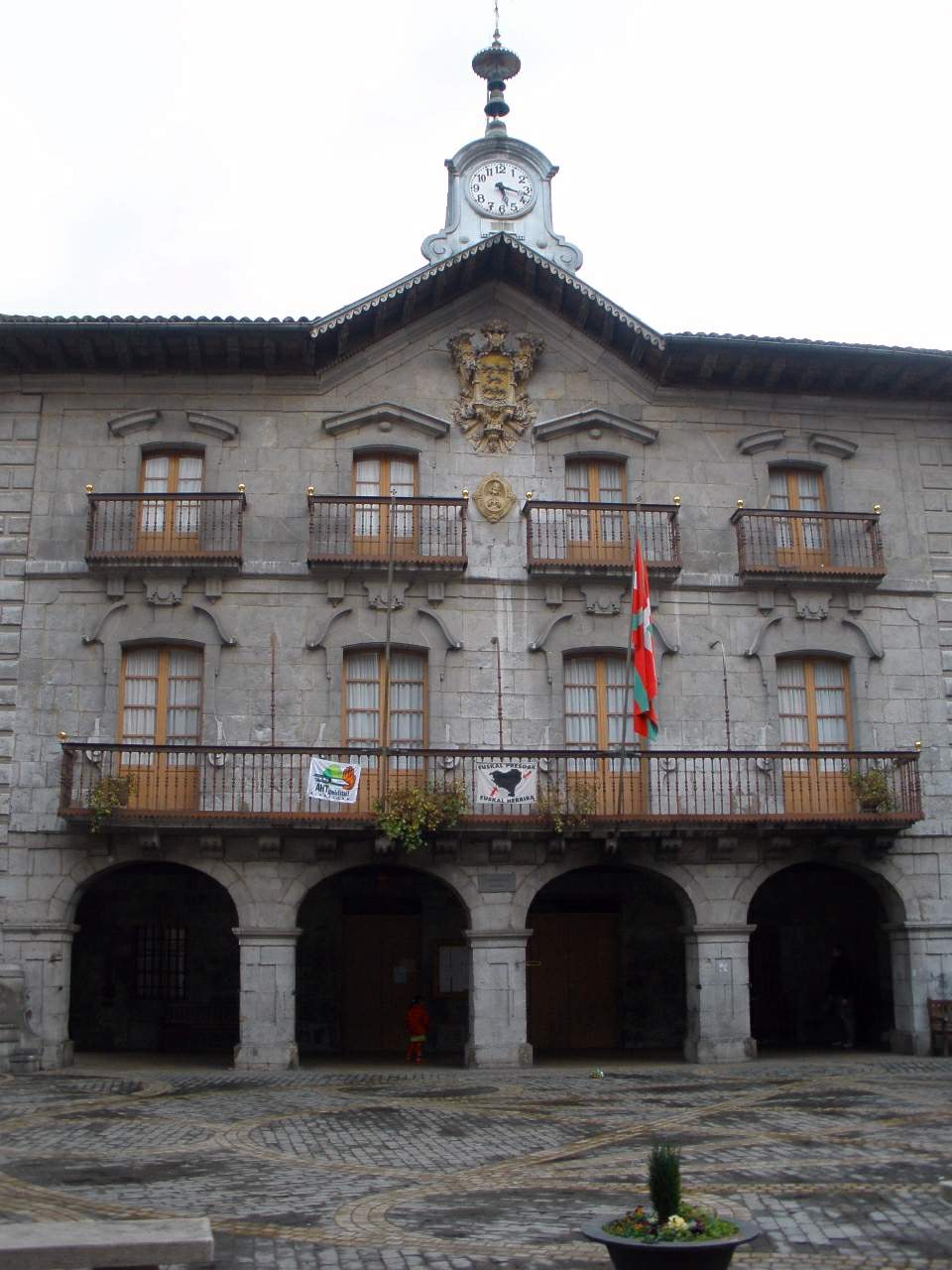
Tolosa's town hall sits at the heart of Tolosa, the historic former capital of Gipuzkoa in the Basque Country, and has anchored local government here for more than three centuries.
What does the building look like, and why?
The current town hall dates from 1672, built in the baroque style typical of municipal architecture in the region at the time. Its brick facade and wrought-iron balcony above the main entrance remain the building's most recognizable features, standing out against the old town that surrounds it. Construction followed a fire in 1503 that destroyed much of Tolosa's built-up area; town authorities responded by replacing the earlier, largely timber-framed town center with sturdier masonry structures, and the town hall was part of that rebuilding push.
Why did Tolosa carry so much weight in Gipuzkoa's history?
King Alfonso X the Wise founded Tolosa in 1256, granting it privileges designed to encourage trade along the border with the Kingdom of Navarre. That early advantage translated into lasting political influence: between 1374 and 1392, 26 surrounding towns and settlements placed themselves under Tolosa's legal and institutional protection, only gradually detaching from it starting in 1615. For centuries, Tolosa represented a sixth of the entire province at Gipuzkoa's General Assemblies, giving it a political voice out of proportion to its size. That standing peaked when Tolosa formally served as the province's capital between 1844 and 1854, a period during which the town hall functioned as an administrative center of importance well beyond the town itself.
How did the Carlist Wars affect the town?
The 19th century was rough on Tolosa. The Carlist conflicts brought serious material and human losses, and the town's position on a major transit route made it a recurring military target throughout the period. Even so, Tolosa rebuilt and diversified economically, leaning on commerce — its weekly market has long carried real regional weight — and on a paper industry that took firm root in the Oria river valley and shaped the local economy for generations.
What happens on the square in front of the town hall today?
The square facing the town hall functions as Tolosa's public heart. It's where the town's biggest gatherings converge, including Tolosa's carnival, widely regarded as one of the largest and most elaborate in the Basque Country. The town hall's balcony has long served as a vantage point during civic celebrations and processions, and the old town surrounding the square still follows a legible medieval street layout.
Frequently Asked Questions
When was Tolosa's town hall built? The building in its current form dates to 1672, part of the town's rebuilding effort after a fire destroyed much of Tolosa in 1503.
Can visitors go inside the town hall? It's an active administrative building, so interior access depends on office hours; the square and facade, however, are open to visitors at any time.
Why is Tolosa called the historic capital of Gipuzkoa? Because of its former administrative role — the town formally served as the province's capital between 1844 and 1854, after centuries of holding outsized influence at Gipuzkoa's General Assemblies.
What else is worth seeing near the town hall? Tolosa's old town, which still follows its medieval layout and has the town hall as its focal point, along with the sites tied to the town's well-known carnival tradition.
Nearby places

Earn badges for the places you visit
Download NextOnTrip, discover new places and check off your trails.