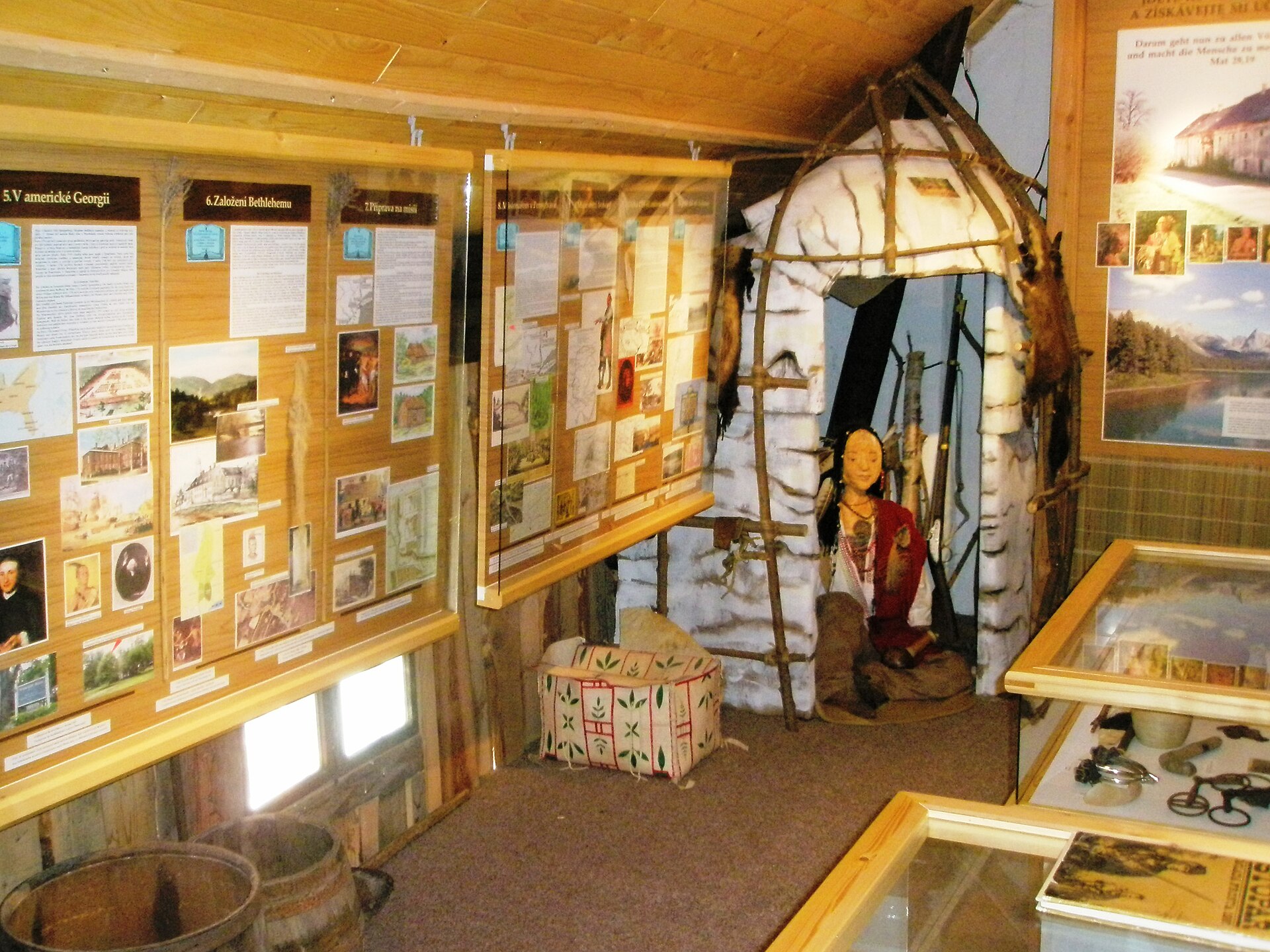
About this place
The Museum of Moravian Brethren stands in Suchdol nad Odrou, just a short drive from the village of Kletné in the Nový Jičín district of Moravia. It is a small, community-run institution that documents both everyday rural life in the region and the turbulent history of the Moravian Brethren, the Protestant movement that traces its roots to this very corner of Moravia.
What can you see inside?
The core exhibition recreates the life of the inhabitants of the Moravian Kravařsko villages roughly a hundred years ago. The museum occupies a period farmstead typical of that era — a dwelling house together with its adjoining barns and yard — giving visitors a direct sense of how local families lived and worked the land before mechanised agriculture changed the countryside.
A separate part of the exhibition is devoted to a darker chapter: the executions carried out on the Kunín and Fulnek estates during a period of religious persecution. This episode is closely tied to the story of the Moravian Brethren, who were forced underground or into exile after the Battle of White Mountain, and whose spiritual roots lie precisely in this stretch of northern Moravia.
Why this particular area?
The countryside around Suchdol nad Odrou and Kletné is intimately linked with the history of the Moravian Brethren. Nearby, along the road leading from Suchdol towards Kletné, stands the so-called Horní dvůr (Upper Court) — the birthplace of David Zeisberger, a Moravian missionary who later became well known for his work among Native American communities in North America. It was from small villages like these that members of the movement carried their beliefs across the Atlantic.
How do you get there?
The museum is located at Malá Strana 21 in Suchdol nad Odrou. The village sits in the Nový Jičín district, not far from the Polish border, and is most easily reached by car — the drive from either Nový Jičín or Ostrava takes only a few dozen minutes. Because this is a small, volunteer-supported museum, it is worth calling or emailing ahead to confirm opening hours and, if needed, arrange a guided tour.
When is the best time to visit?
As a small regional museum with limited opening hours, it is best visited in the summer season, and always after checking availability in advance. Many visitors combine their trip with the nearby museums of country life in Albrechtičky and Skotnice, which together form a small network of open-air style exhibits illustrating rural life in the Nový Jičín region.
Who is this museum for?
The Museum of Moravian Brethren appeals mainly to travellers interested in regional history, ethnography, and the religious history of Central Europe. It is also a natural stop for anyone following the trail of the Moravian Brethren through Suchdol nad Odrou, Kunín, and Fulnek, as well as for visitors who prefer authentic, low-key destinations away from the main tourist routes.
Frequently asked questions
Where exactly is the museum located? At Malá Strana 21 in Suchdol nad Odrou, close to the village of Kletné in the Nový Jičín district.
What is the main exhibition about? Rural life in the Moravian Kravařsko villages about a century ago, alongside the history of executions on the Kunín and Fulnek estates linked to the persecution of the Moravian Brethren.
Who were the Moravian Brethren? A Protestant religious movement originating in Moravia, whose members — including David Zeisberger, born at the nearby Horní dvůr — later carried out missionary work on other continents.
Do you need to book a visit in advance? Yes, given the museum's small scale, it is recommended to contact it by phone or email beforehand to arrange opening hours or a guided visit.
Nearby places

Earn badges for the places you visit
Download NextOnTrip, discover new places and check off your trails.