About this place
Tetřevská slať
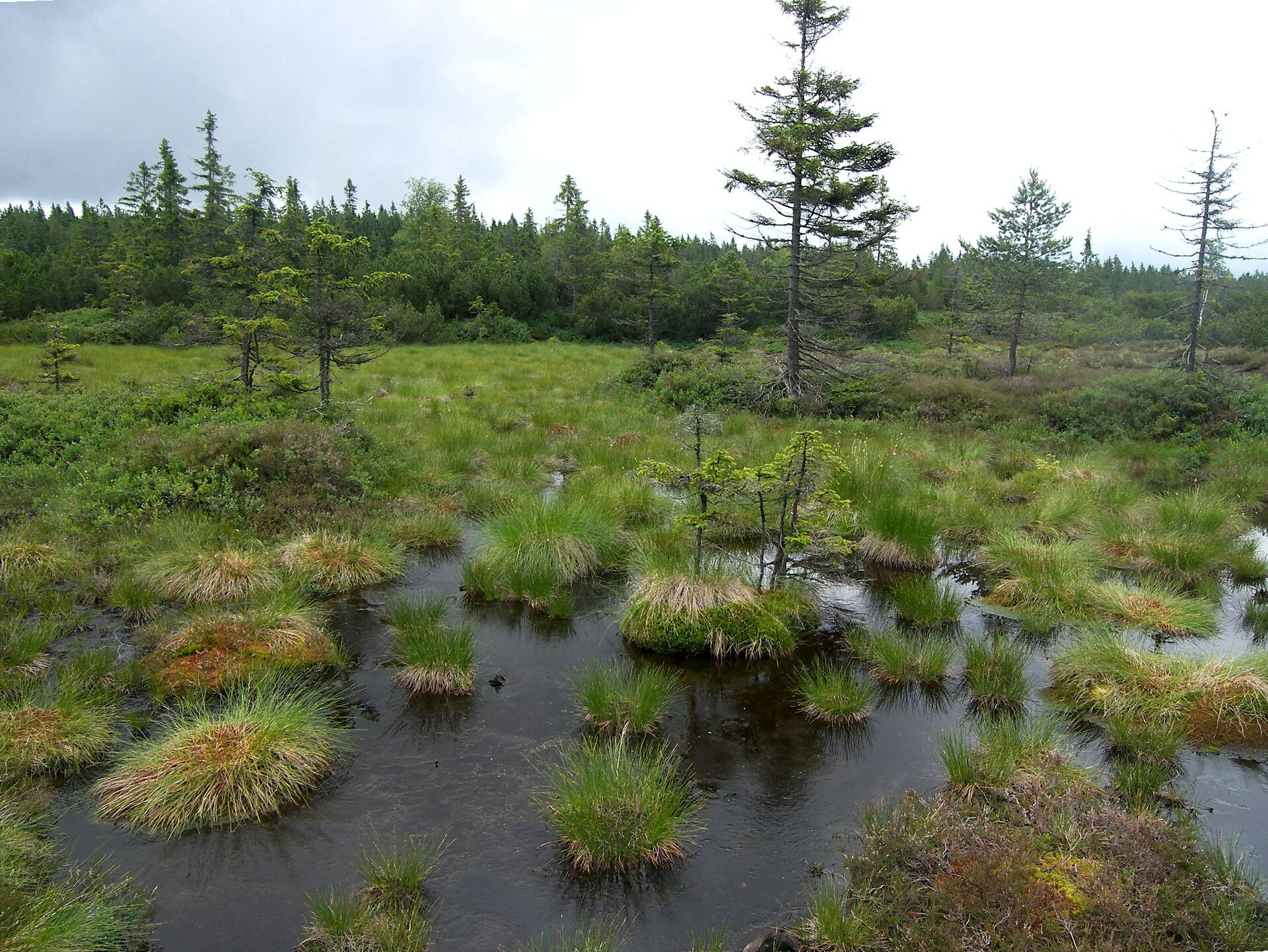
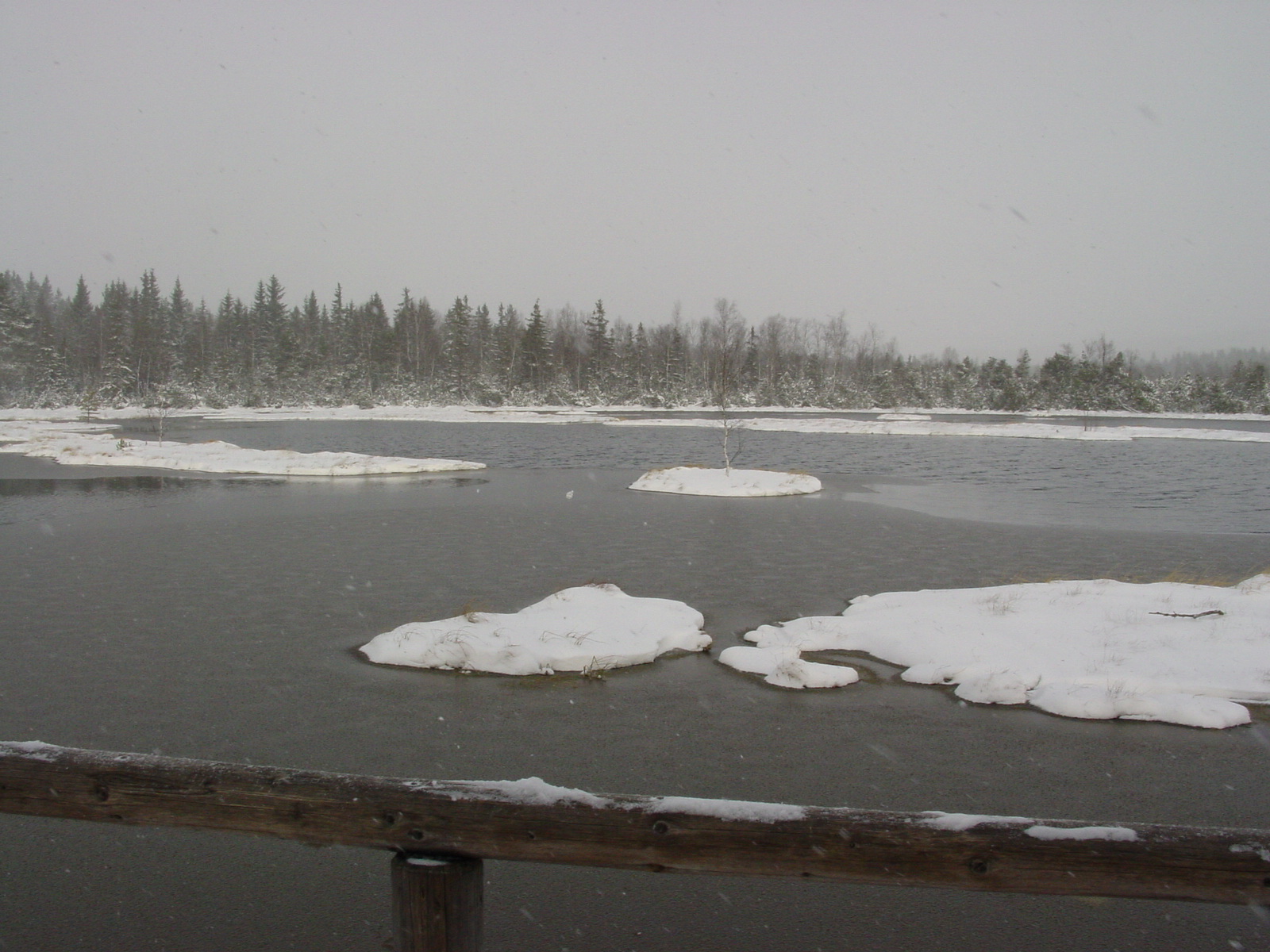
Tetřevská slať is a mountain peat bog in the heart of the Šumava range, spread across the northern slope of Mount Tetřev right next to the road connecting Kvilda with the hamlet of Filipova Huť, close to the village of Horská Kvilda. The site holds the status of a natural monument and falls under the protection of the Šumava National Park and Protected Landscape Area administration, since it represents a textbook example of a high-altitude bog typical of the range's highest sections.
Why is this bog protected?
The peatland straddles the boundary between two administrative regions, Plzeň and South Bohemia, as well as two districts, Klatovy and Prachatice. Its position on this watershed, combined with the elevation at which it sits, has allowed vegetation adapted to the harsh, cold microclimate of the Šumava peaks to take hold. Species found here are rare at lower elevations: dwarf birch, mountain dwarf pine (locally known as blatka), tussock cottongrass, and the Šumava gentian — a plant whose very name references this region and which blooms during the brief mountain summer.
What wildlife lives here?
The name Tetřevská slať is no coincidence — it derives from the capercaillie (tetřev hlušec), a bird that once populated these areas in considerable numbers and for which the vast, undisturbed bog offers ideal cover and lekking grounds. Alongside the capercaillie, the alpine shrew makes its home here, a species tied exclusively to damp, high-altitude habitats. The presence of these animals was one of the main arguments behind granting the site legal protection.
Can visitors walk through Tetřevská slať?
Unlike several other Šumava bogs, Tetřevská slať is not open to visitors — there is no educational trail or boardwalk crossing it, and entering the bog itself is prohibited. The protection here is strict, since the fragile structure of the peat surface is easily damaged by foot traffic. Anyone hoping to experience a similar landscape up close can instead visit the nearby Jezerní slať, which features an observation tower and an educational trail laid out on wooden boardwalks.
How do you get to the area?
Horská Kvilda serves as the starting point — a small settlement in the central part of Šumava valued as a base for both summer and winter tourism. The road from Kvilda to Filipova Huť, along which the bog lies, is easily accessible on foot or by bicycle, though the bog itself remains visible only from a certain distance, beyond the treeline and the buffer of protective vegetation.
Frequently asked questions
Is Tetřevská slať open to visitors? No — the bog is closed to tourist traffic due to strict nature protection rules. It can only be viewed from the nearby road.
Where does the name come from? The name comes from the capercaillie (tetřev), a bird characteristic of the region that finds one of its natural habitats here.
Which plants are most characteristic of this site? The most notable are dwarf birch, mountain dwarf pine, and the Šumava gentian — species adapted to the harsh conditions of a high-altitude peat bog.
Is there a nearby alternative for tourists? Yes, the nearby Jezerní slať offers an observation tower and an educational trail, allowing visitors to experience a similar ecosystem without disturbing the protected area.
Nearby places

Earn badges for the places you visit
Download NextOnTrip, discover new places and check off your trails.