About this place
Prameny Vltavy (the Sources of the Vltava) is the symbolic spring of the Czech Republic's longest river, located in the Šumava mountains within the cadastral area of Bučina, a few kilometers from the village of Kvilda. The site sits at roughly 1,172 meters above sea level, just a few hundred meters from the German border, and has been part of Šumava National Park since 1991.
Where exactly is the source of the Vltava?
What visitors see as "the source of the Vltava" is actually a symbolic marker at the beginning of one of the river's two main headwaters, the Teplá Vltava (Warm Vltava). The stream leaving this spot is first called the Černý potok (Black Stream), and only takes the name Teplá Vltava once it passes the village of Borová Lada. After flowing for 54 kilometers, it merges with the Studená Vltava (Cold Vltava), which rises on the Bavarian side of the border near Haidmühle. Only after these two streams join does the river become what is known as the Vltava.
What is there to see at the site?
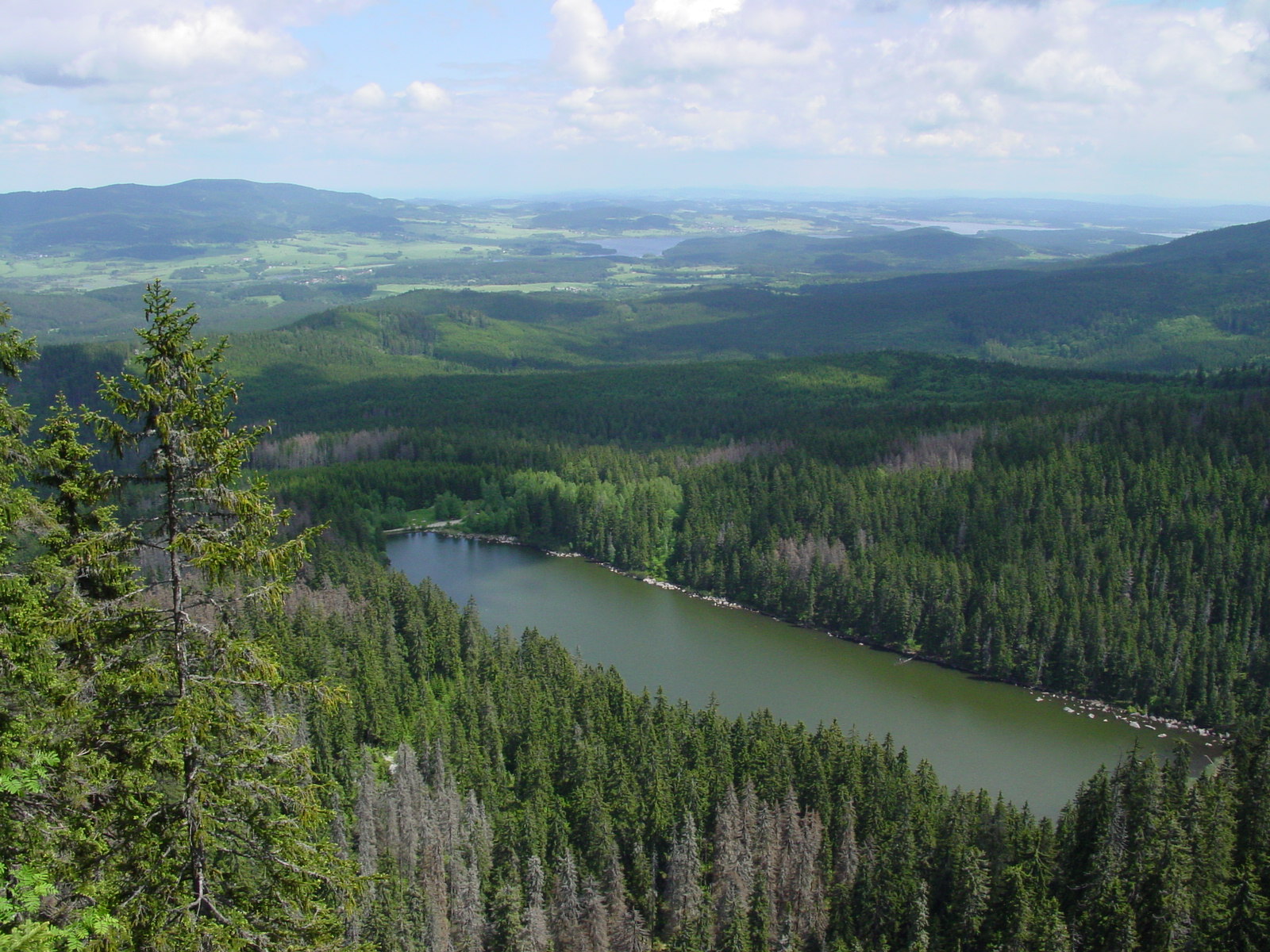
Since 2004, a wooden sculpture by carver David Fialy has stood at the symbolic spring, created during a sculpture symposium organized by the municipality of Kvilda. The sculpture marks the exact spot where the first stream emerges and serves as the main landmark for visitors. The surrounding landscape is typical of the high-altitude Šumava terrain — wet meadows, peat bogs, and spruce forests characteristic of this part of the national park.
How to get to the Vltava's sources?
The most common starting point is the village of Kvilda, from which a comfortable, roughly 7-kilometer route follows a blue-marked hiking trail. The trail suits an averagely fit hiker and can be walked as a round trip in a few hours. Many visitors combine the walk to the springs with a detour to the nearby, once-abandoned settlement of Bučina, known for its distinctive Šumava-style buildings and views toward Knížecí pláně.
Why does this place matter?
The Vltava is the longest river in the Czech Republic and the country's most important waterway both symbolically and economically — it flows through Prague and feeds, among other things, the Lipno reservoir. Marking its symbolic source in the Šumava mountains has long drawn visitors interested both in the national park's nature and in the origin of one of Central Europe's most recognizable rivers. The area's inclusion in Šumava National Park in 1991 further protects the surrounding peat bogs and forests from development and heavy tourist pressure.
Frequently asked questions
Is this the actual source of the Vltava? It is a symbolic site marking the start of the Teplá Vltava, one of the river's two principal headwaters. The real geographic origins of the water that eventually forms the Vltava extend more broadly on both sides of the Czech-German border.
How long is the trail from Kvilda? About 7 kilometers one way, along a blue-marked trail accessible to most hikers.
What does the sculpture at the spring represent? A wooden sculpture by David Fialy from 2004, marking the symbolic point where the water emerges and commemorating a sculpture symposium organized by Kvilda.
Nearby places

Earn badges for the places you visit
Download NextOnTrip, discover new places and check off your trails.