About this place
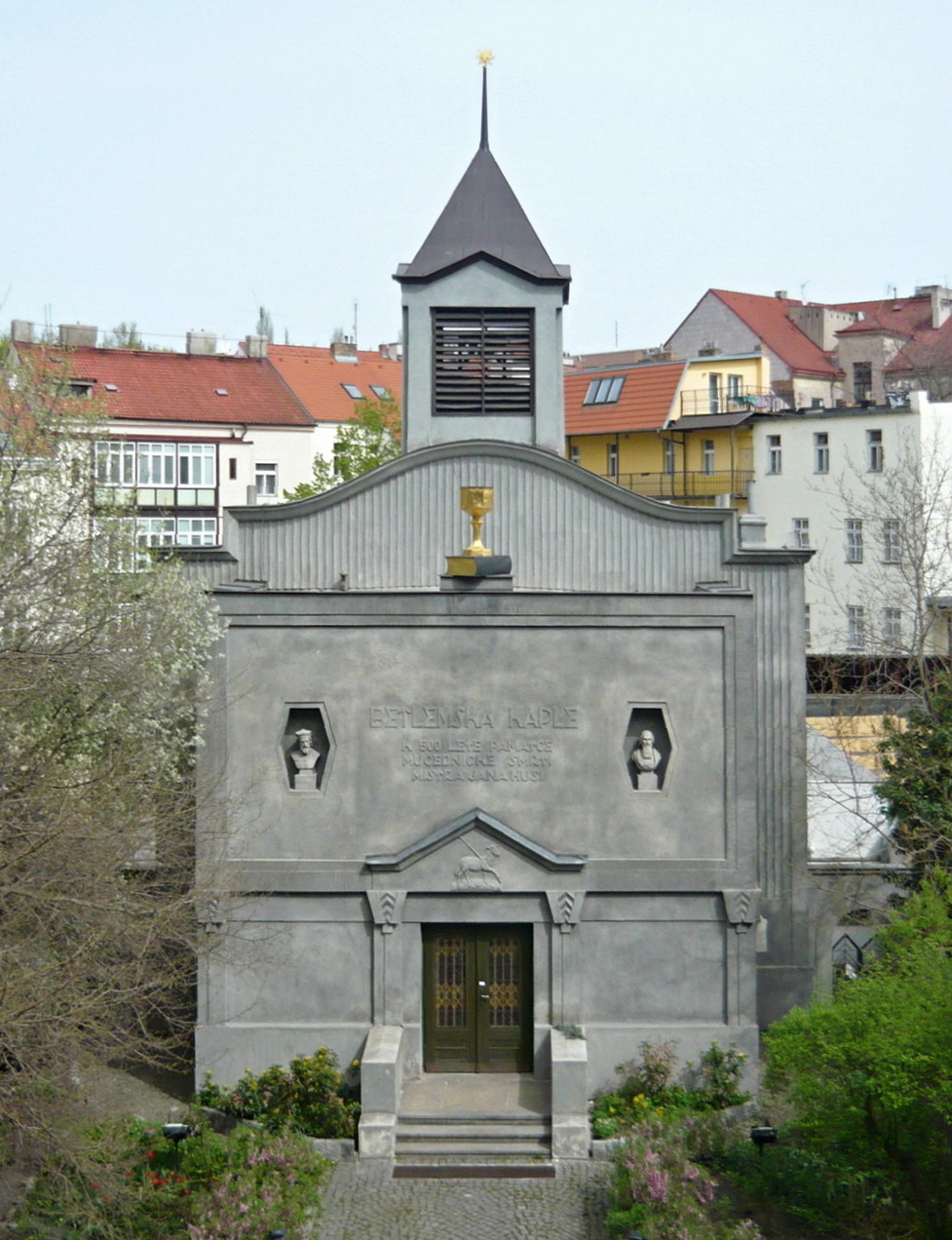
The Karlín Synagogue stands on Vítkova Street in Karlín, a district on the Prague side of the Vltava river. Although it no longer serves its original religious purpose, the building remains one of the more interesting traces of Jewish history in Prague outside the famous Josefov quarter.
Why was a synagogue built in Karlín?
Karlín, formerly known by its German name Karolinenthal, was an independent town until the end of 1921 with a strongly industrial and commercial character. Many wealthy factory owners and merchants of Jewish origin lived here and needed a place of worship close to home rather than travelling into central Prague. The synagogue, completed in 1861, was built to meet exactly that need.
What does the building look like?
The synagogue was originally designed in the neo-Romanesque style, typical of many Central European houses of prayer from that era, featuring rounded arches, a solid mass, and a restrained yet dignified facade. The building underwent a significant transformation at the turn of the 1920s and 1930s: between 1928 and 1930 its interior was rebuilt in a functionalist style, giving it a far more modern and streamlined appearance characteristic of Czechoslovak architecture of the time.
What is the history of the community that used it?
The synagogue served Karlín's affluent Jewish community until the outbreak of the Second World War. The last rabbi to lead the congregation before the occupation was Dr. Isidor Hirsch, who was forced into retirement as a result of the Nazi occupation and died the following year. As the war progressed, regular services in the building ceased, and the fate of Karlín's Jewish community mirrored the tragic fate shared by most of Prague's Jews during that period.
What happened to the building after the war?
After the end of the Second World War, the synagogue was returned to Prague's Jewish community. However, it did not resume its original function for long: in 1950 the building was sold to the Czechoslovak Hussite Church. That religious community adapted the interior to its own liturgical needs and continues to use it today, which is largely why the structure has survived in good condition, albeit serving a completely different purpose than it was built for.
Can visitors go inside the Karlín synagogue?
The building is not a museum or a conventional tourist attraction — it functions as an active house of worship for the Hussite Church. Even so, its imposing form and location on Vítkova Street make an impression on anyone walking through Karlín, a district that has undergone notable revitalization in recent years and now draws increasing numbers of visitors with its cafés, street art, and atmospheric turn-of-the-century architecture.
Frequently asked questions
Where is the Karlín synagogue located? On Vítkova Street in Prague's Karlín district (Prague 8).
When was it built? The building was completed in 1861 in the neo-Romanesque style.
Is it still a synagogue? No — since 1950 the building has belonged to the Czechoslovak Hussite Church and serves as one of its places of worship.
What is notable about the building's renovation? Between 1928 and 1930 its interior was rebuilt in a functionalist style, markedly changing its character compared with the original neo-Romanesque design.
Nearby places

Earn badges for the places you visit
Download NextOnTrip, discover new places and check off your trails.