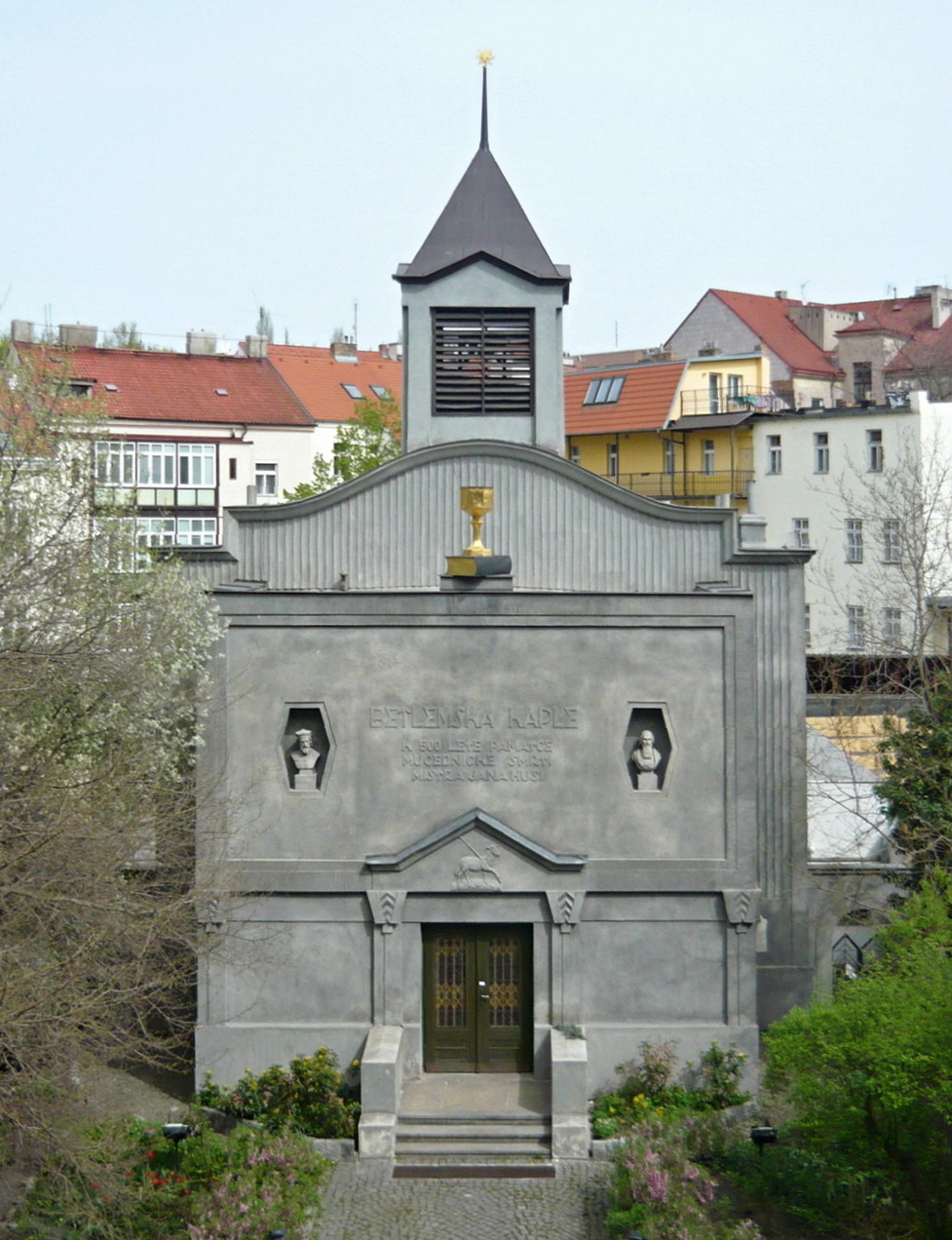
About this place
Bethlehem Chapel (Betlémská kaple) is a medieval religious building in Prague's Old Town, famous above all as the place where Jan Hus delivered his sermons and helped spark the Bohemian Reformation. The movement that grew out of his preaching, known as Hussitism, left a lasting mark on Czech history and on the wider religious landscape of medieval Europe.
Where is the chapel located?
The building stands on the small square Betlémské náměstí, right in the heart of Old Town Prague, just a short walk from Charles Bridge and the Old Town area around Charles University. Its location makes it an easy addition to any walking tour of central Prague, since most major historical sights sit within roughly fifteen minutes on foot. The chapel's plain, unadorned exterior with tall walls and a steep roof stands out noticeably against the ornate baroque facades of the surrounding buildings.
What is the history behind Bethlehem Chapel?
The chapel was originally built as a preaching hall designed specifically for sermons delivered in Czech rather than Latin, an unusual choice for its time that made it possible to reach ordinary townspeople directly rather than only the educated clergy. This is precisely what turned it into a center for reformist ideas: Jan Hus preached here at the turn of the 14th and 15th centuries, criticizing abuses within the church hierarchy and calling for spiritual renewal. His teachings eventually put him in direct conflict with the Catholic Church, a conflict that ended with his execution at the stake in Constance in 1415 — an event that became the spark for the Hussite Wars that followed.
The chapel survived in altered form for several centuries before being largely destroyed and rebuilt during the 18th century. It wasn't until the 20th century, in the postwar period, that a reconstruction project restored the chapel closer to its original medieval appearance, relying on surviving wall fragments and historical documentation. Today the rebuilt chapel stands as a symbolic site commemorating the origins of the Bohemian Reformation.
What can you see inside?
The interior is notable for its plainness and open, hall-like space — a striking contrast with the ornate baroque churches found elsewhere in Prague. That simplicity was intentional: the chapel was designed from the start to hold large preaching audiences rather than to serve as a conventional liturgical space. The reconstructed wall sections, simple pulpit, and open layout of the hall give visitors a sense of the setting in which Hus once addressed crowds of Prague residents. Plaques and informational elements throughout the building highlight its role in the history of religious reform in Central Europe.
How do you get to Bethlehem Chapel?
The easiest way to reach the chapel is on foot from Old Town or the area around Charles University — the walk typically takes no more than five to ten minutes. Nearby tram stops and the Národní třída metro station (line B) are also within a short walking distance. Given its central location, it's worth pairing a visit with a walk through Old Town, a stop at Charles Bridge, or a look at the university quarter around the Karolinum.
When is the best time to visit?
Like most historic sites in central Prague, the chapel tends to see the heaviest foot traffic during the summer months (June through August) and around the winter holiday season. Travelers who prefer a quieter visit should consider spring or autumn, when the crowds in the city center thin out noticeably while the weather still stays pleasant for walking through Old Town.
Frequently asked questions
Did Jan Hus really preach in this exact chapel? Yes. Bethlehem Chapel was the main venue for his sermons at the turn of the 14th and 15th centuries, and it was here that he developed the reformist ideas that eventually led to his conflict with the Catholic Church.
Is the current building the original structure? Not entirely — after being largely destroyed in the 18th century, the chapel was rebuilt in the 20th century using surviving wall fragments and historical records, in an effort to restore its original medieval character.
How much time should you plan for a visit? Seeing the interior typically takes between 20 and 40 minutes, making it easy to combine with a longer walk through Old Town Prague.
Is it worth visiting if you're not interested in religious history? Yes — it's one of the few places in central Prague where the architecture is deliberately austere and minimalist, offering an interesting contrast to the baroque grandeur found throughout the rest of Old Town.
Nearby places

Earn badges for the places you visit
Download NextOnTrip, discover new places and check off your trails.