About this place
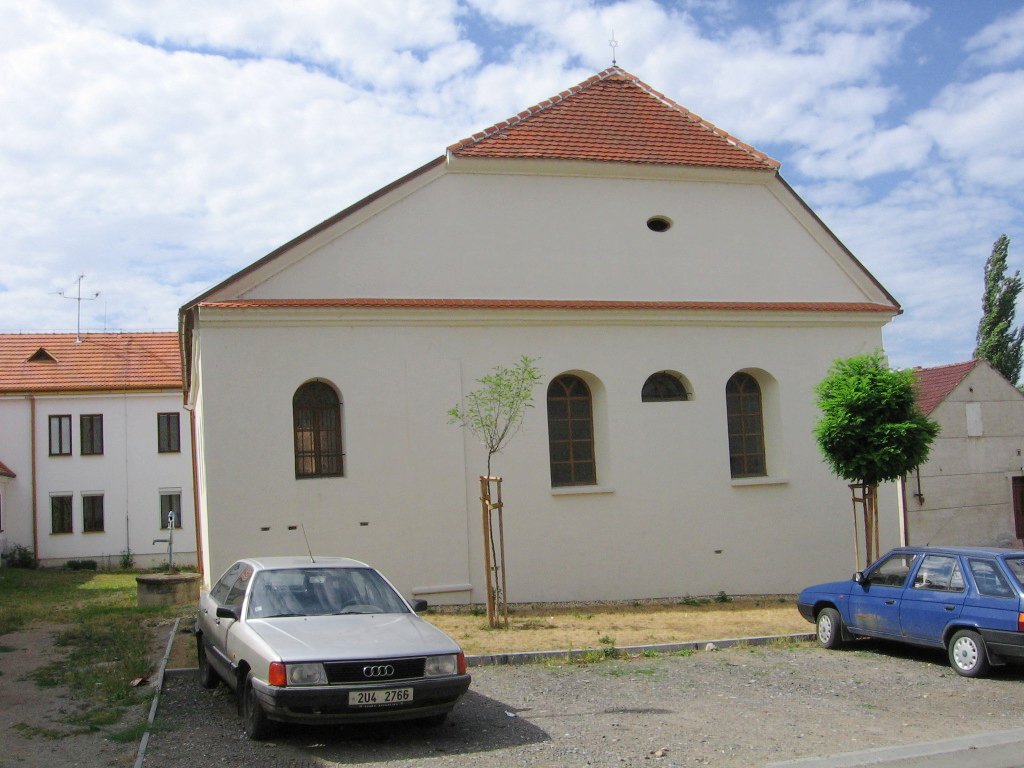
The Synagogue in Dolní Kounice is a historic Orthodox synagogue built between 1652 and 1656 in the central part of the town's former Jewish ghetto, in the South Moravian Region of the Czech Republic. The building survives today as one of the most tangible reminders of the long-standing Jewish community that once lived in Dolní Kounice, and it now serves as a museum.
Where is the synagogue located?
The synagogue stands in the heart of the former Jewish quarter of Dolní Kounice, a small town in South Moravia. Its geographic coordinates are approximately 49.06994 N, 16.46361 E, placing it within the compact, historic street layout of the old ghetto — a self-contained district that for centuries housed the town's Jewish community.
When was the synagogue built?
Construction dates to 1652–1656. This was a period in which Jewish communities across Moravia were rebuilding and consolidating their religious infrastructure after the upheavals of the earlier seventeenth century, often replacing more modest earlier prayer houses with permanent, purpose-built stone synagogues. The building's survival to the present day in a recognizable form makes it a valuable example of the religious architecture of that era.
What religious tradition did the synagogue belong to?
The synagogue served a community following the Orthodox tradition of Judaism, meaning it upheld the strict, traditional forms of liturgy and communal organization typical of Orthodox Jewish congregations in Central Europe at the time. As such, the building functioned as the religious and social center of the ghetto — the place around which the community's daily, religious, and communal life revolved.
What was the ghetto in Dolní Kounice?
The ghetto in whose central section the synagogue was built was a designated historic Jewish district of the town. Such districts were common across Moravian towns, where Jewish communities, operating under historical privileges and restrictions, settled in defined quarters and developed their own religious infrastructure, including synagogues, schools, and prayer houses. The synagogue's placement at the very center of the ghetto underlines its role as the community's principal point of reference.
What is the synagogue used for today?
Today the former synagogue building operates as a museum. Having transitioned from a place of worship to an institution focused on education and remembrance, it is open to visitors interested in the history of the local Jewish community and in the sacred architecture of this part of the Czech Republic.
Frequently asked questions
When was the synagogue in Dolní Kounice built? Between 1652 and 1656.
What religious tradition did it follow? The Orthodox tradition of Judaism.
Where exactly does the building stand? In the central part of the former Jewish ghetto in Dolní Kounice, in South Moravia, Czech Republic.
Does the synagogue still function as a house of worship? No — it now houses a museum.
Is it worth visiting as part of a trip through the region? Yes — for anyone interested in the history and architecture of Moravia's former Jewish quarters, this well-preserved building is a notable stop on the regional map.
Nearby places

Earn badges for the places you visit
Download NextOnTrip, discover new places and check off your trails.